
评估美国县级热带气旋暴露水平,以开展人类健康相关研究。
Assessing United States County-Level Exposure for Research on Tropical Cyclones and Human Health.
机构信息
Department of Environmental and Radiological Health Sciences, Colorado State University, Fort Collins, Colorado, USA.
School of Medicine, University of Colorado, Aurora, Colorado, USA.
出版信息
Environ Health Perspect. 2020 Oct;128(10):107009. doi: 10.1289/EHP6976. Epub 2020 Oct 28.
BACKGROUND
Tropical cyclone epidemiology can be advanced through exposure assessment methods that are comprehensive and consistent across space and time, as these facilitate multiyear, multistorm studies. Further, an understanding of patterns in and between exposure metrics that are based on specific hazards of the storm can help in designing tropical cyclone epidemiological research.
OBJECTIVES
) Provide an open-source data set for tropical cyclone exposure assessment for epidemiological research; and ) investigate patterns and agreement between county-level assessments of tropical cyclone exposure based on different storm hazards.
METHODS
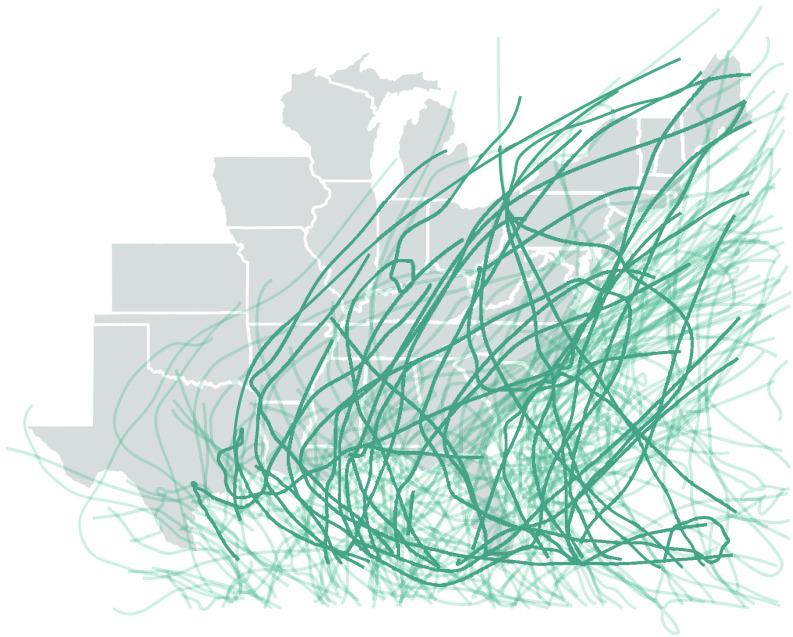
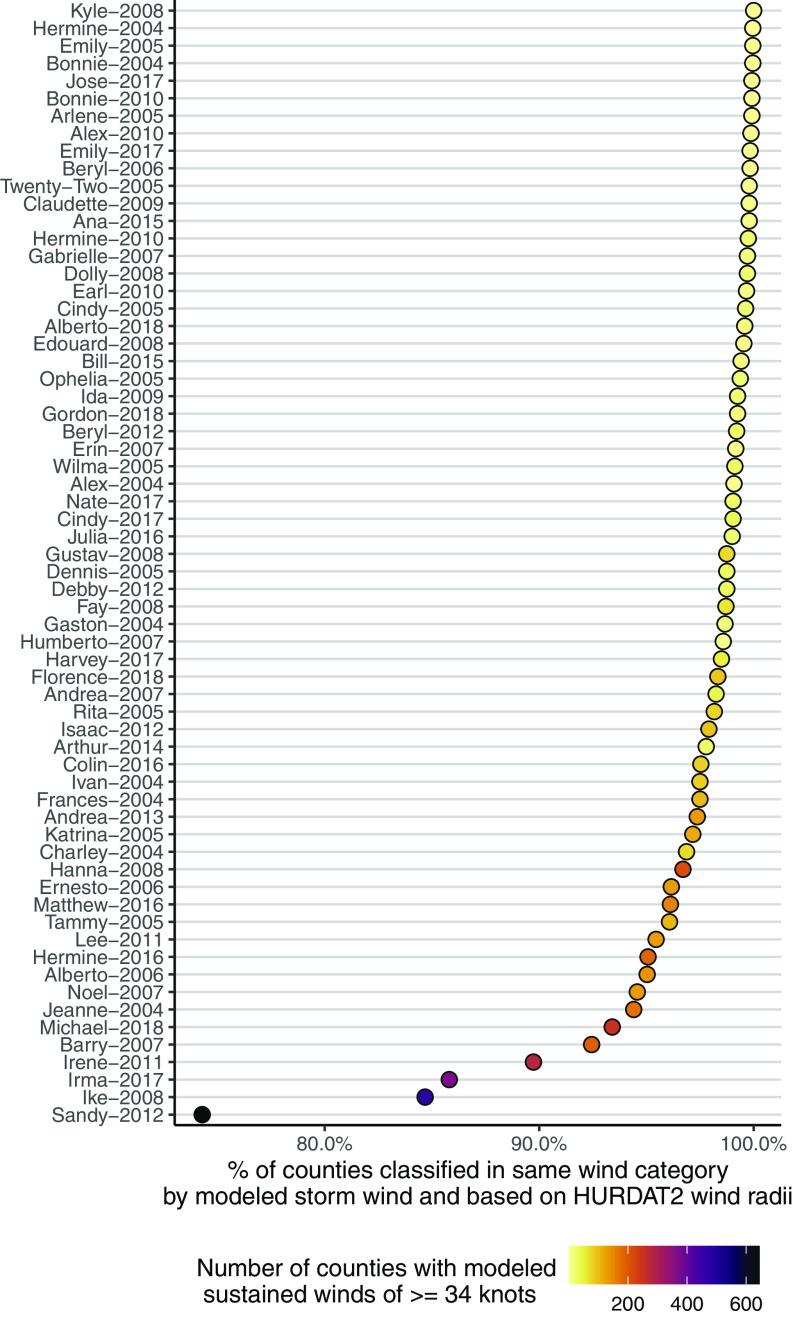
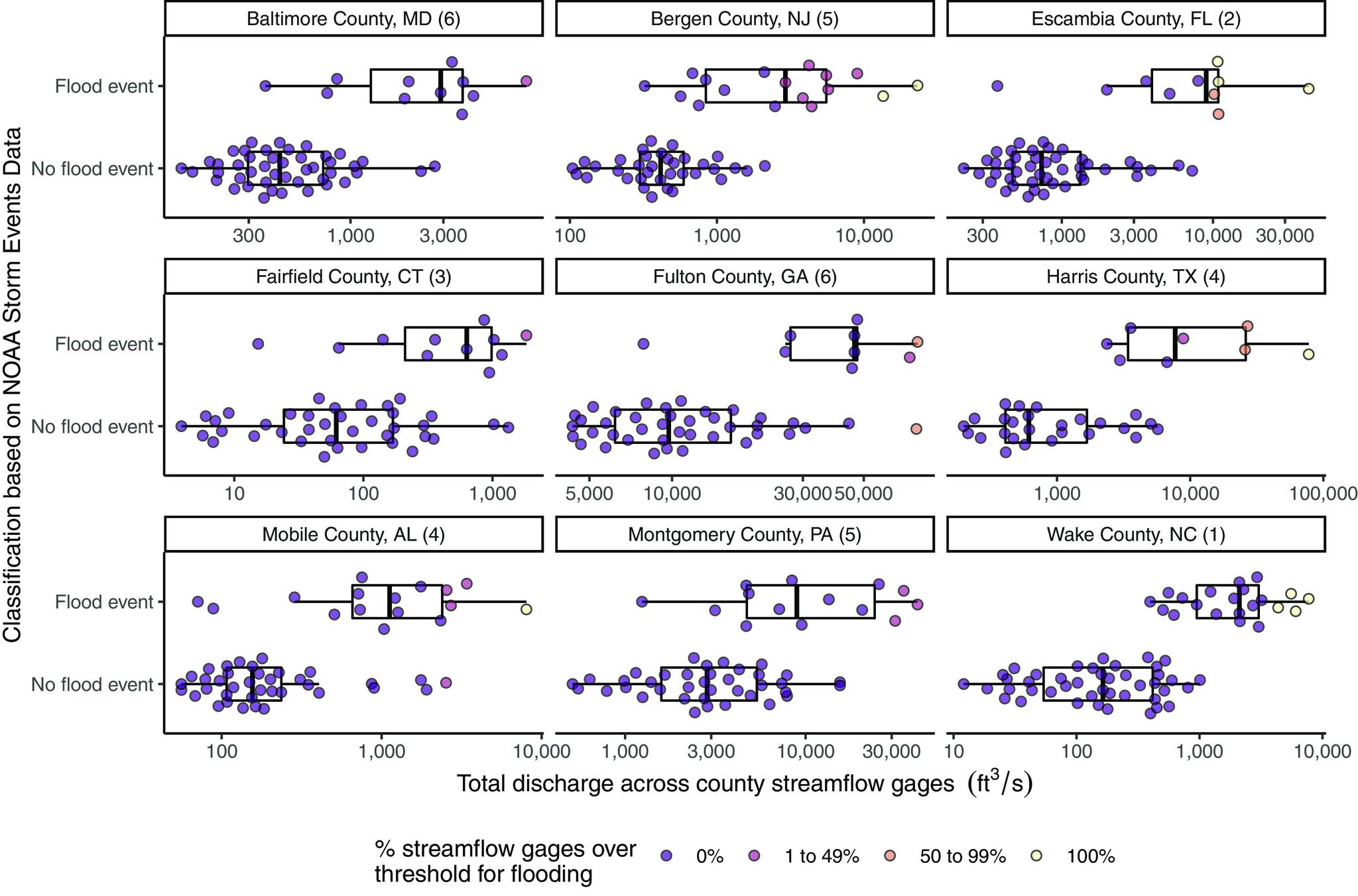
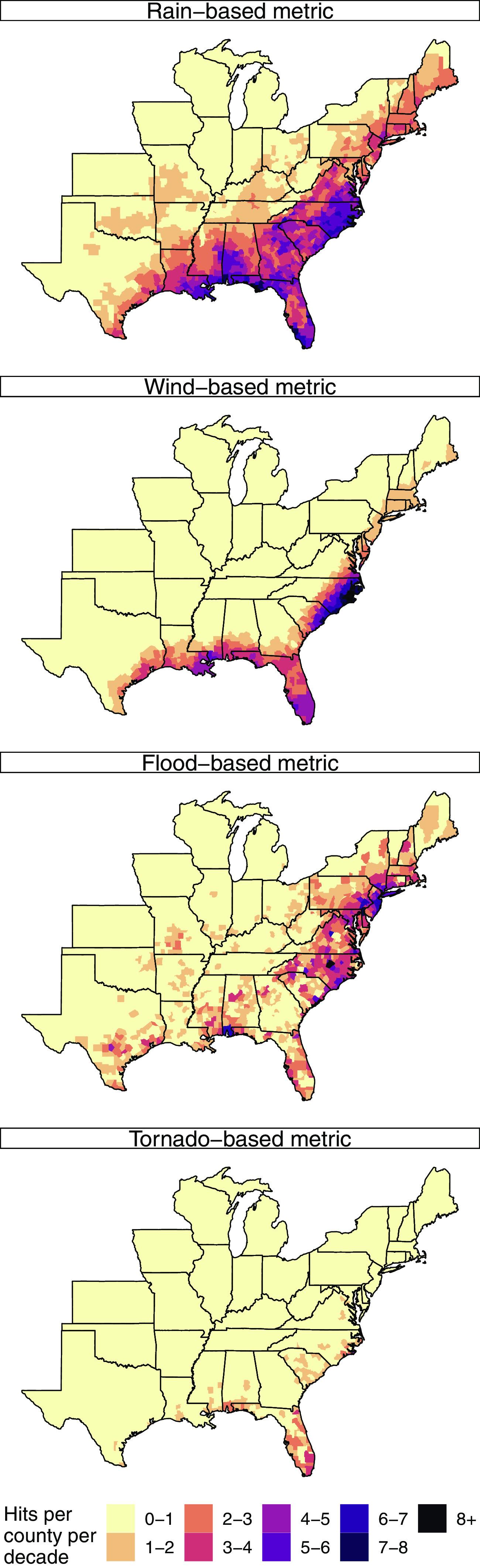
We created an open-source data set with data at the county level on exposure to four tropical cyclone hazards: peak sustained wind, rainfall, flooding, and tornadoes. The data cover all eastern U.S. counties for all land-falling or near-land Atlantic basin storms, covering 1996-2011 for all metrics and up to 1988-2018 for specific metrics. We validated measurements against other data sources and investigated patterns and agreement among binary exposure classifications based on these metrics, as well as compared them to use of distance from the storm's track, which has been used as a proxy for exposure in some epidemiological studies.
RESULTS
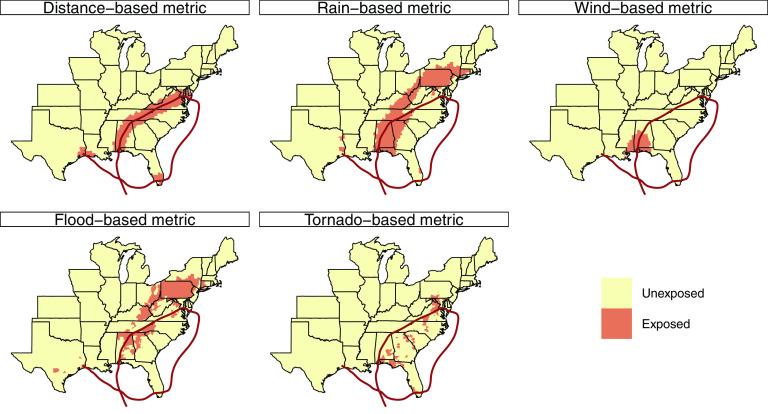
Our open-source data set was typically consistent with data from other sources, and we present and discuss areas of disagreement and other caveats. Over the study period and area, tropical cyclones typically brought different hazards to different counties. Therefore, when comparing exposure assessment between different hazard-specific metrics, agreement was usually low, as it also was when comparing exposure assessment based on a distance-based proxy measurement and any of the hazard-specific metrics.
DISCUSSION
Our results provide a multihazard data set that can be leveraged for epidemiological research on tropical cyclones, as well as insights that can inform the design and analysis for tropical cyclone epidemiological research. https://doi.org/10.1289/EHP6976.
背景
通过全面且一致的暴露评估方法,可以推进热带气旋流行病学研究,这些方法有利于多年度、多风暴研究。此外,了解基于风暴特定危害的暴露度量之间的模式,可以帮助设计热带气旋流行病学研究。
目的
) 提供一个用于热带气旋暴露评估的开源数据集,用于流行病学研究;和 ) 研究基于不同风暴危害的县级热带气旋暴露评估的模式和一致性。
方法
我们创建了一个开源数据集,其中包含 1996 年至 2011 年所有指标以及特定指标的 1988 年至 2018 年期间,美国东部所有登陆或近岸大西洋盆地风暴的县级暴露数据,涵盖了四个热带气旋危害的峰值持续风速、降雨、洪水和龙卷风。我们将测量值与其他数据源进行了比较,并研究了基于这些指标的二元暴露分类的模式和一致性,以及与风暴轨迹距离的使用进行了比较,在一些流行病学研究中,该距离已被用作暴露的替代指标。
结果
我们的开源数据集通常与其他来源的数据一致,我们提出并讨论了不一致和其他注意事项的领域。在研究期间和地区,热带气旋通常给不同的县带来不同的危害。因此,当比较不同特定危害指标的暴露评估时,一致性通常较低,与基于距离的代理测量值和任何特定危害指标的暴露评估的一致性也较低。
讨论
我们的研究结果提供了一个多危害数据集,可以用于热带气旋的流行病学研究,并且为热带气旋流行病学研究的设计和分析提供了有价值的见解。


 Zotero 插件