
硫酸盐改变长期暴露于沥青的沉积物中微生物群落成员之间的竞争。
Sulfate Alters the Competition Among Microbiome Members of Sediments Chronically Exposed to Asphalt.
作者信息
Michas Antonios, Harir Mourad, Lucio Marianna, Vestergaard Gisle, Himmelberg Anne, Schmitt-Kopplin Philippe, Lueders Tillmann, Hatzinikolaou Dimitris G, Schöler Anne, Rabus Ralf, Schloter Michael
机构信息
Research Unit Comparative Microbiome Analysis, Helmholtz Zentrum München, Helmholtz Association of German Research Centers, Neuherberg, Germany.
Chair of Soil Science, Technical University of Munich, Freising-Weihenstephan, Germany.
出版信息
Front Microbiol. 2020 Sep 29;11:556793. doi: 10.3389/fmicb.2020.556793. eCollection 2020.
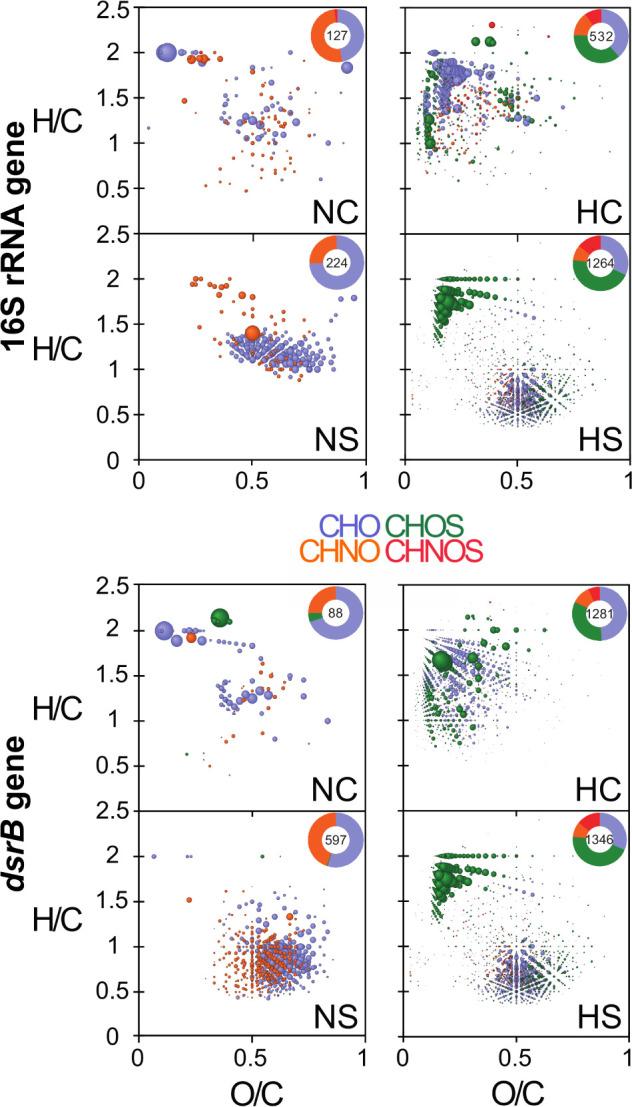
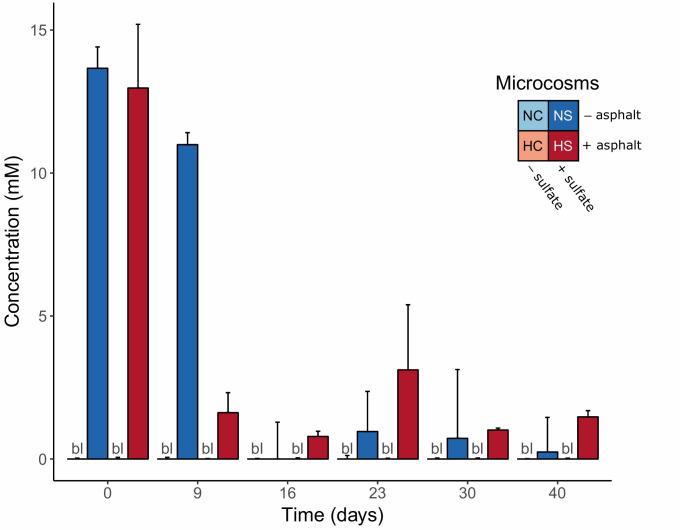
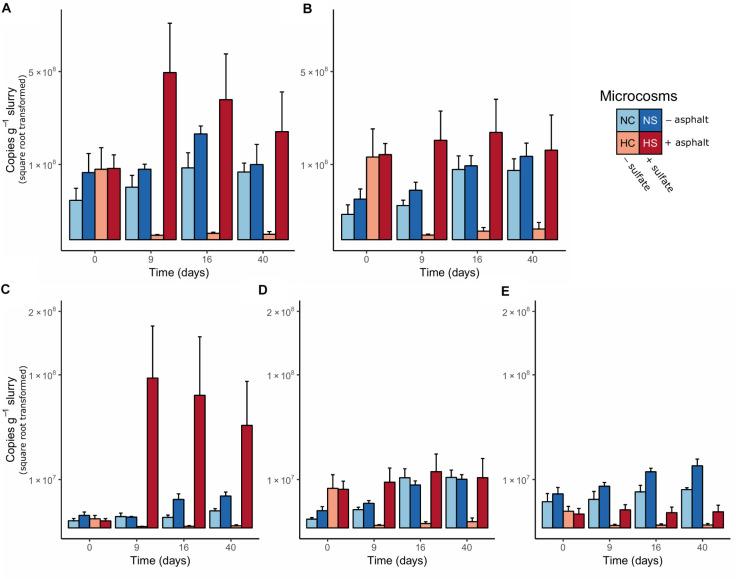
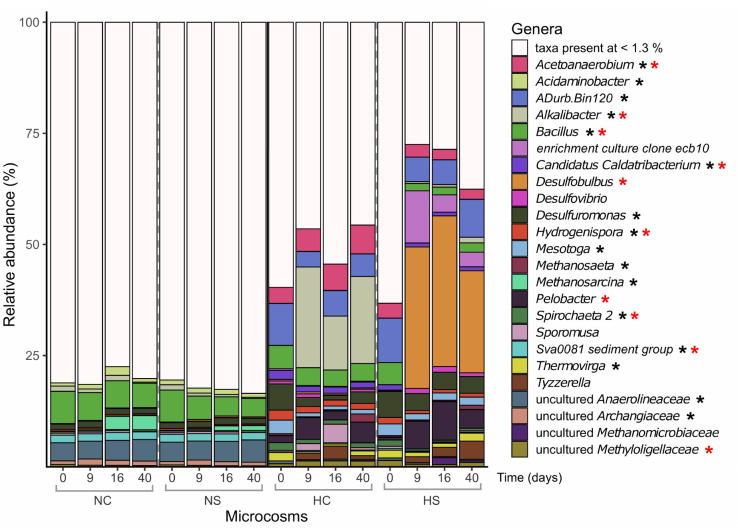
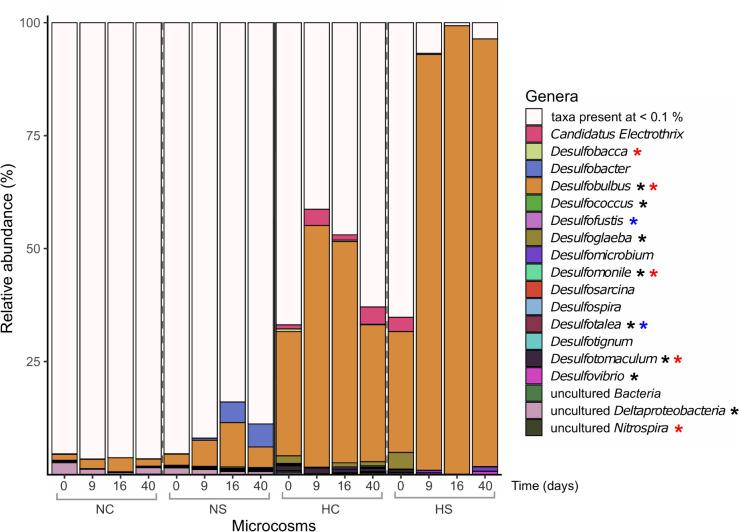
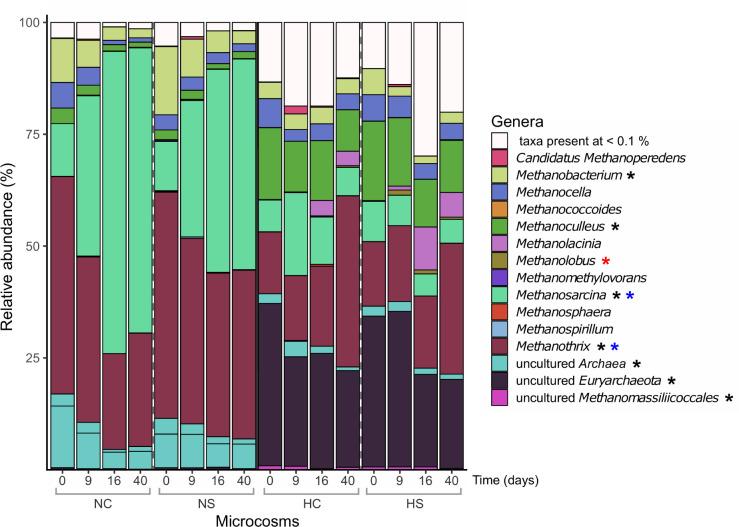
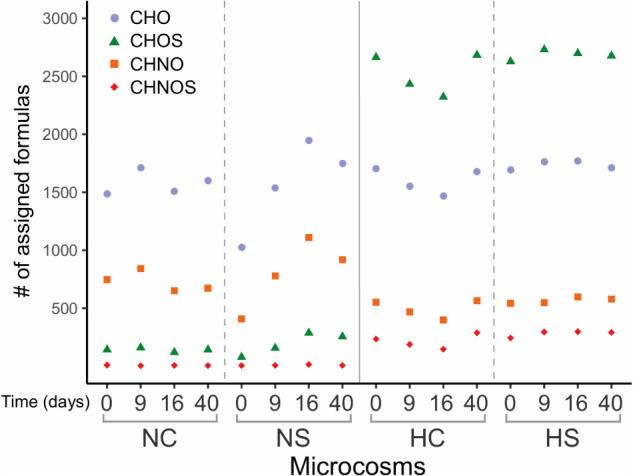
Sulfate-reducing microorganisms (SRMs) often compete with methanogens for common substrates. Due to thermodynamic reasons, SRMs should outcompete methanogens in the presence of sulfate. However, many studies have documented coexistence of these microbial groups in natural environments, suggesting that thermodynamics alone cannot explain the interactions among them. In this study, we investigated how SRMs compete with the established methanogenic communities in sediment from a long-term, electron acceptor-depleted, asphalt-exposed ecosystem and how they affect the composition of the organic material. We hypothesized that, upon addition of sulfate, SRMs (i) outcompete the methanogenic communities and (ii) markedly contribute to transformations of the organic material. We sampled sediments from the test and proximate control sites under anoxic conditions and incubated them in seawater medium with or without sulfate. Abundance and activity pattern of SRMs and methanogens, as well as the total prokaryotic community, were followed for 6 weeks by using qPCR targeting selected marker genes. Some of these genes were also subjected to amplicon sequencing to assess potential shifts in diversity patterns. Alterations of the organic material in the microcosms were determined by mass spectrometry. Our results indicate that the competition of SRMs with methanogens upon sulfate addition strongly depends on the environment studied and the starting microbiome composition. In the asphalt-free sediments (control), the availability of easily degradable organic material (mainly plant-derived) allows SRMs to use a larger variety of substrates, reducing interspecies competition with methanogens. In contrast, the abundant presence of recalcitrant compounds in the asphalt-exposed sediment was associated with a strong competition between SRMs and methanogens, ultimately detrimental for the latter. Our data underpin the importance of the quality of bioavailable organic materials in anoxic environments as a driver for microbial community structure and function.
硫酸盐还原微生物(SRMs)常常与产甲烷菌争夺共同的底物。由于热力学原因,在有硫酸盐存在的情况下,SRMs应胜过产甲烷菌。然而,许多研究记录了这些微生物群体在自然环境中的共存情况,这表明仅靠热力学无法解释它们之间的相互作用。在本研究中,我们调查了SRMs如何与来自长期电子受体耗尽、暴露于沥青的生态系统沉积物中已建立的产甲烷群落竞争,以及它们如何影响有机物质的组成。我们假设,添加硫酸盐后,SRMs(i)胜过产甲烷群落,(ii)显著促进有机物质的转化。我们在缺氧条件下从测试和邻近对照地点采集沉积物,并将它们在添加或不添加硫酸盐的海水培养基中培养。通过针对选定标记基因的定量聚合酶链反应(qPCR)对SRMs、产甲烷菌以及整个原核生物群落的丰度和活性模式进行了为期6周的跟踪。其中一些基因还进行了扩增子测序,以评估多样性模式的潜在变化。通过质谱法测定了微观世界中有机物质的变化。我们的结果表明,添加硫酸盐后SRMs与产甲烷菌的竞争很大程度上取决于所研究的环境和起始微生物群落组成。在无沥青沉积物(对照)中,易降解有机物质(主要是植物来源)的可利用性使SRMs能够利用更多种类的底物,减少了与产甲烷菌的种间竞争。相反,暴露于沥青的沉积物中难降解化合物的大量存在与SRMs和产甲烷菌之间的激烈竞争有关,最终对后者不利。我们的数据强调了缺氧环境中生物可利用有机物质质量作为微生物群落结构和功能驱动因素的重要性。
 Zotero 插件