
中美洲水果中的酚类化合物——特性、健康潜力及创新技术加工。
Phenolic Compounds in Mesoamerican Fruits-Characterization, Health Potential and Processing with Innovative Technologies.
机构信息
Food Structure Team, Clinical Nutrition Research Center, Singapore Institute of Food and Biotechnology Innovation, Agency for Science, Research and Technology, 14 Medical Drive #07-02, MD 6 Building, Yong Loo Lin School of Medicine, Singapore 117599, Singapore.
Escuela de Ingeniería y Ciencias, Tecnologico de Monterrey, Av. Eugenio Garza Sada 2501 Sur, Col. Tecnológico, Monterrey 64849, Nuevo León, Mexico.
出版信息
Int J Mol Sci. 2020 Nov 7;21(21):8357. doi: 10.3390/ijms21218357.
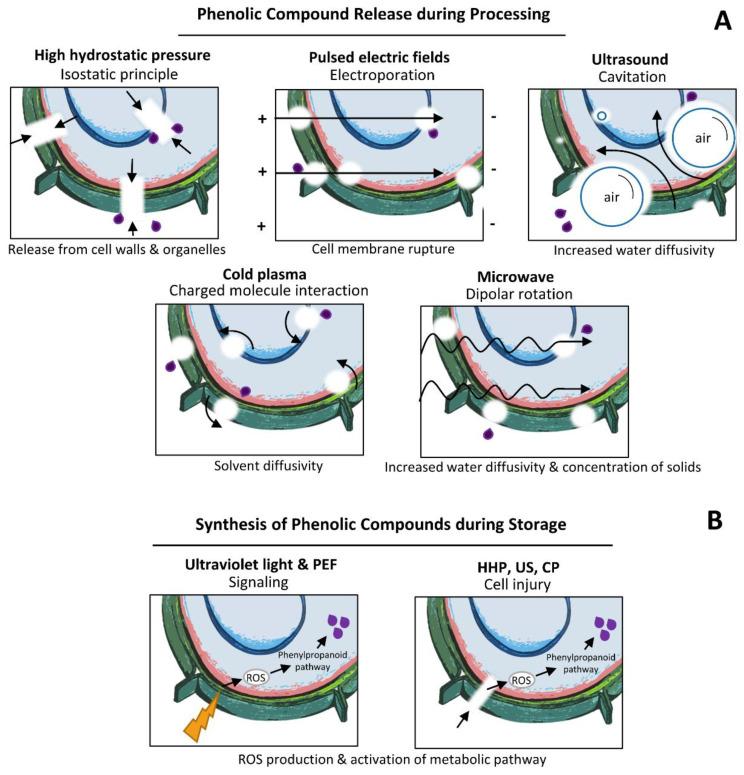
Diets rich in phenolic compounds have been associated to reducing the risk of metabolic syndrome and its derived disorders. Fruits are healthy components of the human diet because of their vitamin, mineral, fiber and phenolic profile. However, they have a short shelf-life which is limited by microbiological growth and enzymatic activity. Innovative preservation methods such as high hydrostatic pressure, pulsed electric fields, ultrasound, microwave, cold plasma and ultraviolet light have become popular for the processing of fruits because they can preserve nutritional quality. In this review, the phenolic profile and health potential of 38 Mesoamerican fruits were assessed. Phenolic compounds were classified based on their contribution to the diet as flavonoids, phenolic acids, tannin, lignins and stilbenoids. Due to this composition, fruits showed a wide range of bioactivities which included anti-inflammatory, anti-diabetic, anti-hypertensive and anti-obesity activities, among others. Phenolic content in fruits submitted to innovative food processing technologies depended on parameters such as enzymatic activity, antioxidant capacity, microstructure integrity and cell viability. Innovative technologies could increase phenolic content while assuring microbiological safety by (i) promoting the release of bound phenolic compounds during processing and (ii) inducing the synthesis of phenolic compounds by activation of phenylpropanoid pathway during storage.
富含酚类化合物的饮食与降低代谢综合征及其衍生疾病的风险有关。水果是人类饮食中健康的组成部分,因为它们含有维生素、矿物质、纤维和酚类物质。然而,它们的保质期很短,这是由微生物生长和酶活性限制的。高静压、脉冲电场、超声波、微波、冷等离子体和紫外线等创新的保鲜方法因其能够保持营养质量而成为水果加工的热门方法。在这篇综述中,评估了 38 种中美洲水果的酚类物质组成和健康潜力。根据它们对饮食的贡献,酚类化合物被分为黄酮类、酚酸类、单宁类、木质素类和芪类。由于这种成分,水果表现出广泛的生物活性,包括抗炎、抗糖尿病、抗高血压和抗肥胖等活性。在经过创新食品加工技术处理的水果中,酚类物质的含量取决于酶活性、抗氧化能力、微观结构完整性和细胞活力等参数。创新技术可以通过(i)在加工过程中促进结合态酚类化合物的释放,(ii)通过苯丙烷途径的激活在储存过程中诱导酚类化合物的合成,从而提高酚类化合物的含量,同时确保微生物安全性。
 Zotero 插件