
Kv7.2在神经发育中的作用:我们理解中的见解与差距
The Role of Kv7.2 in Neurodevelopment: Insights and Gaps in Our Understanding.
作者信息
Dirkx Nina, Miceli Francesco, Taglialatela Maurizio, Weckhuysen Sarah
机构信息
Applied and Translational Neurogenomics Group, VIB Center for Molecular Neurology, Vlaams Instituut voor Biotechnologie, Antwerp, Belgium.
Section of Pharmacology, Department of Neuroscience, University of Naples Federico II, Naples, Italy.
出版信息
Front Physiol. 2020 Oct 28;11:570588. doi: 10.3389/fphys.2020.570588. eCollection 2020.
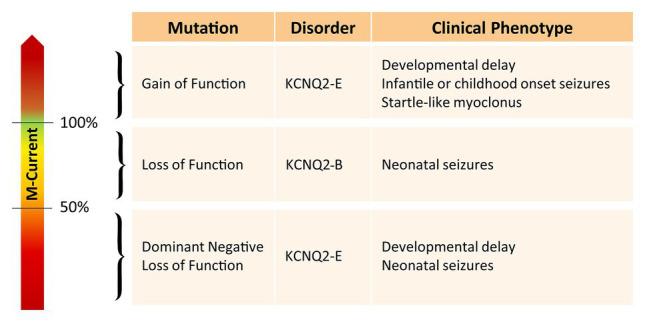
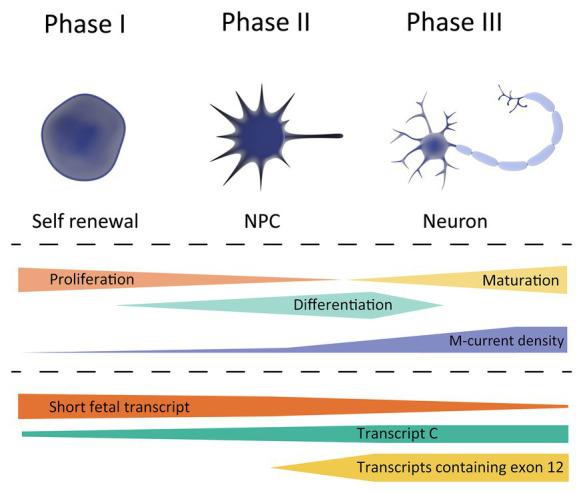
Kv7.2 subunits encoded by the gene constitute a critical molecular component of the M-current, a subthreshold voltage-gated potassium current controlling neuronal excitability by dampening repetitive action potential firing. Pathogenic loss-of-function variants in have been linked to epilepsy since 1998, and there is ample functional evidence showing that dysfunction of the channel indeed results in neuronal hyperexcitability. The recent description of individuals with severe developmental delay with or without seizures due to pathogenic variants in (-encephalopathy) reveals that Kv7.2 channels also have an important role in neurodevelopment. Kv7.2 channels are expressed already very early in the developing brain when key developmental processes such as proliferation, differentiation, and synaptogenesis play a crucial role in brain morphogenesis and maturation. In this review, we will discuss the available evidence for a role of Kv7.2 channels in these neurodevelopmental processes, focusing in particular on insights derived from -related human phenotypes, from the spatio-temporal expression of Kv7.2 and other Kv7 family member, and from cellular and rodent models, highlighting critical gaps and research strategies to be implemented in the future. Lastly, we propose a model which divides the M-current activity in three different developmental stages, correlating with the cell characteristics during these particular periods in neuronal development, and how this can be linked with -related disorders. Understanding these mechanisms can create opportunities for new targeted therapies for -encephalopathy.
由该基因编码的Kv7.2亚基构成了M电流的关键分子成分,M电流是一种阈下电压门控钾电流,通过抑制重复动作电位发放来控制神经元兴奋性。自1998年以来,该基因的致病性功能丧失变异与癫痫有关,并且有充分的功能证据表明该通道功能障碍确实会导致神经元兴奋性过高。最近对因该基因(-脑病)致病性变异而患有严重发育迟缓且伴有或不伴有癫痫发作的个体的描述表明,Kv7.2通道在神经发育中也起着重要作用。在发育中的大脑中,当增殖、分化和突触形成等关键发育过程在脑形态发生和成熟中起关键作用时,Kv7.2通道就已经很早表达了。在这篇综述中,我们将讨论Kv7.2通道在这些神经发育过程中作用的现有证据,特别关注从与该基因相关的人类表型、Kv7.2和其他Kv7家族成员的时空表达以及细胞和啮齿动物模型中获得的见解,突出未来需要填补的关键空白和实施的研究策略。最后,我们提出一个模型,将M电流活性分为三个不同的发育阶段,与神经元发育这些特定时期的细胞特征相关,以及这如何与-相关疾病联系起来。了解这些机制可为-脑病的新靶向治疗创造机会。

 Zotero 插件