
基于脐带血自然杀伤细胞的癌症免疫疗法。
Cord-Blood Natural Killer Cell-Based Immunotherapy for Cancer.
机构信息
Department of Hematology, Union Hospital, Tongji Medical College, Huazhong University of Science and Technology, Wuhan, China.
出版信息
Front Immunol. 2020 Oct 22;11:584099. doi: 10.3389/fimmu.2020.584099. eCollection 2020.
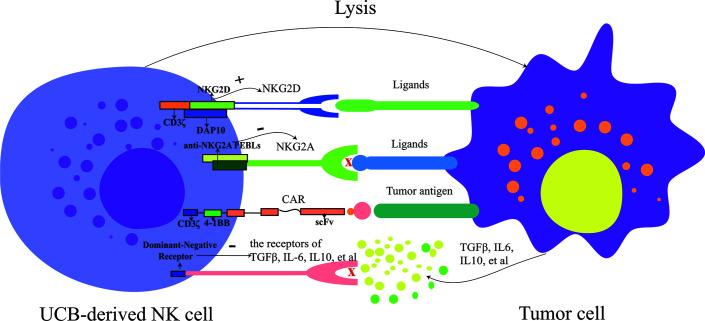
Natural killer (NK) cells are a predominant part of innate immune cells and play a crucial role in anti-cancer immunity. NK cells can kill target cells nonspecifically, and their recognition of target cells is not restricted by the major histocompatibility complex. NK cells also fight against tumor cells independently of antibodies and prior activation. Of note, umbilical cord blood (UCB) is a rich source of NK cells. Immunotherapies based on UCB-derived NK cells are becoming increasingly researched, and the investigations are producing encouraging results. In recent years, non-modified and modified UCB-derived NK cells have been successfully developed to fight against tumor cells. Herein, UCB-derived NK cell-based immunotherapy is a potential strategy for the treatment of cancer in the future. In this review, we focus on discussing the biological characteristics of UCB-derived NK cells and their application prospects in anti-tumor immunotherapy, including the latest preclinical and clinical researches.
自然杀伤 (NK) 细胞是先天免疫细胞的主要组成部分,在抗肿瘤免疫中发挥着关键作用。NK 细胞可以非特异性地杀死靶细胞,其对靶细胞的识别不受主要组织相容性复合体的限制。NK 细胞还可以独立于抗体和预先激活来对抗肿瘤细胞。值得注意的是,脐带血 (UCB) 是 NK 细胞的丰富来源。基于 UCB 衍生 NK 细胞的免疫疗法的研究越来越多,并且这些研究正在产生令人鼓舞的结果。近年来,已经成功开发出未经修饰和修饰的 UCB 衍生 NK 细胞来对抗肿瘤细胞。在此,UCB 衍生 NK 细胞为基础的免疫疗法是未来治疗癌症的一种潜在策略。在这篇综述中,我们重点讨论了 UCB 衍生 NK 细胞的生物学特性及其在抗肿瘤免疫治疗中的应用前景,包括最新的临床前和临床研究。
 Zotero 插件