
一项对患有血友病 A 的狗进行的 AAV 基因治疗的长期研究发现,转导的肝细胞发生了克隆扩增。
A long-term study of AAV gene therapy in dogs with hemophilia A identifies clonal expansions of transduced liver cells.
机构信息
The Raymond G. Perelman Center for Cellular and Molecular Therapeutics, Children's Hospital of Philadelphia, Philadelphia, PA, USA.
Department of Microbiology, Perelman School of Medicine, University of Pennsylvania, Philadelphia, PA, USA.
出版信息
Nat Biotechnol. 2021 Jan;39(1):47-55. doi: 10.1038/s41587-020-0741-7. Epub 2020 Nov 16.
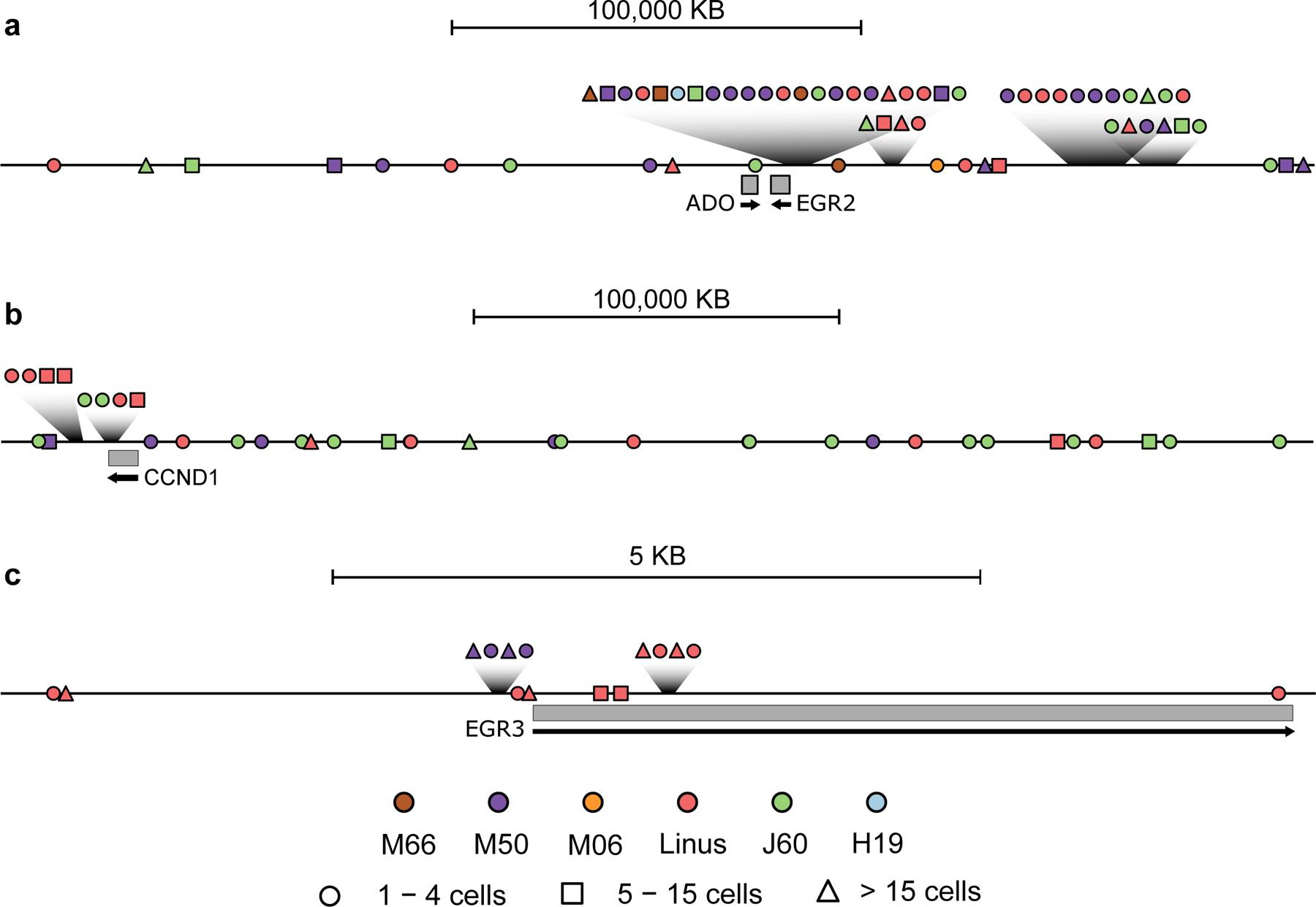
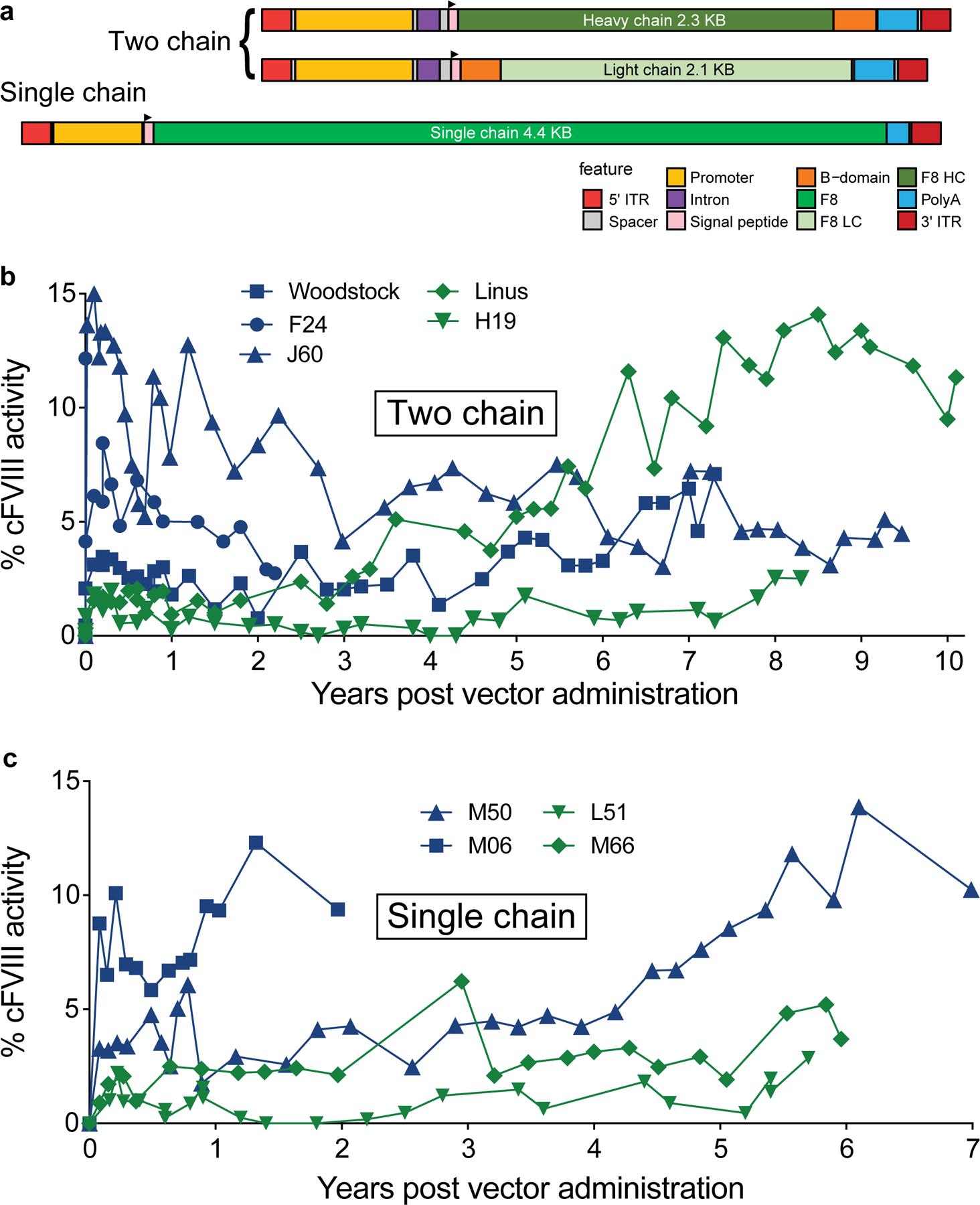
Nine dogs with hemophilia A were treated with adeno-associated viral (AAV) gene therapy and followed for up to 10 years. Administration of AAV8 or AAV9 vectors expressing canine factor VIII (AAV-cFVIII) corrected the FVIII deficiency to 1.9-11.3% of normal FVIII levels. In two of nine dogs, levels of FVIII activity increased gradually starting about 4 years after treatment. None of the dogs showed evidence of tumors or altered liver function. Analysis of integration sites in liver samples from six treated dogs identified 1,741 unique AAV integration events in genomic DNA and expanded cell clones in five dogs, with 44% of the integrations near genes involved in cell growth. All recovered integrated vectors were partially deleted and/or rearranged. Our data suggest that the increase in FVIII protein expression in two dogs may have been due to clonal expansion of cells harboring integrated vectors. These results support the clinical development of liver-directed AAV gene therapy for hemophilia A, while emphasizing the importance of long-term monitoring for potential genotoxicity.
九只患有血友病 A 的狗接受了腺相关病毒(AAV)基因治疗,并进行了长达 10 年的随访。表达犬凝血因子 VIII(AAV-cFVIII)的 AAV8 或 AAV9 载体的给药将 FVIII 缺乏症纠正至正常 FVIII 水平的 1.9-11.3%。在九只狗中,有两只狗的 FVIII 活性水平在治疗后约 4 年开始逐渐升高。没有一只狗出现肿瘤或肝功能改变的迹象。对六只治疗犬的肝组织样本中整合位点的分析在基因组 DNA 中鉴定出 1741 个独特的 AAV 整合事件,并在五只狗中扩增了细胞克隆,其中 44%的整合靠近参与细胞生长的基因。所有回收的整合载体都部分缺失和/或重排。我们的数据表明,两只狗的 FVIII 蛋白表达增加可能是由于携带整合载体的细胞克隆扩增所致。这些结果支持针对血友病 A 的肝脏定向 AAV 基因治疗的临床开发,同时强调了长期监测潜在遗传毒性的重要性。



 Zotero 插件