
蜗牛软组织中对[具体物质1]和[具体物质2]的抗性与不饱和脂肪酸水平相关。
Resistance of to and to Correlates with Unsaturated Fatty Acid Levels in the Snail Soft Tissue.
作者信息
Elias Marian, Hanafi Rasha S, El-Bardicy Samia, Hafez Ebtisam A, El Ridi Rashika
机构信息
Department of Malacology, Theodore Bilharz Research Institute, Giza 12411, Egypt.
Faculty of Science, Cairo University, Giza 12613, Egypt.
出版信息
J Parasitol Res. 2020 Nov 1;2020:8852243. doi: 10.1155/2020/8852243. eCollection 2020.
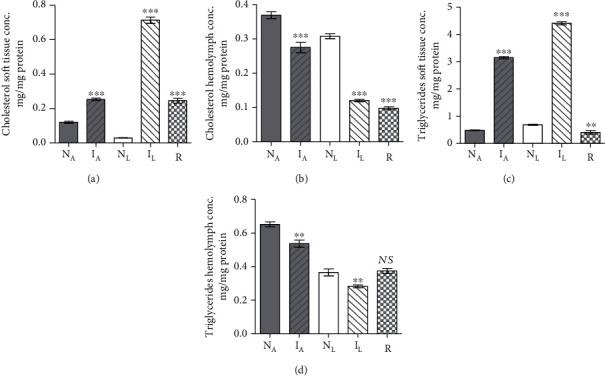
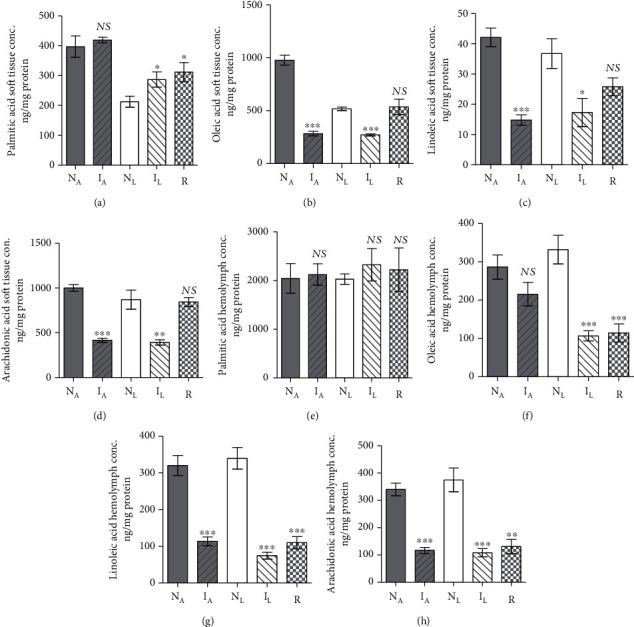
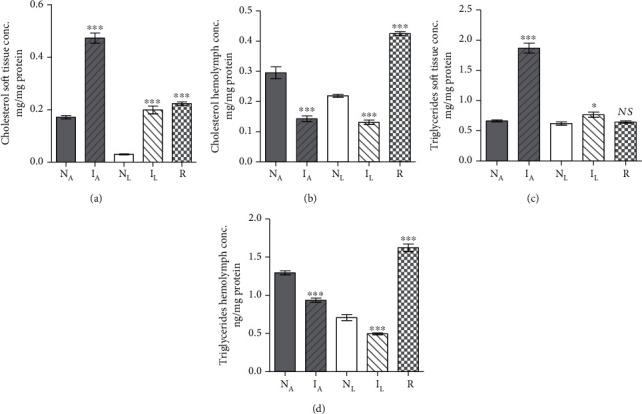
Only a fraction of the and snail community shows patent infection with schistosomes despite continuous exposure to the parasite, indicating that a substantial proportion of snails may resist infection. Accordingly, exterminating the schistosome intermediate snail hosts in transmission foci in habitats that may extend to kilometres is cost-prohibitive and damaging to the ecological equilibrium and quality of water and may be superfluous. It may be more cost effective with risk less ecological damage to focus on discovering the parameters governing snail susceptibility and resistance to schistosome infection. Therefore, laboratory bred and snails were exposed to miracidia of laboratory-maintained and , respectively. Snails were examined for presence or lack of infection association with soft tissue and hemolymph content of proteins, cholesterol, and triglycerides, evaluated using standard biochemical techniques and palmitic, oleic, linoleic, and arachidonic acid, assayed by ultraperformance liquid chromatography-tandem mass spectrometry. Successful schistosome infection of and consistently and reproducibly correlated with snails showing highly significant (up to < 0.0001) decrease in soft tissue and hemolymph content of the monounsaturated fatty acid, oleic acid, and the polyunsaturated fatty acids, linoleic, and arachidonic acids as compared to naïve snails. Snails that resisted twice infection had soft tissue content of oleic, linoleic, and arachidonic acid similar to naïve counterparts. High levels of soft tissue and hemolymph oleic, linoleic, and arachidonic acid content appear to interfere with schistosome development in snails. Diet manipulation directed to eliciting excessive increase of polyunsaturated fatty acids in snails may protect them from infection and interrupt disease transmission in a simple and effective manner.
尽管持续接触寄生虫,但只有一小部分[螺类名称1]和[螺类名称2]螺群显示出明显的血吸虫感染,这表明很大一部分螺可能抵抗感染。因此,在可能延伸数公里的栖息地的传播疫源地消灭血吸虫中间螺宿主成本过高,且会破坏生态平衡和水质,可能是多余的。关注发现控制螺对血吸虫感染易感性和抗性的参数可能更具成本效益,且对生态的破坏风险更小。因此,将实验室饲养的[螺类名称1]和[螺类名称2]螺分别暴露于实验室饲养的[血吸虫名称1]和[血吸虫名称2]的毛蚴。使用标准生化技术评估螺的软组织和血淋巴中蛋白质、胆固醇和甘油三酯的含量,以检测是否存在感染,并通过超高效液相色谱-串联质谱法测定棕榈酸、油酸、亚油酸和花生四烯酸。与未感染的螺相比,[螺类名称1]和[螺类名称2]成功感染血吸虫始终且可重复地与软组织和血淋巴中单不饱和脂肪酸油酸以及多不饱和脂肪酸亚油酸和花生四烯酸含量显著降低(高达<0.0001)相关。抵抗两次感染的螺的软组织中油酸、亚油酸和花生四烯酸含量与未感染的螺相似。软组织和血淋巴中高水平的油酸、亚油酸和花生四烯酸含量似乎会干扰血吸虫在螺体内的发育。旨在引发螺体内多不饱和脂肪酸过度增加的饮食调控可能会以简单有效的方式保护它们免受感染并中断疾病传播。

 Zotero 插件