
完全可吸收聚4-羟基丁酸酯和不可吸收聚丙烯盆底植入物上的体外细菌粘附和生物膜形成
In Vitro Bacterial Adhesion and Biofilm Formation on Fully Absorbable Poly-4-hydroxybutyrate and Nonabsorbable Polypropylene Pelvic Floor Implants.
作者信息
Verhorstert Kim W J, Guler Zeliha, de Boer Leonie, Riool Martijn, Roovers Jan-Paul W R, Zaat Sebastian A J
机构信息
Department of Obstetrics and Gynecology, Amsterdam Reproduction and Development, Amsterdam UMC, University of Amsterdam, Meibergdreef 9, Amsterdam 1105 AZ, The Netherlands.
Department of Medical Microbiology and Infection Prevention, Amsterdam Institute for Infection and Immunity, Amsterdam UMC, University of Amsterdam, Meibergdreef 9, Amsterdam 1105 AZ, The Netherlands.
出版信息
ACS Appl Mater Interfaces. 2020 Dec 2;12(48):53646-53653. doi: 10.1021/acsami.0c14668. Epub 2020 Nov 19.
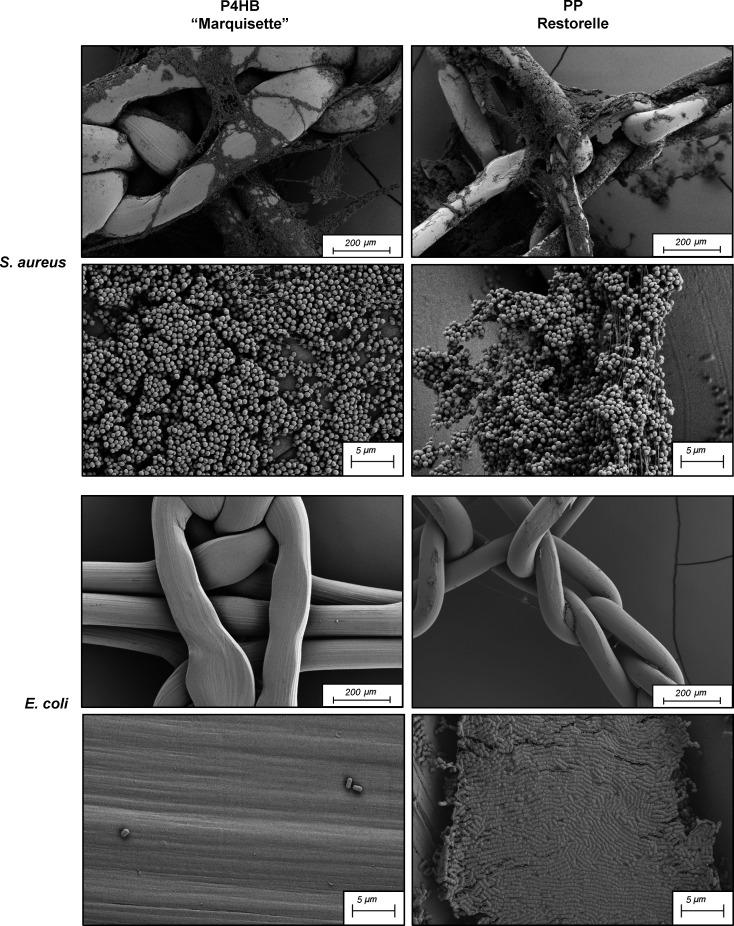
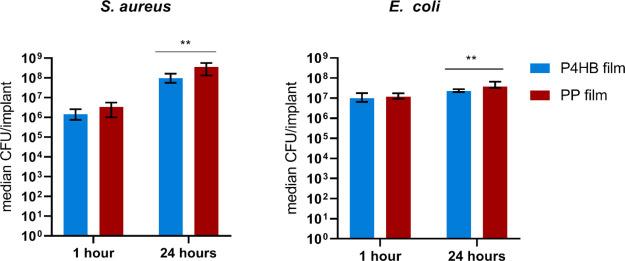
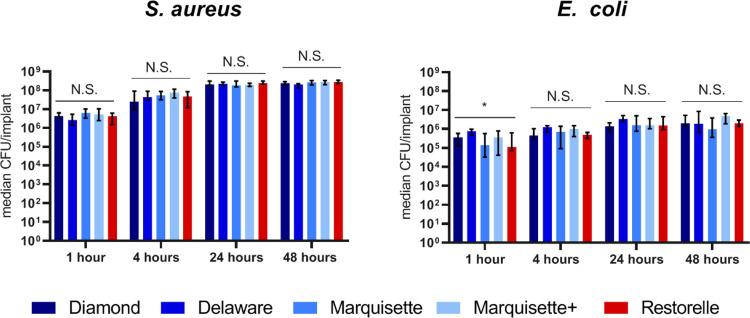
Knitted polypropylene (PP) implants for the correction of pelvic organ prolapse have been associated with complications such as vaginal exposure, infection, and pain. Since certain complications may be linked to bacterial contamination and persistent inflammation, there is a rationale to develop a biocompatible implant that is less prone to bacterial adhesion and biofilm formation. Delayed absorbable materials could meet these requirements and poly-4-hydroxybutyrate (P4HB) might be such a new material for future pelvic floor implants. We studied in vitro bacterial adhesion and biofilm formation on P4HB in comparison to PP. We investigated the influence of both polymers using flat films and compared P4HB and PP implants with different knitting designs. P4HB flat films were demonstrated to be hydrophilic with significantly less and cultured from P4HB films than from hydrophobic PP films after 24 h of incubation. On the implants, a higher number of were cultured after 1 h of incubation from the knitted P4HB implant with the highest density and smallest pore size, compared to other P4HB and PP implants. No differences were observed between the implants for at later time points or for incubation. These results show that in flat films, the polymer influences biofilm formation, demonstrated by a reduced biofilm formation on P4HB compared with PP flat films. In addition, the knitting design may affect bacterial adhesion. Despite certain design and material characteristics that give the knitted P4HB implants a higher surface area, this did not result in more bacterial adhesion and biofilm formation overall. Collectively, these results warrant further (pre)clinical investigations of P4HB pelvic floor implants.
用于矫正盆腔器官脱垂的针织聚丙烯(PP)植入物与诸如阴道暴露、感染和疼痛等并发症相关。由于某些并发症可能与细菌污染和持续性炎症有关,因此有理由开发一种不易发生细菌黏附和生物膜形成的生物相容性植入物。可延迟吸收的材料可以满足这些要求,聚-4-羟基丁酸酯(P4HB)可能是未来盆底植入物的一种新型材料。我们研究了与PP相比,P4HB上的体外细菌黏附和生物膜形成情况。我们使用平膜研究了两种聚合物的影响,并比较了具有不同编织设计的P4HB和PP植入物。P4HB平膜被证明具有亲水性,孵育24小时后,从P4HB膜培养出的细菌明显少于疏水性PP膜。在植入物上,孵育1小时后,与其他P4HB和PP植入物相比,从密度最高且孔径最小的针织P4HB植入物培养出的细菌数量更多。在后期时间点或孵育期间,植入物之间未观察到细菌差异。这些结果表明,在平膜中,聚合物会影响生物膜形成,与PP平膜相比,P4HB上的生物膜形成减少证明了这一点。此外,编织设计可能会影响细菌黏附。尽管某些设计和材料特性使针织P4HB植入物具有更大的表面积,但这并未导致总体上更多的细菌黏附和生物膜形成。总的来说,这些结果值得对P4HB盆底植入物进行进一步的(临床前)临床研究。

 Zotero 插件