
2019年冠状病毒病大流行高峰期对需要手术的创伤和骨科患者的影响:一项回顾性队列研究
The impact of COVID-19 on trauma and orthopaedic patients requiring surgery during the peak of the pandemic: a retrospective cohort study.
作者信息
Mackay Nicola D, Wilding Christopher P, Langley Clare R, Young Jonathan
机构信息
Department of Trauma and Orthopaedics, University Hospital Coventry and Warwickshire, UK.
出版信息
Bone Jt Open. 2020 Sep 1;1(9):520-529. doi: 10.1302/2633-1462.19.BJO-2020-0108.R1. eCollection 2020 Sep.
AIMS
COVID-19 represents one of the greatest global healthcare challenges in a generation. Orthopaedic departments within the UK have shifted care to manage trauma in ways that minimize exposure to COVID-19. As the incidence of COVID-19 decreases, we explore the impact and risk factors of COVID-19 on patient outcomes within our department.
METHODS
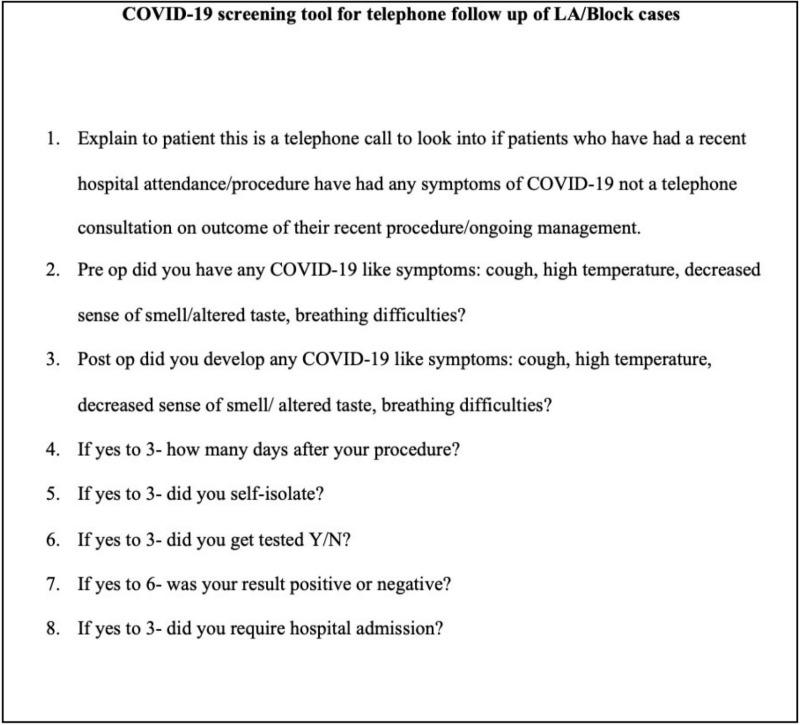
We retrospectively included all patients who underwent a trauma or urgent orthopaedic procedure from 23 March to 23 April 2020. Electronic records were reviewed for COVID-19 swab results and mortality, and patients were screened by telephone a minimum 14 days postoperatively for symptoms of COVID-19.
RESULTS
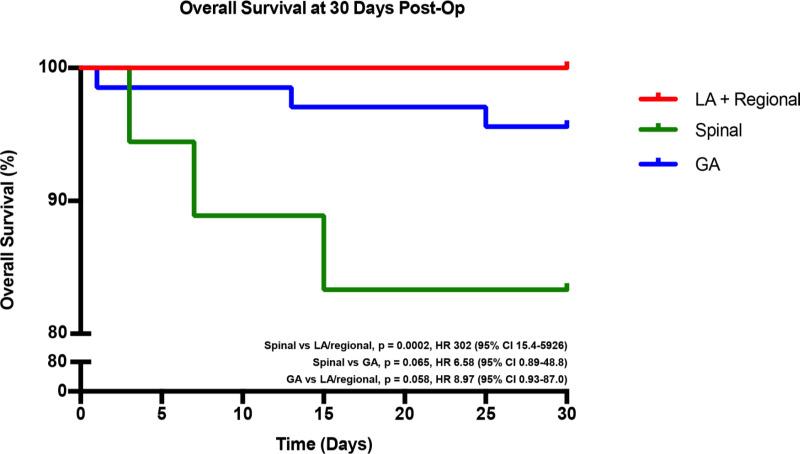
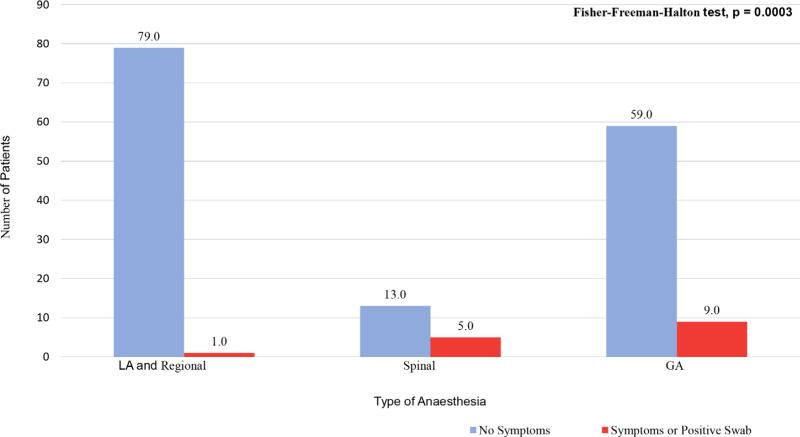
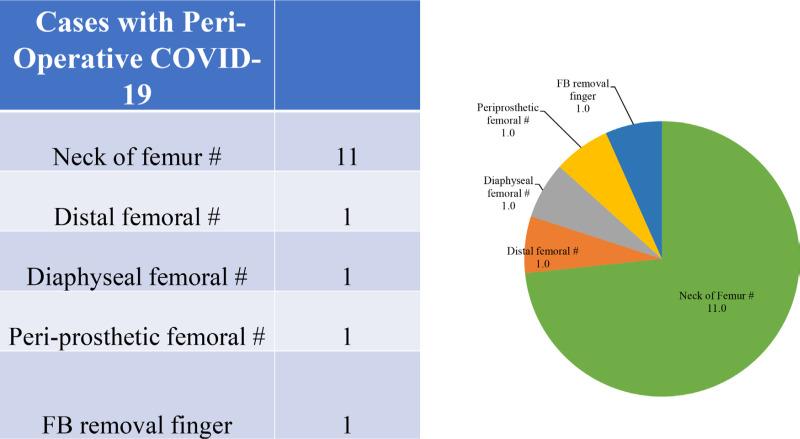
A total of 214 patients had orthopaedic surgical procedures, with 166 included for analysis. Patients undergoing procedures under general or spinal anaesthesia had a higher risk of contracting perioperative COVID-19 compared to regional/local anaesthesia (p = 0.0058 and p = 0.0007, respectively). In all, 15 patients (9%) had a perioperative diagnosis of COVID-19, 14 of whom had fragility fractures; six died within 30 days of their procedure (40%, 30-day mortality). For proximal femoral fractures, our 30-day mortality was 18.2%, compared to 7% in 2019.
CONCLUSION
Based on our findings, patients undergoing procedures under regional or local anaesthesia have minimal risk of developing COVID-19 perioperatively. Those with multiple comorbidities and fragility fractures have a higher morbidity and mortality if they contract COVID-19 perioperatively; therefore, protective care pathways could go some way to mitigate the risk. Our 30-day mortality of proximal femoral fractures was 18.2% during the COVID-19 pandemic in comparison to the annual national average of 6.1% in 2018 and the University Hospital Coventry average of 7% for the same period in 2019, as reported in the National Hip Fracture Database. Patients undergoing procedures under general or spinal anaesthesia at the peak of the pandemic had a higher risk of contracting perioperative COVID-19 compared to regional block or local anaesthesia. We question whether young patients undergoing day-case procedures under regional block or local anaesthesia with minimal comorbidities require fourteen days self-isolation; instead, we advocate that compliance with personal protective equipment, a negative COVID-19 swab three days prior to surgery, and screening questionnaire may be sufficient.Cite this article: 2020;1-9:520-529.
目的
新型冠状病毒肺炎(COVID-19)是一代人以来全球最大的医疗挑战之一。英国的骨科部门已调整护理方式,以尽量减少接触COVID-19的方式来管理创伤。随着COVID-19发病率的下降,我们探讨了COVID-19对我们科室患者预后的影响及风险因素。
方法
我们回顾性纳入了2020年3月23日至4月23日期间接受创伤或紧急骨科手术的所有患者。查阅电子记录以获取COVID-19拭子检测结果和死亡率,并在术后至少14天通过电话对患者进行COVID-19症状筛查。
结果
共有214例患者接受了骨科手术,其中166例纳入分析。与区域/局部麻醉相比,接受全身麻醉或脊髓麻醉手术的患者围手术期感染COVID-19的风险更高(分别为p = 0.0058和p = 0.0007)。总共有15例患者(9%)围手术期诊断为COVID-19,其中14例为脆性骨折;6例在手术后30天内死亡(30天死亡率为40%)。对于股骨近端骨折,我们的30天死亡率为18.2%,而2019年为7%。
结论
根据我们的研究结果,接受区域或局部麻醉手术的患者围手术期感染COVID-19的风险最小。患有多种合并症和脆性骨折的患者如果围手术期感染COVID-19,其发病率和死亡率更高;因此,保护性护理途径在一定程度上可以降低风险。在COVID-19大流行期间,我们股骨近端骨折的30天死亡率为18.2%,而2018年全国年平均水平为6.1%,2019年同期考文垂大学医院平均水平为7%,如国家髋部骨折数据库所报告。在大流行高峰期接受全身麻醉或脊髓麻醉手术的患者与接受区域阻滞或局部麻醉的患者相比,围手术期感染COVID-19的风险更高。我们质疑,合并症极少且接受区域阻滞或局部麻醉的日间手术年轻患者是否需要14天自我隔离;相反,我们主张遵守个人防护设备规定、术前3天COVID-19拭子检测阴性以及筛查问卷可能就足够了。引用本文:2020;1 - 9:520 - 529。

 Zotero 插件