
将具有白细胞介素-2和白细胞介素-15活性的工程化细胞因子靶向至实体瘤的新生血管。
Targeting an engineered cytokine with interleukin-2 and interleukin-15 activity to the neovasculature of solid tumors.
作者信息
Mortensen Michael R, Mock Jacqueline, Bertolini Marco, Stringhini Marco, Catalano Marco, Neri Dario
机构信息
Department of Chemistry and Applied Biosciences (D-CHAB), Institute for Pharmaceutical Sciences (IPW), 8093 Zurich, Switzerland.
出版信息
Oncotarget. 2020 Nov 3;11(44):3972-3983. doi: 10.18632/oncotarget.27772.
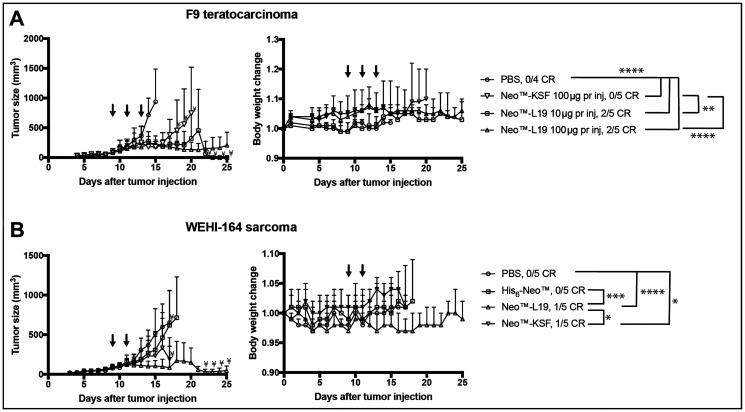
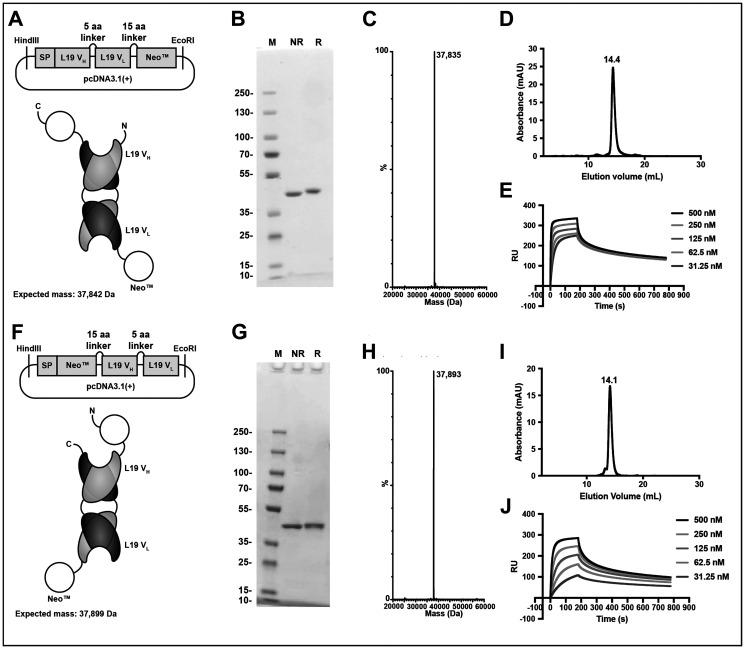
There is a growing interest in the antibody-based delivery of cytokines to the tumor environment as a means to boost the anti-cancer activity of tumor-resident T cells and NK cells. Here, we describe the expression and characterization of fusion proteins, featuring the L19 antibody (specific to the alternatively-spliced EDB domain of fibronectin) and an engineered cytokine with interleukin-2 and interleukin-15 properties. The cytokine moiety was fused either at the N-terminal or at the C-terminal extremity and both fusion proteins showed a selective tumor accumulation in a quantitative biodistribution experiment. The N-terminal fusion inhibited tumor growth in immunocompetent mice bearing F9 carcinomas or WEHI-164 sarcomas when used as single agent. The anticancer activity was compared to the one of the same cytokine payload used as recombinant protein or fused to an anti-hen egg lysozyme antibody, serving as negative control of irrelevant specificity in the mouse. These results indicate that the antibody-based delivery of engineered cytokines to the tumor neovasculature may mediate a potent anticancer activity.
作为增强肿瘤驻留T细胞和NK细胞抗癌活性的一种手段,基于抗体将细胞因子递送至肿瘤环境的研究兴趣日益浓厚。在此,我们描述了融合蛋白的表达和特性,该融合蛋白以L19抗体(对纤连蛋白可变剪接的EDB结构域具有特异性)和具有白细胞介素-2和白细胞介素-15特性的工程化细胞因子为特征。细胞因子部分在N端或C端末端融合,并且在定量生物分布实验中两种融合蛋白均显示出选择性肿瘤蓄积。当用作单一药物时,N端融合蛋白抑制了携带F9癌或WEHI-164肉瘤的免疫活性小鼠的肿瘤生长。将抗癌活性与用作重组蛋白或与抗鸡卵溶菌酶抗体融合的相同细胞因子有效载荷的抗癌活性进行了比较,后者用作小鼠中无关特异性的阴性对照。这些结果表明,基于抗体将工程化细胞因子递送至肿瘤新生血管可能介导强大的抗癌活性。


 Zotero 插件