
2019冠状病毒病大流行期间的全球创伤负担:一项范围综述。
The global burden of trauma during the COVID-19 pandemic: A scoping review.
作者信息
Waseem S, Nayar S K, Hull P, Carrothers A, Rawal J, Chou D, Khanduja V
机构信息
Major Trauma Centre, Cambridge University Hospitals NHS Foundation Trust, Hills Road, Cambridge, CB20QQ, United Kingdom.
Department of Trauma and Orthopaedics, Whittington Hospital, Madgala Avenue, London, N195NF, United Kingdom.
出版信息
J Clin Orthop Trauma. 2021 Jan;12(1):200-207. doi: 10.1016/j.jcot.2020.11.005. Epub 2020 Nov 14.
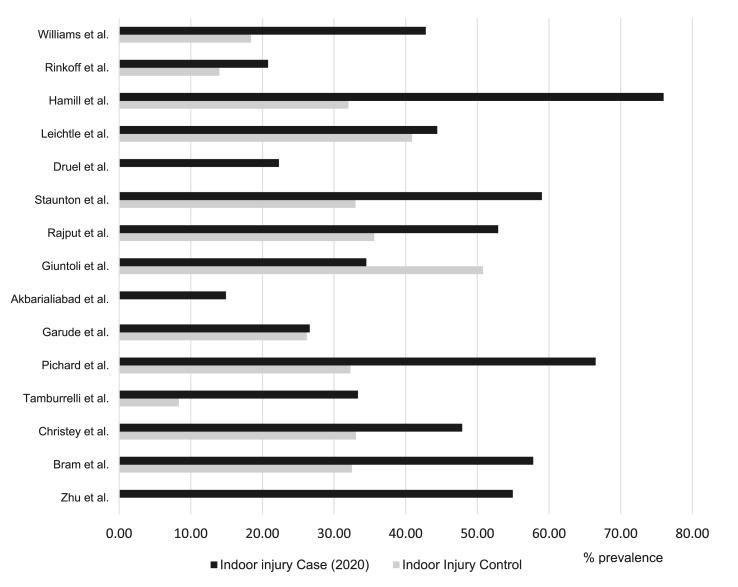
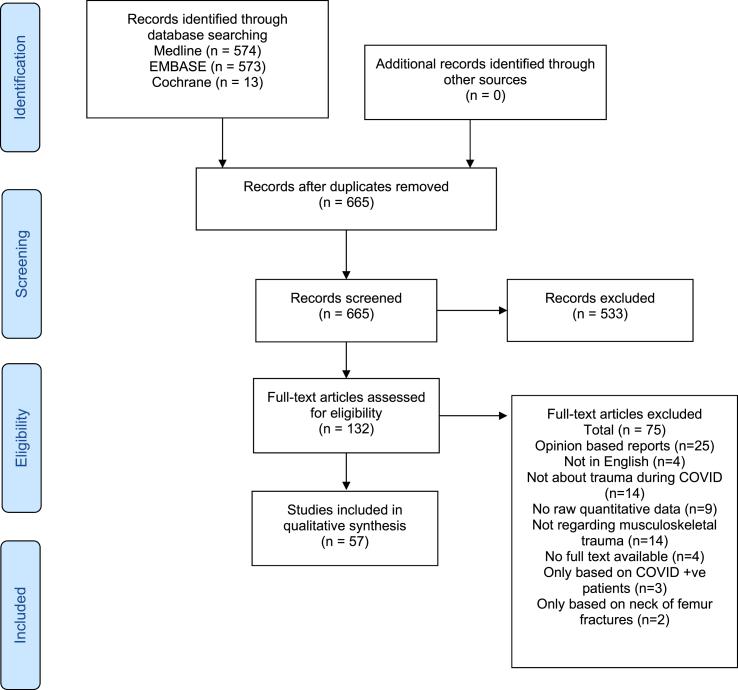
Purpose; The COVID-19 pandemic has necessitated profound adaptations in the delivery of healthcare to manage a rise in critically unwell patients. In an attempt to slow the spread of the virus nationwide lockdown restrictions were introduced. This review aims to scope the literature on the impact of the pandemic and subsequent lockdown on the presentation and management of trauma globally. Methods; A scoping review was conducted in accordance with PRISMA-ScR guidelines. A systematic search was carried out on the Medline, EMBASE and Cochrane databases to identify papers investigating presentation and management of trauma during the COVID-19 pandemic. All studies based on patients admitted with orthopaedic trauma during the COVID-19 pandemic were included. Exclusion criteria were opinion-based reports, reviews, studies that did not provide quantitative data and papers not in English. Results; 665 studies were screened, with 57 meeting the eligibility criteria. Studies reported on the footfall of trauma in the UK, Europe, Asia, USA, Australia and New Zealand. A total of 29,591 patients during the pandemic were considered. Mean age was 43.7 years (range <1-103); 54.8% were male. Reported reductions in trauma footfall ranged from 20.3% to 84.6%, with a higher proportion of trauma occurring secondary to interpersonal violence, deliberate self-harm and falls from a height. A decrease was seen in road traffic collisions, sports injuries and trauma occurring outdoors. There was no significant change in the proportion of patients managed operatively, and the number of trauma patients reported to be COVID-19 positive was low. Conclusion; Whilst the worldwide COVID-19 pandemic has caused a reduction in the number of trauma patients; the services managing trauma have continued to function despite infrastructural, personnel and pathway changes in health systems. The substantial effect of the COVID-19 pandemic on elective orthopaedics is well described, however the contents of this review evidence minimal change in the delivery of effective trauma care despite resource constraints during this global COVID-19 pandemic.
目的;新冠疫情使得医疗服务的提供方式必须做出深刻调整,以应对危重症患者数量的增加。为减缓病毒传播,各国实施了全国性封锁限制措施。本综述旨在梳理全球范围内关于疫情及后续封锁对创伤患者就诊及治疗影响的文献。方法;按照PRISMA - ScR指南进行范围综述。在Medline、EMBASE和Cochrane数据库中进行系统检索,以识别研究新冠疫情期间创伤患者就诊及治疗情况的论文。纳入所有基于新冠疫情期间收治的骨科创伤患者的研究。排除标准为基于观点的报告、综述、未提供定量数据的研究以及非英文论文。结果;共筛选665项研究,其中57项符合纳入标准。这些研究报告了英国、欧洲、亚洲、美国、澳大利亚和新西兰的创伤患者就诊情况。疫情期间共纳入29,591例患者。平均年龄为43.7岁(范围<1 - 103岁);男性占54.8%。报告的创伤患者就诊量降幅在20.3%至84.6%之间,因人际暴力、蓄意自残和高处坠落导致的创伤比例较高。道路交通碰撞伤、运动损伤和户外创伤有所减少。接受手术治疗的患者比例无显著变化,报告的新冠病毒检测呈阳性的创伤患者数量较少。结论;虽然全球新冠疫情导致创伤患者数量减少;但尽管卫生系统在基础设施、人员和流程方面发生了变化,创伤治疗服务仍在继续运转。新冠疫情对择期骨科手术的重大影响已有充分描述,然而本综述的内容表明,尽管在全球新冠疫情期间资源有限,但有效创伤护理的提供情况变化极小。

 Zotero 插件