
哺乳动物生物钟的双反馈环模型,用于对生物钟相位的多输入控制。
A dual-feedback loop model of the mammalian circadian clock for multi-input control of circadian phase.
机构信息
Harvard John A. Paulson School of Engineering and Applied Sciences, Harvard University, Cambridge, Massachusetts, United States of America.
Division of Sleep Medicine, Harvard Medical School, Boston, Massachusetts, United States of America.
出版信息
PLoS Comput Biol. 2020 Nov 23;16(11):e1008459. doi: 10.1371/journal.pcbi.1008459. eCollection 2020 Nov.
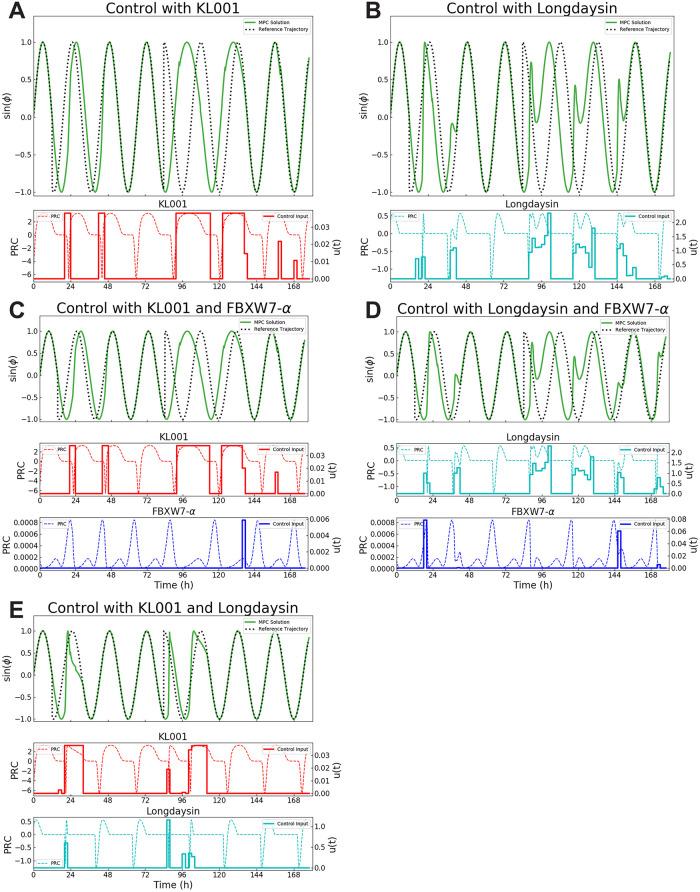
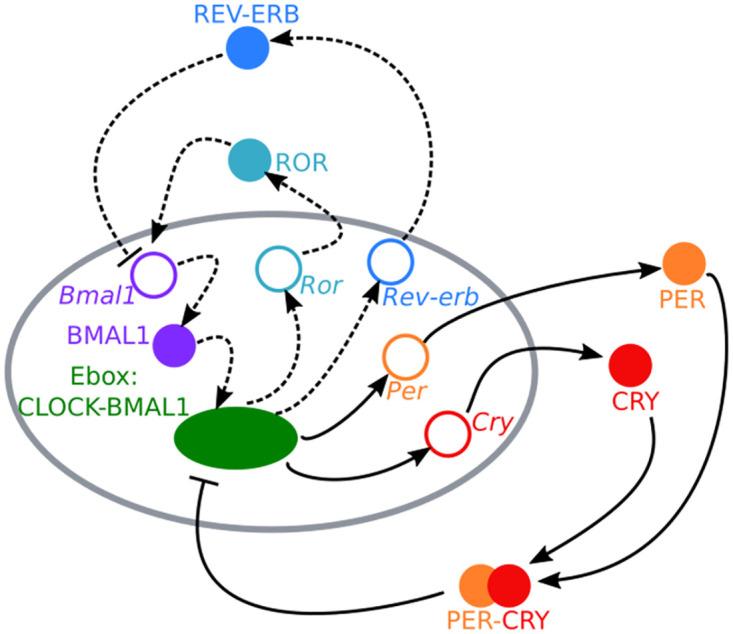
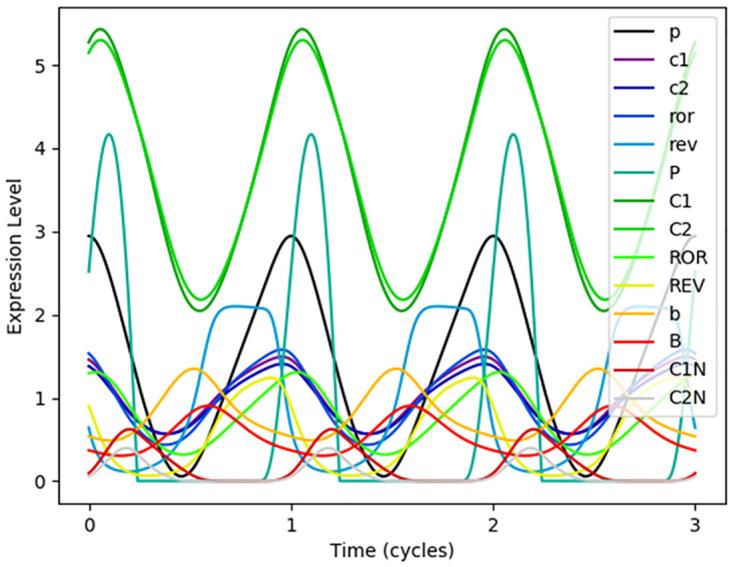
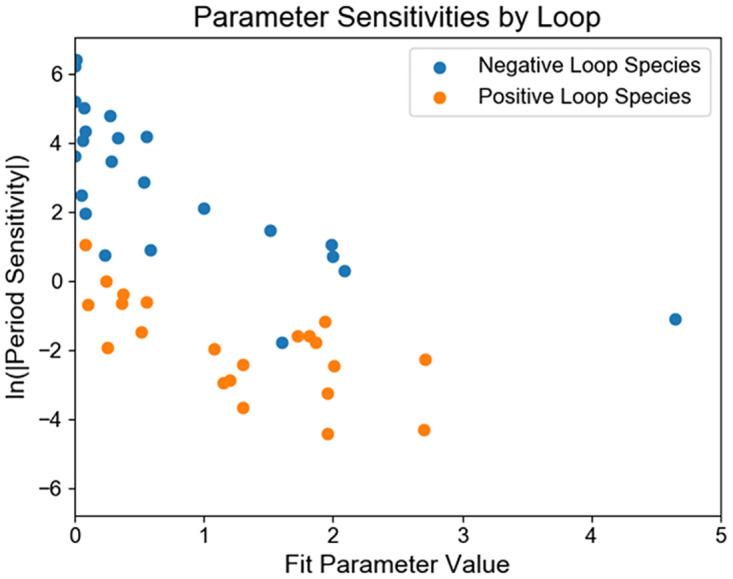
The molecular circadian clock is driven by interlocked transcriptional-translational feedback loops, producing oscillations in the expressions of genes and proteins to coordinate the timing of biological processes throughout the body. Modeling this system gives insight into the underlying processes driving oscillations in an activator-repressor architecture and allows us to make predictions about how to manipulate these oscillations. The knockdown or upregulation of different cellular components using small molecules can disrupt these rhythms, causing a phase shift, and we aim to determine the dosing of such molecules with a model-based control strategy. Mathematical models allow us to predict the phase response of the circadian clock to these interventions and time them appropriately but only if the model has enough physiological detail to describe these responses while maintaining enough simplicity for online optimization. We build a control-relevant, physiologically-based model of the two main feedback loops of the mammalian molecular clock, which provides sufficient detail to consider multi-input control. Our model captures experimentally observed peak to trough ratios, relative abundances, and phase differences in the model species, and we independently validate this model by showing that the in silico model reproduces much of the behavior that is observed in vitro under genetic knockout conditions. Because our model produces valid phase responses, it can be used in a model predictive control algorithm to determine inputs to shift phase. Our model allows us to consider multi-input control through small molecules that act on both feedback loops, and we find that changes to the parameters of the negative feedback loop are much stronger inputs for shifting phase. The strongest inputs predicted by this model provide targets for new experimental small molecules and suggest that the function of the positive feedback loop is to stabilize the oscillations while linking the circadian system to other clock-controlled processes.
分子生物钟由互锁的转录-翻译反馈环驱动,产生基因和蛋白质表达的振荡,以协调全身生物过程的时间。对该系统进行建模可以深入了解驱动激活剂-抑制剂结构中振荡的基本过程,并使我们能够预测如何操纵这些振荡。使用小分子敲低或上调不同的细胞成分会破坏这些节律,导致相位偏移,我们的目标是使用基于模型的控制策略确定这些分子的剂量。数学模型使我们能够预测生物钟对这些干预的相位反应,并适当地对其进行定时,但前提是模型具有足够的生理细节来描述这些反应,同时保持足够的简单性以进行在线优化。我们构建了哺乳动物分子钟的两个主要反馈环的控制相关的、基于生理学的模型,该模型提供了足够的细节来考虑多输入控制。我们的模型捕捉到了实验中观察到的模型物种中的峰值到谷底比、相对丰度和相位差异,并且我们通过证明该模型能够再现遗传敲除条件下体外观察到的大部分行为,独立验证了该模型。由于我们的模型产生了有效的相位响应,因此它可以在模型预测控制算法中用于确定输入以改变相位。我们的模型允许我们通过作用于两个反馈环的小分子考虑多输入控制,并且我们发现负反馈环参数的变化是改变相位的更强输入。该模型预测的最强输入为新的实验小分子提供了目标,并表明正反馈环的功能是稳定振荡,同时将生物钟系统与其他时钟控制的过程联系起来。
 Zotero 插件