
人工湿地处理畜牧业废水中用于农业再利用。
Livestock Wastewater Treatment in Constructed Wetlands for Agriculture Reuse.
机构信息
CIIMAR-Interdisciplinary Centre of Marine and Environmental Research of the University of Porto, Terminal de Cruzeiros do Porto de Leixões, Avenida General Norton de Matos, 4450-208 Matosinhos, Portugal.
Chemistry and Biochemistry Department, Faculty of Sciences, University of Porto, Rua do Campo Alegre 687, 4150-171 Porto, Portugal.
出版信息
Int J Environ Res Public Health. 2020 Nov 19;17(22):8592. doi: 10.3390/ijerph17228592.
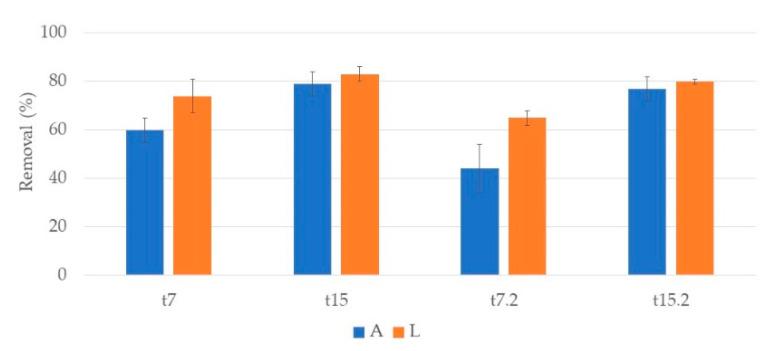
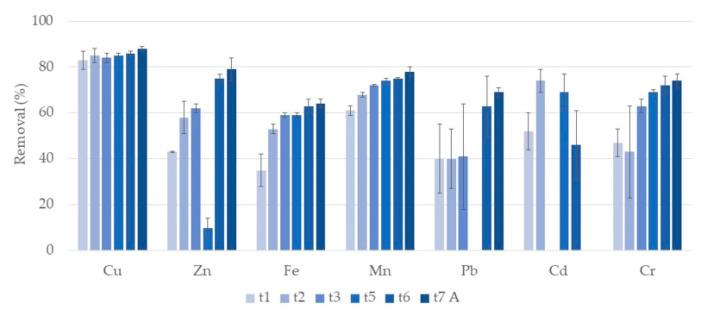
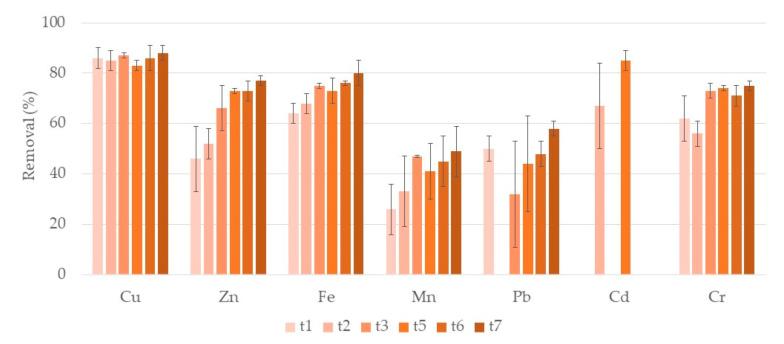
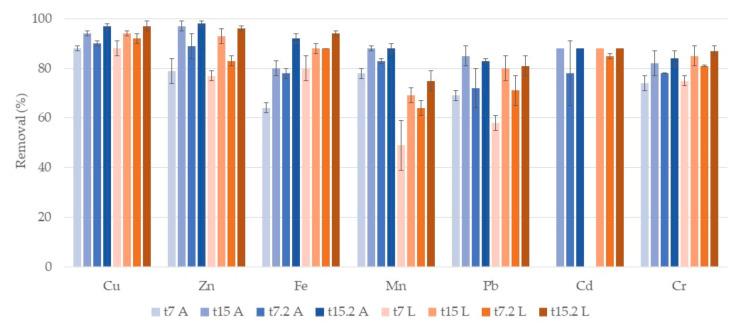
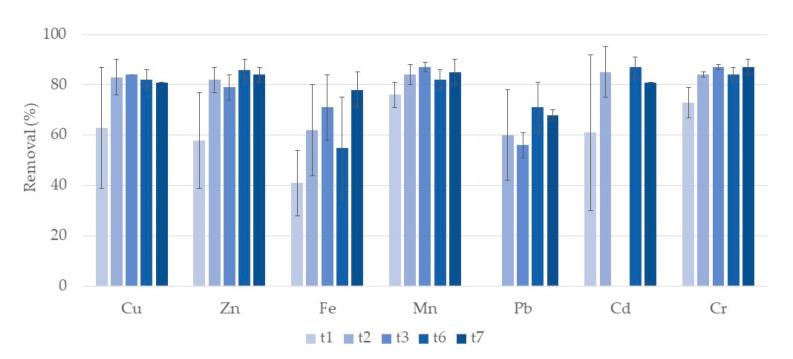
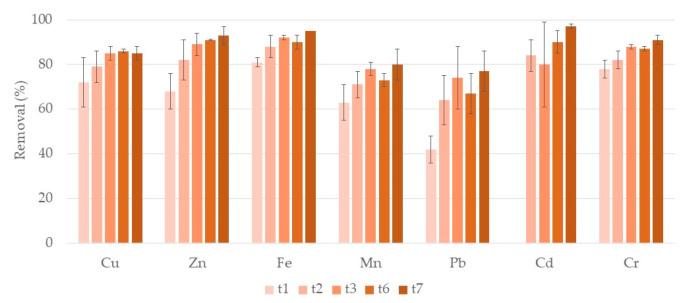
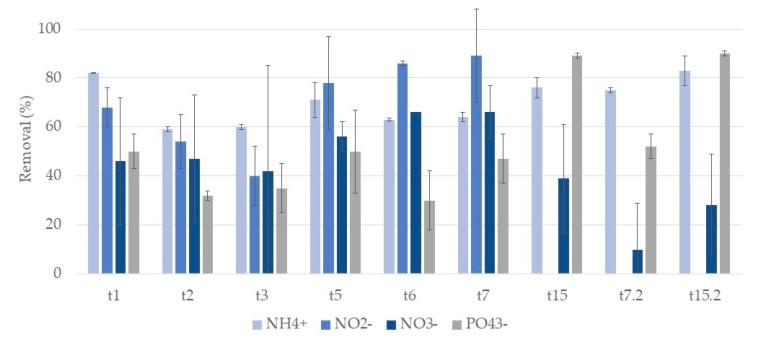
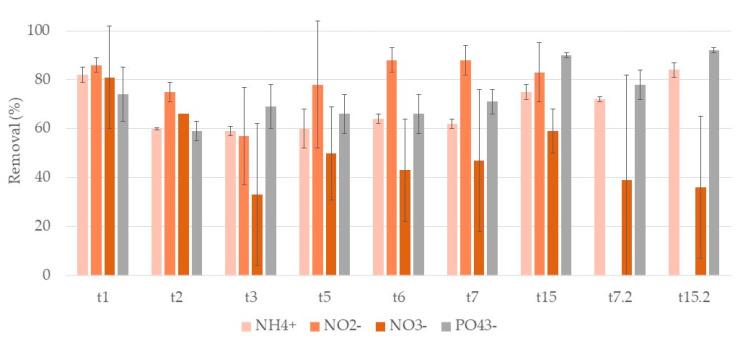
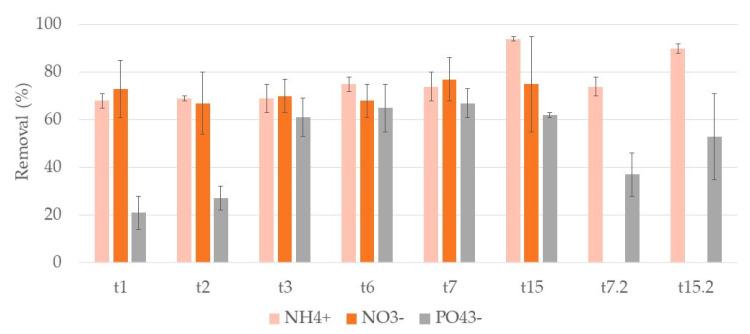
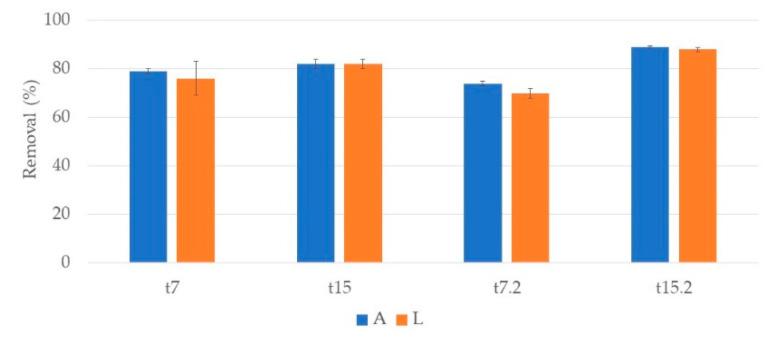
The aim of this study focused on the evaluation of constructed wetlands (CWs) microcosms, on a laboratory scale, for the removal of metals from a pig industry effluent while maintaining effluent organic matter and nutrients levels for its later used as a fertilizer. CWs with different macrophytes ( and ) and different substrates (light expanded clay aggregate and lava rock) were tested. Results showed high removals of metals during CWs treatment, with removal rates reaching >80% for Cd, Cr, Cu, Fe, Mn, and Zn after 2 days of treatment in CWs planted with and >60% in CWs planted with . Significant differences were only found between substrates for Fe and Mn in CWs with . Removal of organic matter (through chemical oxygen demand (COD)) was >77%, with no significant differences between substrates or plants. Removals of ammonium and phosphate ions ranged between 59-84% and 32-92%, respectively, in CWs with and 62-75% and 7-68% in CWs with , with no significant differences between substrates. Overall, CWs showed potential to be efficient in removing toxic contaminants, as metals, while maintaining moderated levels of nutrients, allowing the use of reclaimed water in agriculture, namely as fertilizer. If one aims for a short CW treatment, CW planted with and expanded clay as substrate could be the more suitable choice.
本研究的目的是评估人工湿地(CWs)小试系统对去除养猪废水中金属的效果,同时保持出水有机物和养分水平,以便后续作为肥料使用。试验了不同挺水植物(和)和不同基质(轻质膨胀粘土骨料和火山岩)的 CWs。结果表明,CWs 处理过程中金属去除率高,种植和的 CWs 在处理 2 天后,Cd、Cr、Cu、Fe、Mn 和 Zn 的去除率达到>80%,而种植的 CWs 中去除率>60%。仅在种植的 CWs 中,Fe 和 Mn 在基质之间存在显著差异。有机物(通过化学需氧量(COD))的去除率>77%,基质或植物之间没有显著差异。和的 CWs 中铵和磷酸盐离子的去除率分别在 59-84%和 32-92%之间,而种植的 CWs 中去除率分别在 62-75%和 7-68%之间,基质之间没有显著差异。总体而言,CWs 在去除有毒污染物方面表现出潜力,如金属,同时保持适度的养分水平,允许将再生水用于农业,即作为肥料。如果目标是进行短时间的 CW 处理,种植和使用膨胀粘土作为基质的 CW 可能是更合适的选择。


 Zotero 插件