
孕期及哺乳期女性使用大麻:行为及神经生物学后果
Cannabis Use in Pregnant and Breastfeeding Women: Behavioral and Neurobiological Consequences.
作者信息
Navarrete Francisco, García-Gutiérrez María Salud, Gasparyan Ani, Austrich-Olivares Amaya, Femenía Teresa, Manzanares Jorge
机构信息
Instituto de Neurociencias, Universidad Miguel Hernández-CSIC, Alicante, Spain.
Red Temática de Investigación Cooperativa en Salud (RETICS), Red de Trastornos Adictivos (RTA), Instituto de Salud Carlos III, MICINN and FEDER, Madrid, Spain.
出版信息
Front Psychiatry. 2020 Nov 2;11:586447. doi: 10.3389/fpsyt.2020.586447. eCollection 2020.
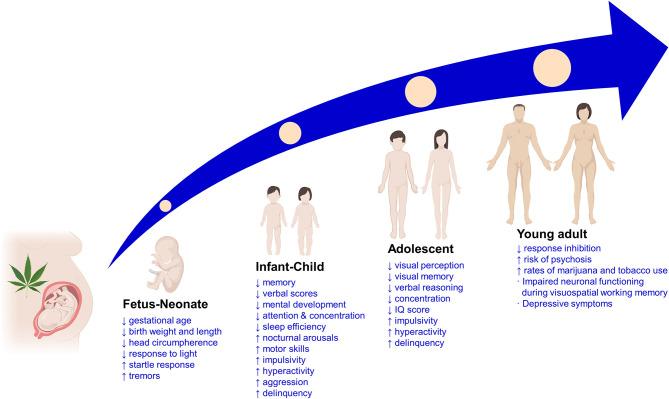
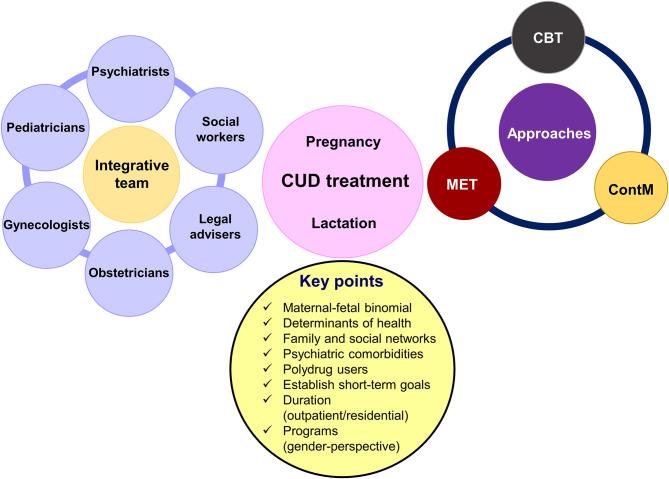
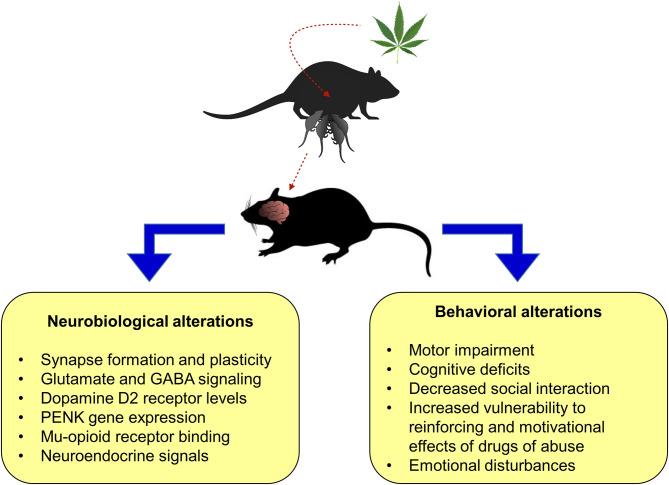
Nowadays, cannabis is the most consumed illicit drug. The global prevalence of the use of cannabis in 2017 was estimated in 188 million of people, 3.8% of worldwide population. Importantly, the legalization of cannabis in different countries, together with the increase in the apparent safety perception, may result in a great variety of health problems. Indeed, an important concern is the increase in cannabis use among pregnant and breastfeeding women, especially since the content of delta9-tetrahidrocannabinol (THC) is currently around 2-fold higher than it was 15-20 years ago. The purpose of this study was to review cannabis use during pregnancy and breastfeeding including epidemiological aspects, therapeutic or preventive strategies, and experimental considerations and results from animal models of perinatal cannabis exposure to analyze the underlying neurobiological mechanisms and to identify new therapeutic approaches. A recent report revealed that among pregnant women aged 15-44, last month cannabis use prevalence was over 4.9%, raising to 8.5% in the 18-25-year-old age range. Pre- and post-natal exposure to cannabis may be associated with critical alterations in the newborn infants that are prolonged throughout childhood and adolescence. Briefly, several reports revealed that perinatal cannabis exposure was associated with low birth weight, reduction in the head circumference, cognitive deficits (attention, learning, and memory), disturbances in emotional response leading to aggressiveness, high impulsivity, or affective disorders, and higher risk to develop a substance use disorder. Furthermore, important neurobiological alterations in different neuromodulatory and neurotransmission systems have been associated with cannabis consumption during pregnancy and lactation. In spite of the evidences pointing out the negative behavioral and neurobiological consequences of cannabis use in pregnant and breastfeeding women, there are still limitations to identify biomarkers that could help to establish preventive or therapeutic approaches. It is difficult to define the direct association specifically with cannabis, avoiding other confusing factors, co-occurrence of other drugs consumption (mainly nicotine and alcohol), lifestyle, or socioeconomic factors. Therefore, it is necessary to progress in the characterization of short- and long-term cannabis exposure-related disturbances.
如今,大麻是消费最为广泛的非法毒品。2017年全球大麻使用流行率估计为1.88亿人,占全球人口的3.8%。重要的是,大麻在不同国家的合法化,以及人们对其明显安全性认知的增加,可能会导致各种各样的健康问题。事实上,一个重要的担忧是孕妇和哺乳期妇女中大麻使用的增加,特别是因为目前δ9 - 四氢大麻酚(THC)的含量比15至20年前高出约两倍。本研究的目的是综述孕期和哺乳期大麻使用情况,包括流行病学方面、治疗或预防策略、实验考量以及围产期大麻暴露动物模型的结果,以分析潜在的神经生物学机制并确定新的治疗方法。最近一份报告显示,在15至44岁的孕妇中,上个月大麻使用流行率超过4.9%,在18至25岁年龄组中升至8.5%。产前和产后接触大麻可能与新生儿的关键改变有关,这些改变会在整个儿童期和青春期持续存在。简而言之,几份报告显示围产期大麻暴露与低出生体重、头围减小、认知缺陷(注意力、学习和记忆)、导致攻击性、高冲动性或情感障碍的情绪反应紊乱以及患物质使用障碍的更高风险有关。此外,孕期和哺乳期大麻消费与不同神经调节和神经传递系统的重要神经生物学改变有关。尽管有证据指出孕妇和哺乳期妇女使用大麻会产生负面行为和神经生物学后果,但在确定有助于制定预防或治疗方法的生物标志物方面仍存在局限性。很难明确界定与大麻的直接关联,同时避免其他混淆因素,如其他药物消费(主要是尼古丁和酒精)的同时存在、生活方式或社会经济因素。因此,有必要在短期和长期大麻暴露相关紊乱的特征描述方面取得进展。

 Zotero 插件