
一种新的 mesonivirus(宜昌病毒)在蚊子中的传播能力及其对代表性黄病毒的干扰。
Transmission competence of a new mesonivirus, Yichang virus, in mosquitoes and its interference with representative flaviviruses.
机构信息
Key Laboratory of Special Pathogens and Biosafety, Wuhan Institute of Virology, Center for Biosafety Mega-Science, Chinese Academy of Sciences, Wuhan, China.
University of Chinese Academy of Sciences, Beijing, China.
出版信息
PLoS Negl Trop Dis. 2020 Nov 30;14(11):e0008920. doi: 10.1371/journal.pntd.0008920. eCollection 2020 Nov.
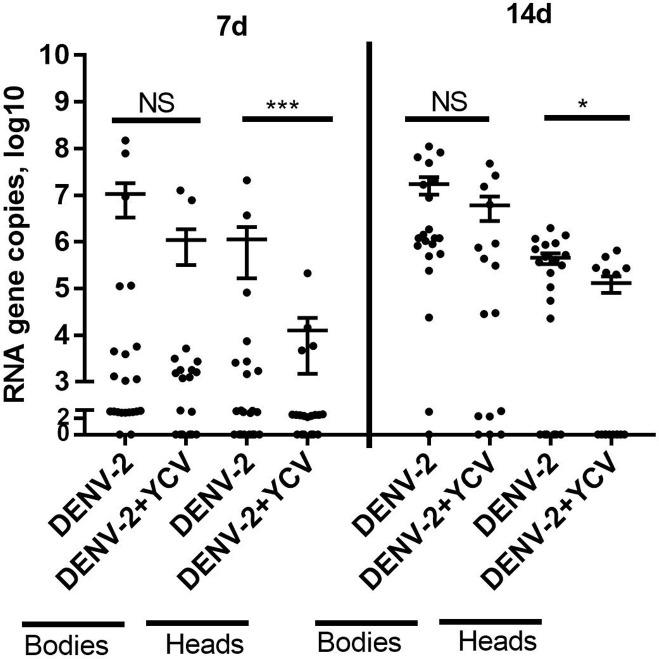
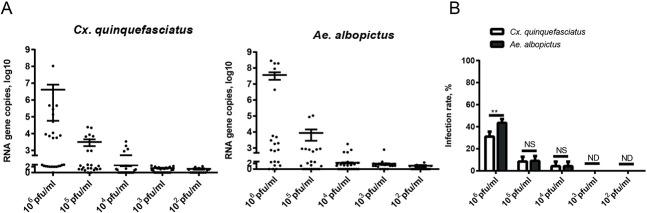
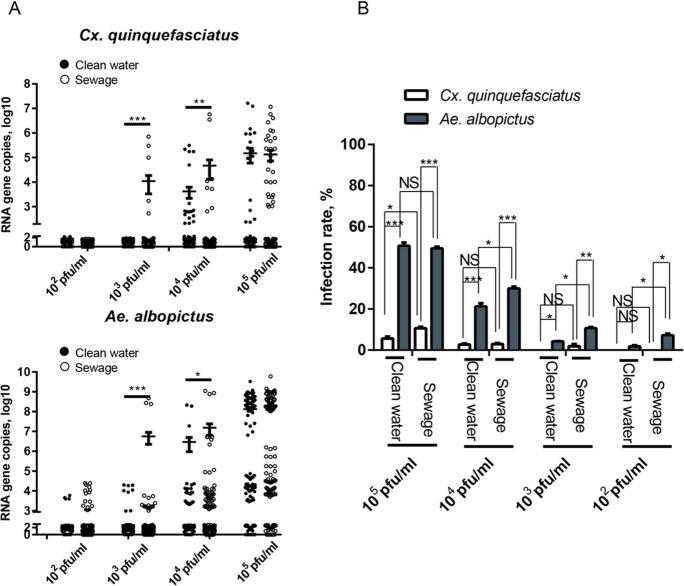
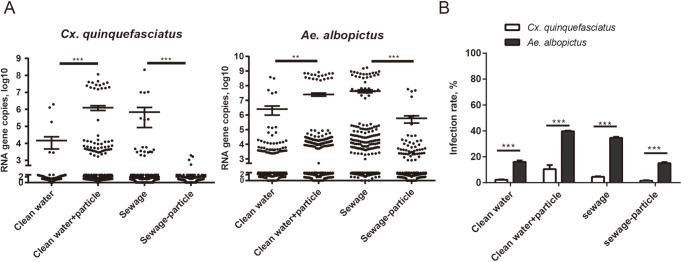
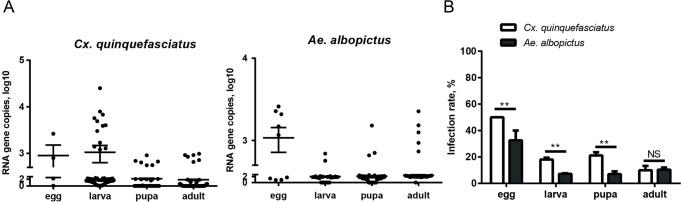
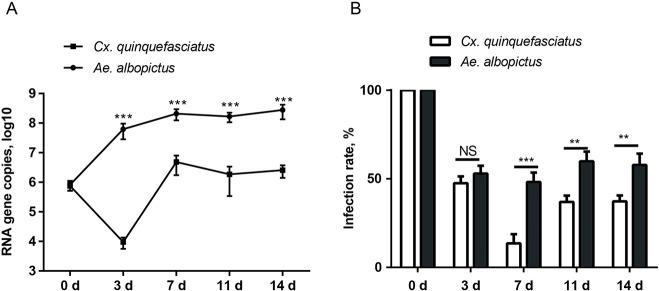
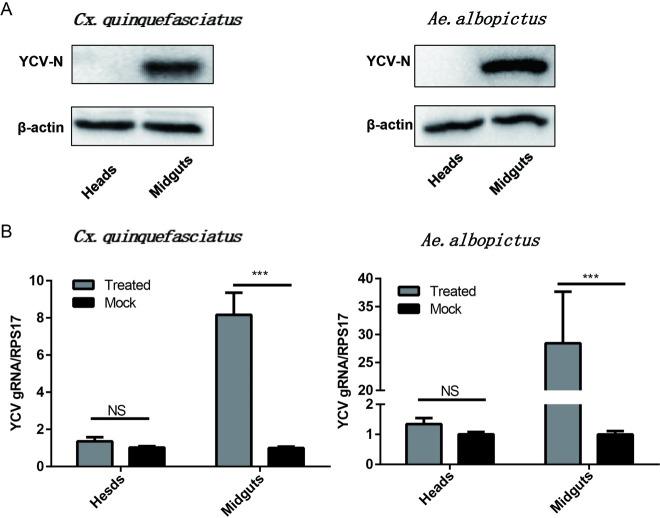
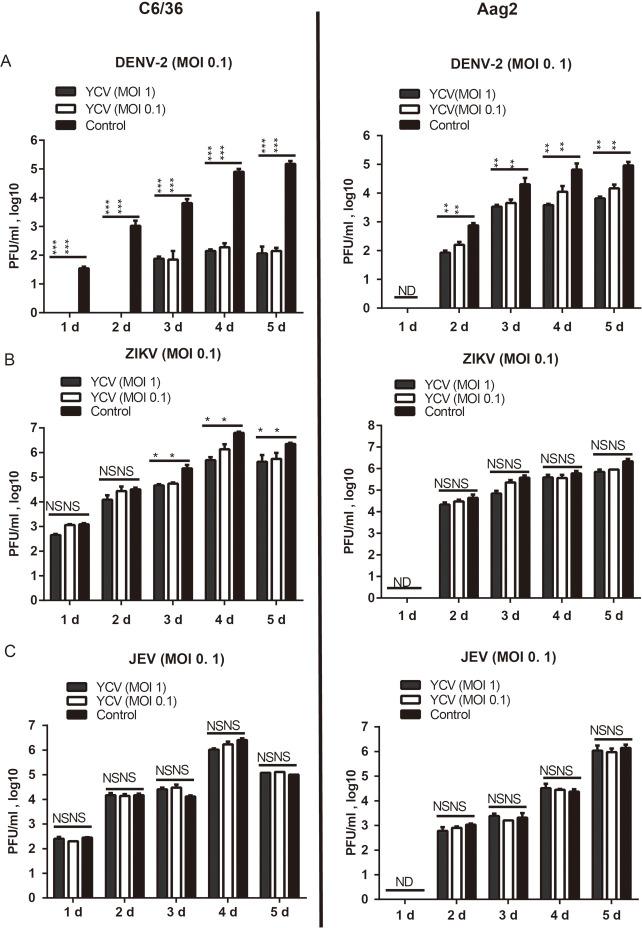
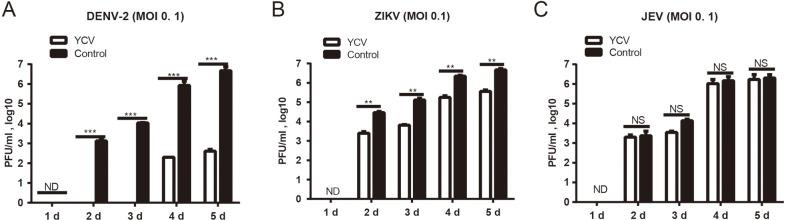
Advances in technology have greatly stimulated the understanding of insect-specific viruses (ISVs). Unfortunately, most of these findings are based on sequencing technology, and laboratory data are scarce on the transmission dynamics of ISVs in nature and the potential effects of these viruses on arboviruses. Mesonivirus is a class of ISVs with a wide geographical distribution. Recently, our laboratory reported the isolation of a novel strain of mesonivirus, Yichang virus (YCV), from Culex mosquitoes, China. In this study, the experimental infection of YCV by the oral route for adult and larvae mosquitoes, and the vertical transmission has been conducted, which suggests that YCV could adopt a mixed-mode transmission. Controlled experiments showed that the infectivity of YCV depends on the mosquito species, virus dose, and infection route. The proliferation curve and tissue distribution of YCV in Cx. quinquefasciatus and Ae. albopictus showed that YCV is more susceptible to Ae. albopictus and is located in the midgut. Furthermore, we also assessed the interference of YCV with flaviviruses both in vitro and in vivo. YCV significantly inhibited the proliferation of DENV-2 and ZIKV, in cell culture, and reduced transmission rate of DENV-2 in Ae. albopictus. Our work provides insights into the transmission of ISVs in different mosquito species during ontogeny and their potential ability to interact with mosquito-borne viruses.
技术的进步极大地促进了对昆虫特异性病毒(ISVs)的理解。不幸的是,这些发现大多数基于测序技术,关于 ISVs 在自然界中的传播动态及其对虫媒病毒的潜在影响,实验室数据却很少。Mesonivirus 是一类具有广泛地理分布的 ISVs。最近,我们实验室从中国的库蚊中分离到一种新型 mesonivirus,即宜昌病毒(YCV)。在本研究中,我们通过口服途径对成蚊和幼虫进行了 YCV 的实验感染和垂直传播,这表明 YCV 可能采用混合传播模式。对照实验表明,YCV 的感染性取决于蚊种、病毒剂量和感染途径。YCV 在 Cx. quinquefasciatus 和 Ae. albopictus 中的增殖曲线和组织分布表明,YCV 对 Ae. albopictus 更易感,位于中肠。此外,我们还评估了 YCV 在体外和体内对黄病毒的干扰作用。YCV 显著抑制了 DENV-2 和 ZIKV 在细胞培养中的增殖,并降低了 DENV-2 在 Ae. albopictus 中的传播率。我们的工作深入了解了 ISVs 在不同蚊种发育过程中的传播及其与蚊媒病毒相互作用的潜在能力。
 Zotero 插件