
阿尔茨海默病大脑中失调的Wnt信号传导
Dysregulated Wnt Signalling in the Alzheimer's Brain.
作者信息
Aghaizu Nozie D, Jin Hanqing, Whiting Paul J
机构信息
UK Dementia Research Institute at University College London, Cruciform Building, Gower Street, London WC1E 6BT, UK.
ARUK Drug Discovery Institute (DDI), University College London, Cruciform Building, Gower Street, London WC1E 6BT, UK.
出版信息
Brain Sci. 2020 Nov 24;10(12):902. doi: 10.3390/brainsci10120902.
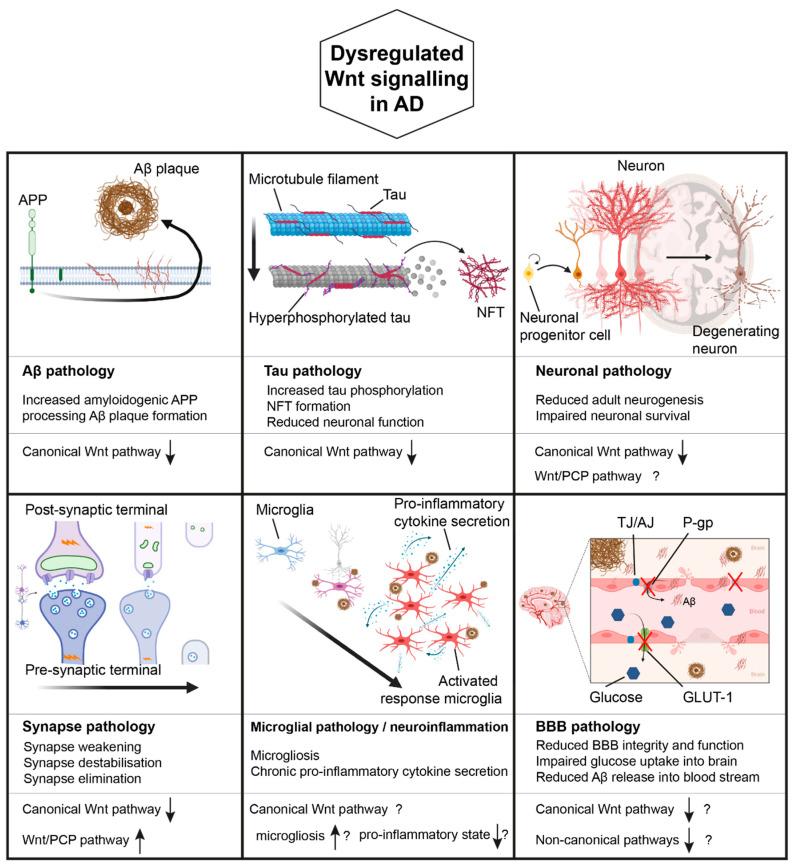
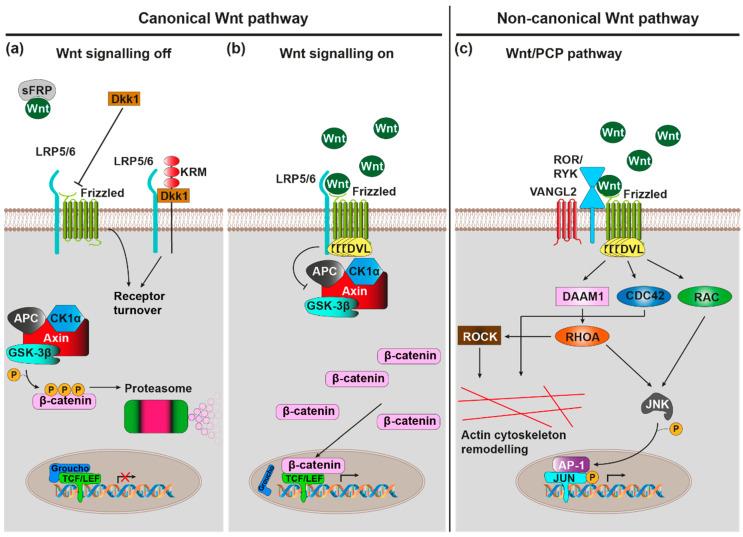
The Wnt signalling system is essential for both the developing and adult central nervous system. It regulates numerous cellular functions ranging from neurogenesis to blood brain barrier biology. Dysregulated Wnt signalling can thus have significant consequences for normal brain function, which is becoming increasingly clear in Alzheimer's disease (AD), an age-related neurodegenerative disorder that is the most prevalent form of dementia. AD exhibits a range of pathophysiological manifestations including aberrant amyloid precursor protein processing, tau pathology, synapse loss, neuroinflammation and blood brain barrier breakdown, which have been associated to a greater or lesser degree with abnormal Wnt signalling. Here we provide a comprehensive overview of the role of Wnt signalling in the CNS, and the research that implicates dysregulated Wnt signalling in the ageing brain and in AD pathogenesis. We also discuss the opportunities for therapeutic intervention in AD via modulation of the Wnt signalling pathway, and highlight some of the challenges and the gaps in our current understanding that need to be met to enable that goal.
Wnt信号系统对于发育中的和成年的中枢神经系统都至关重要。它调节从神经发生到血脑屏障生物学等众多细胞功能。因此,失调的Wnt信号可能对正常脑功能产生重大影响,这在阿尔茨海默病(AD)中越来越明显,AD是一种与年龄相关的神经退行性疾病,是痴呆最常见的形式。AD表现出一系列病理生理表现,包括异常的淀粉样前体蛋白加工、tau病理、突触丧失、神经炎症和血脑屏障破坏,这些在不同程度上都与异常的Wnt信号有关。在这里,我们全面概述了Wnt信号在中枢神经系统中的作用,以及将失调的Wnt信号与衰老大脑和AD发病机制联系起来的研究。我们还讨论了通过调节Wnt信号通路对AD进行治疗干预的机会,并强调了当前理解中为实现这一目标需要克服的一些挑战和差距。
 Zotero 插件