
布鲁塞尔菊苣/菊苣苣苣烯类倍半萜在健康人体中的低口服生物利用度和部分肠道微生物和 II 相代谢。
Low Oral Bioavailability and Partial Gut Microbiotic and Phase II Metabolism of Brussels/Witloof Chicory Sesquiterpene Lactones in Healthy Humans.
机构信息
Department of Nutrition, School of Public Health, Sun Yat-sen University (Northern Campus), Guangzhou 510080, China.
Guangdong Provincial Key Laboratory of Food, Nutrition and Health, Guangzhou 510080, China.
出版信息
Nutrients. 2020 Nov 28;12(12):3675. doi: 10.3390/nu12123675.
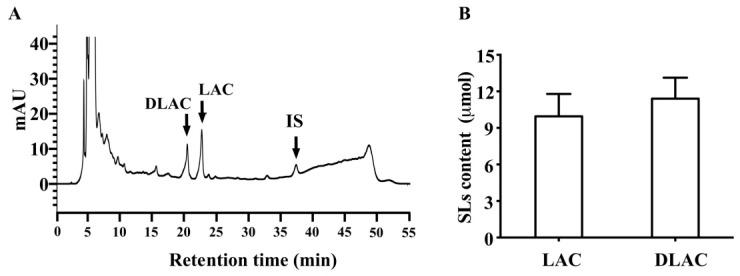
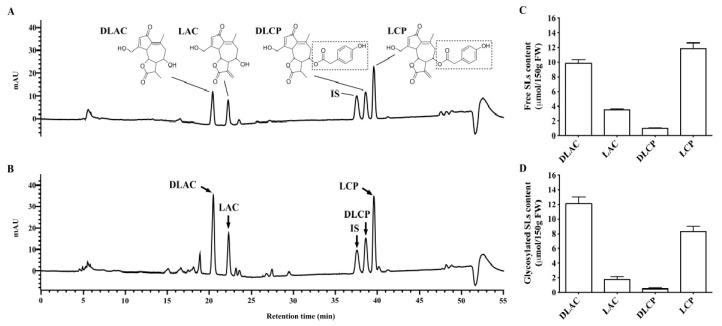
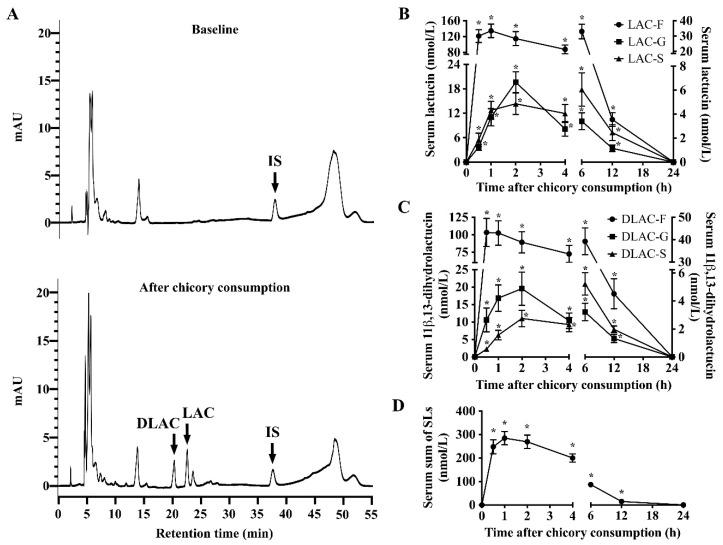
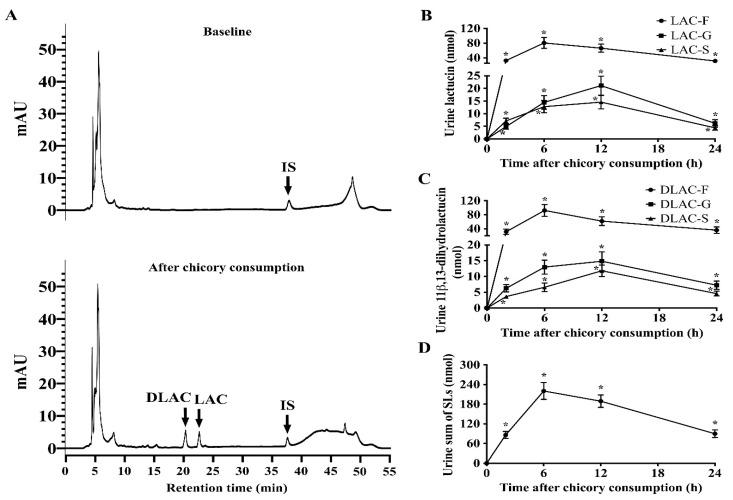
Free and glycosylated sesquiterpene lactones (SLs), which are abundant in leafy vegetables including Brussels/witloof chicory, possess health-promoting effects in vivo. However, the pharmacokinetics of dietary source of SLs remain largely unknown. In this open-label and single-dose trial, sixteen healthy volunteers consumed 150 g of Brussels/witloof chicory juice containing 48.77 μmol SLs in 5 min. Blood, urine, and fecal samples were collected before and after chicory consumption in 24 h. No SLs were detected in the serum, urine, and fecal samples before chicory consumption in all of the participants. Chicory consumption increased lactucin, 11β,13-dihydrolactucin, and their glucuronide/sulfate conjugates, rather than lactucopicrin and 11β,13-dihydrolactucopicrin, as well as glycosylated SLs in biological samples. The peak concentration of total SLs in serum reached 284.46 nmol/L at 1 h, while, in urine, this peak was 220.3 nmol between 2 and 6 h. The recovery of total SLs in blood, urine, and feces was 7.03%, 1.13%, and 43.76% of the ingested dose, respectively. Human fecal suspensions with intestinal microbiota degraded glycosylated SLs in chicory, and converted lactucopicrin and 11β,13-dihydrolactucopicrin to lactucin and 11β,13-dihydrolactucin, respectively. Collectively, Brussels/witloof chicory SLs are poorly bioavailable and they undergo partial gut microbial and phase II metabolism in humans.
游离态和糖苷结合态的倍半萜内酯(SLs)在包括球茎甘蓝/菊苣在内的绿叶蔬菜中含量丰富,具有体内促进健康的作用。然而,膳食来源的 SLs 的药代动力学仍知之甚少。在这项开放标签和单剂量试验中,16 名健康志愿者在 5 分钟内饮用了 150 克含有 48.77 μmol SLs 的球茎甘蓝/菊苣汁。在 24 小时内,在菊苣消费前后收集了血液、尿液和粪便样本。在所有参与者的菊苣消费前的血清、尿液和粪便样本中均未检测到 SLs。菊苣消费增加了乳香内酯、11β,13-二氢乳香内酯及其葡萄糖醛酸/硫酸盐缀合物,而不是乳香苦内酯和 11β,13-二氢乳香苦内酯,以及生物样本中的糖苷结合态 SLs。血清中总 SLs 的峰值浓度在 1 小时时达到 284.46 nmol/L,而在尿液中,该峰值在 2 至 6 小时之间为 220.3 nmol/L。总 SLs 在血液、尿液和粪便中的回收率分别为摄入剂量的 7.03%、1.13%和 43.76%。含有肠道微生物群的人粪便悬浮液可降解菊苣中的糖苷结合态 SLs,并将乳香苦内酯和 11β,13-二氢乳香苦内酯分别转化为乳香内酯和 11β,13-二氢乳香内酯。总之,球茎甘蓝/菊苣 SLs 的生物利用度较差,并且在人体中会经历部分肠道微生物和 II 相代谢。
 Zotero 插件