
血红素加氧酶-1对炎症和免疫反应的调节作用:对细胞内病原体感染的影响
Modulation of Inflammation and Immune Responses by Heme Oxygenase-1: Implications for Infection with Intracellular Pathogens.
作者信息
Costa Diego L, Amaral Eduardo P, Andrade Bruno B, Sher Alan
机构信息
Departamento de Bioquímica e Imunologia, Faculdade de Medicina de Ribeirão Preto, Universidade de São Paulo, Ribeirão Preto 14049-900, São Paulo, Brazil.
Immunobiology Section, Laboratory of Parasitic Diseases, National Institute of Allergy and Infectious Diseases, National Institutes of Health, Bethesda, MD 20892, USA.
出版信息
Antioxidants (Basel). 2020 Nov 30;9(12):1205. doi: 10.3390/antiox9121205.
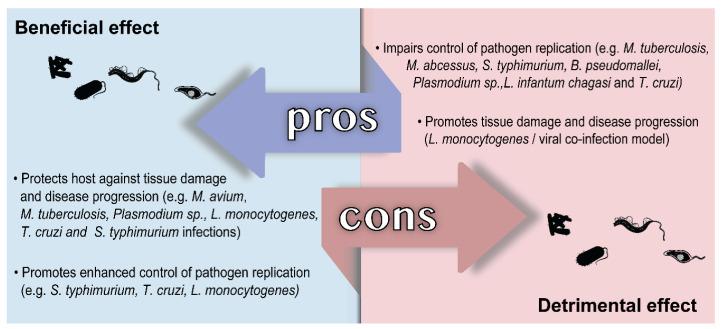
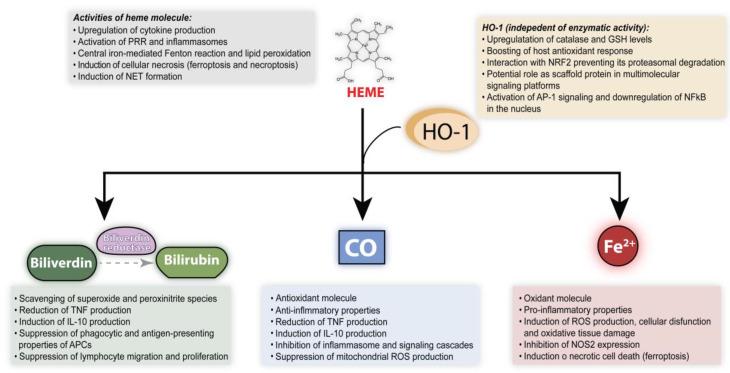
Heme oxygenase-1 (HO-1) catalyzes the degradation of heme molecules releasing equimolar amounts of biliverdin, iron and carbon monoxide. Its expression is induced in response to stress signals such as reactive oxygen species and inflammatory mediators with antioxidant, anti-inflammatory and immunosuppressive consequences for the host. Interestingly, several intracellular pathogens responsible for major human diseases have been shown to be powerful inducers of HO-1 expression in both host cells and in vivo. Studies have shown that this HO-1 response can be either host detrimental by impairing pathogen control or host beneficial by limiting infection induced inflammation and tissue pathology. These properties make HO-1 an attractive target for host-directed therapy (HDT) of the diseases in question, many of which have been difficult to control using conventional antibiotic approaches. Here we review the mechanisms by which HO-1 expression is induced and how the enzyme regulates inflammatory and immune responses during infection with a number of different intracellular bacterial and protozoan pathogens highlighting mechanistic commonalities and differences with the goal of identifying targets for disease intervention.
血红素加氧酶-1(HO-1)催化血红素分子降解,释放等摩尔量的胆绿素、铁和一氧化碳。其表达是对诸如活性氧和炎症介质等应激信号的响应,对宿主具有抗氧化、抗炎和免疫抑制作用。有趣的是,几种导致人类重大疾病的细胞内病原体已被证明是宿主细胞和体内HO-1表达的强大诱导剂。研究表明,这种HO-1反应可能通过损害病原体控制对宿主有害,也可能通过限制感染诱导的炎症和组织病理学对宿主有益。这些特性使HO-1成为针对上述疾病的宿主导向疗法(HDT)的一个有吸引力的靶点,其中许多疾病使用传统抗生素方法难以控制。在这里,我们综述了HO-1表达被诱导的机制,以及该酶在多种不同细胞内细菌和原生动物病原体感染期间如何调节炎症和免疫反应,突出机制的共性和差异,目标是确定疾病干预靶点。

 Zotero 插件