
深入分析小麦条锈菌侵染小麦时的全外显子组,揭示其效应子功能。
In-depth secretome analysis of Puccinia striiformis f. sp. tritici in infected wheat uncovers effector functions.
机构信息
Middle East Technical University, Biotechnology Program, Ankara 06800, Turkey.
Division of Plant Sciences, Research School of Biology, The Australian National University, Canberra, Australian Capital Territory 2601, Australia.
出版信息
Biosci Rep. 2020 Dec 23;40(12). doi: 10.1042/BSR20201188.
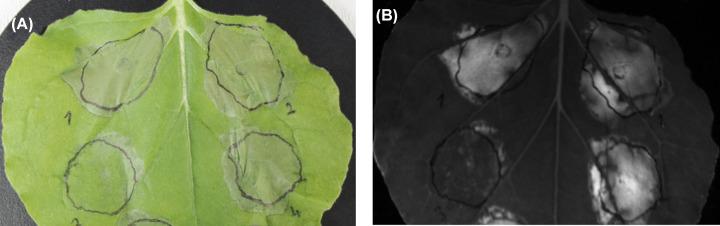
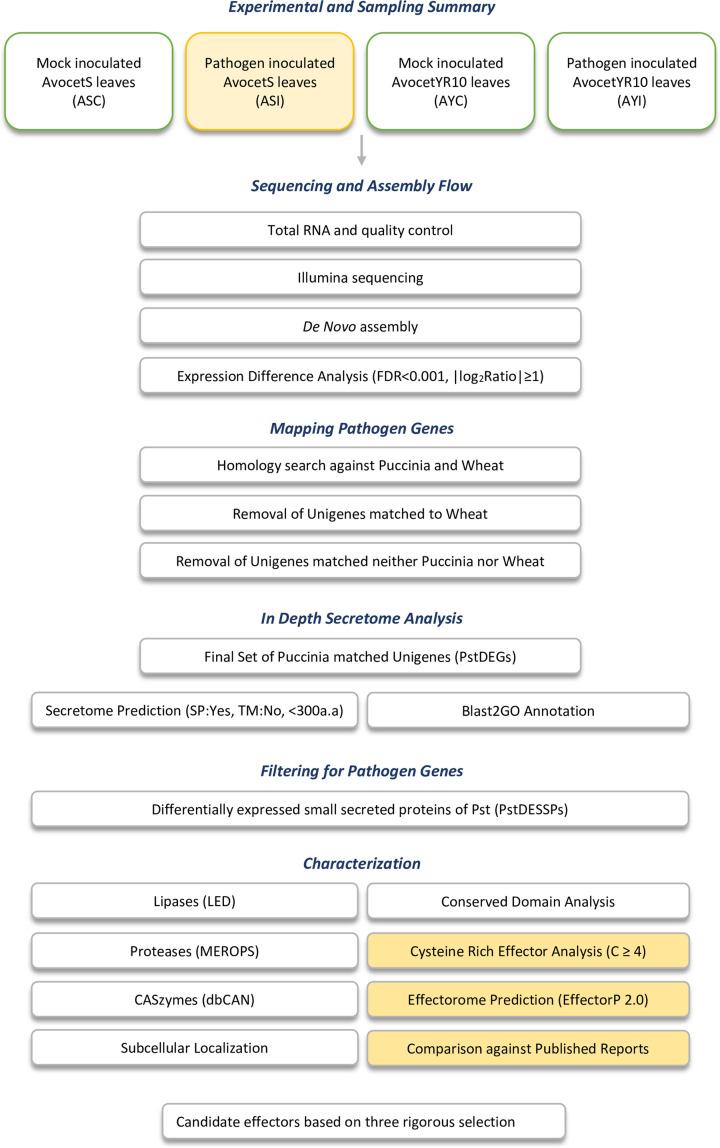
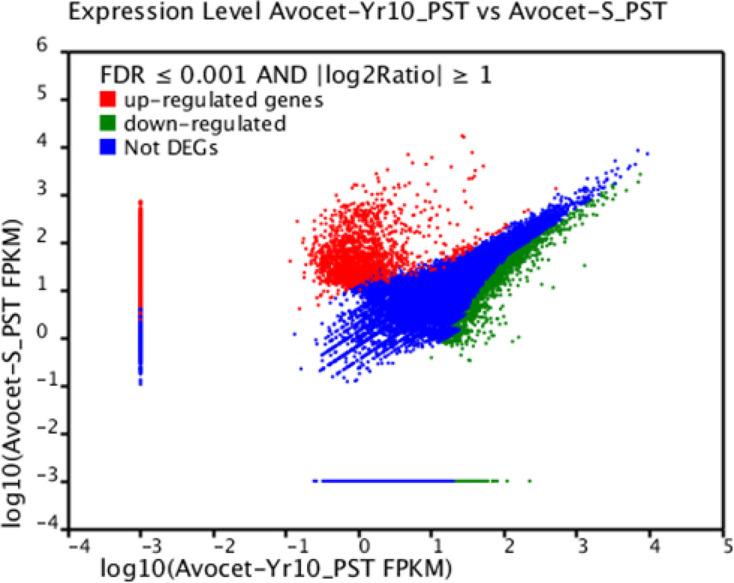
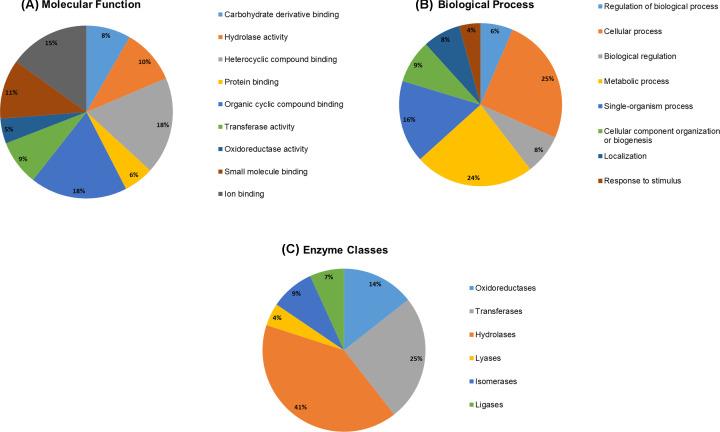
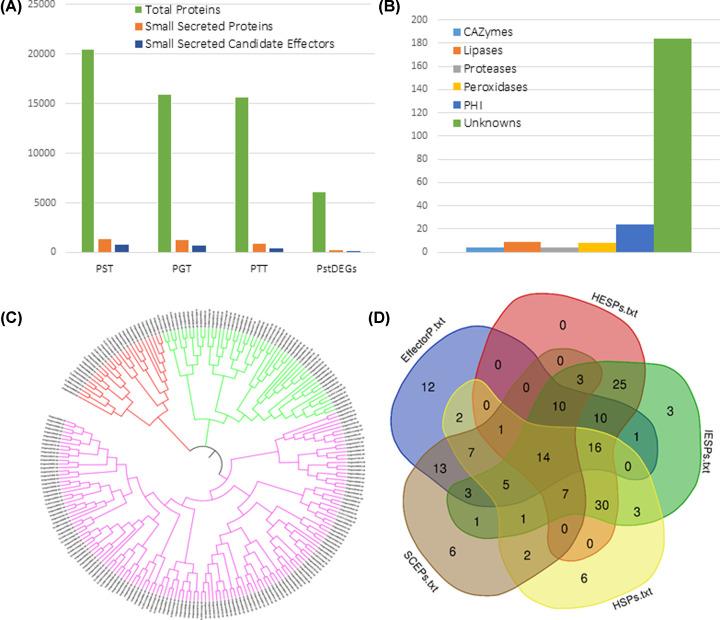
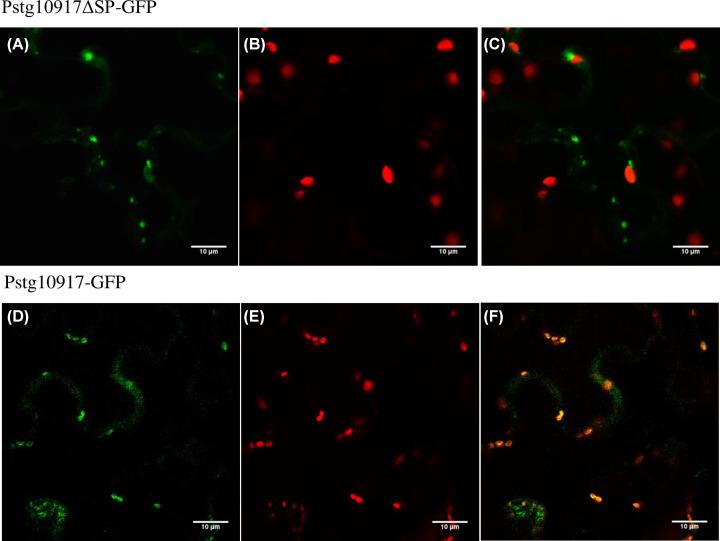
The importance of wheat yellow rust disease, caused by Puccinia striiformis f. sp. tritici (Pst), has increased substantially due to the emergence of aggressive new Pst races in the last couple of decades. In an era of escalating human populations and climate change, it is vital to understand the infection mechanism of Pst in order to develop better strategies to combat wheat yellow disease. The present study focuses on the identification of small secreted proteins (SSPs) and candidate-secreted effector proteins (CSEPs) that are used by the pathogen to support infection and control disease development. We generated de novo assembled transcriptomes of Pst collected from wheat fields in central Anatolia. We inoculated both susceptible and resistant seedlings with Pst and analyzed haustoria formation. At 10 days post-inoculation (dpi), we analyzed the transcriptomes and identified 10550 Differentially Expressed Unigenes (DEGs), of which 6072 were Pst-mapped. Among those Pst-related genes, 227 were predicted as PstSSPs. In silico characterization was performed using an approach combining the transcriptomic data and data mining results to provide a reliable list to narrow down the ever-expanding repertoire of predicted effectorome. The comprehensive analysis detected 14 Differentially Expressed Small-Secreted Proteins (DESSPs) that overlapped with the genes in available literature data to serve as the best CSEPs for experimental validation. One of the CSEPs was cloned and studied to test the reliability of the presented data. Biological assays show that the randomly selected CSEP, Unigene17495 (PSTG_10917), localizes in the chloroplast and is able to suppress cell death induced by INF1 in a Nicotiana benthamiana heterologous expression system.
小麦条锈病由条形柄锈菌小麦专化型(Pst)引起,近几十年来,由于具有侵袭性的新 Pst 菌株的出现,其重要性显著增加。在人口增长和气候变化的时代,了解 Pst 的感染机制对于开发更好的防治小麦黄锈病策略至关重要。本研究专注于鉴定小分泌蛋白(SSPs)和候选分泌效应蛋白(CSEPs),这些蛋白被病原体用于支持侵染并控制疾病发展。我们生成了来自安纳托利亚中部麦田采集的 Pst 的从头组装转录组。我们用 Pst 接种易感和抗性幼苗并分析吸器形成。在接种后 10 天(dpi),我们分析了转录组并鉴定了 10550 个差异表达的基因,其中 6072 个与 Pst 相关。在这些与 Pst 相关的基因中,有 227 个被预测为 PstSSPs。使用结合转录组数据和数据挖掘结果的方法进行了计算机模拟特征分析,提供了一个可靠的列表来缩小预测效应蛋白组不断扩大的范围。综合分析检测到 14 个差异表达的小分泌蛋白(DESSPs),与现有文献数据中的基因重叠,作为实验验证的最佳 CSEP。其中一个 CSEP 被克隆并研究,以验证所提供数据的可靠性。生物测定表明,随机选择的 CSEP,Unigene17495(PSTG_10917),定位于叶绿体中,并能够在异源表达系统中抑制烟草原生质体中 INF1 诱导的细胞死亡。

 Zotero 插件