
中国广州公共长期护理保险试点中痴呆症患者和非痴呆症患者的健康状况、护理需求和评估。
Health status, care needs, and assessment for beneficiaries with or without dementia in a public long-term care insurance pilot in Guangzhou, China.
机构信息
Department of Nursing, Zengcheng Branch, Nanfang Hospital, Southern Medical University, No. 28 Innovation Avenue, Zengcheng, Guangzhou, 511300, China.
School of Nursing, Southern Medical University, No. 1838 Guangzhou Avenue North, Guangzhou, 510515, China.
出版信息
BMC Health Serv Res. 2020 Dec 7;20(1):1127. doi: 10.1186/s12913-020-05965-1.
BACKGROUND
Chinese government launched a pilot study on public long-term care insurance (LTCI) recently. Guangzhou is one of the fifteen pilot cities, officially started providing LTCI in August 2017. An in-depth analysis of experimental data from the pilot city may provide suggestions for developing a fair and effective LTCI system. This study aimed to evaluate the LTCI pilot by exploring the characteristics and care needs of claimants, and performance of the assessment tool.
METHODS
A retrospective cross-sectional study in which claims data between July 2018 and March 2019 in the Guangzhou pilot was analyzed. LTCI claimants during the study period were included. The care needs were determined based on claimants' physical function assessed by the Barthel Index and their medical conditions. Rasch analysis was used to explore the performance of the Barthel Index.
RESULTS
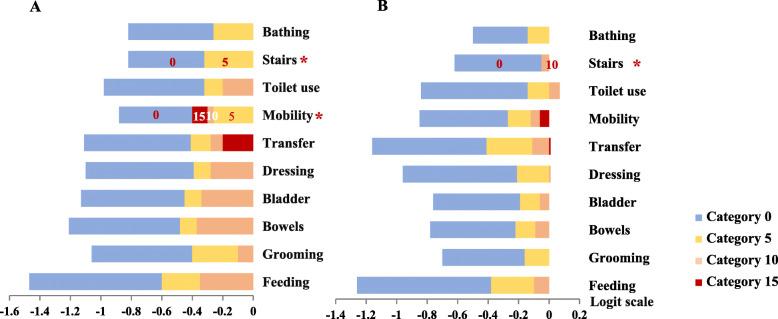
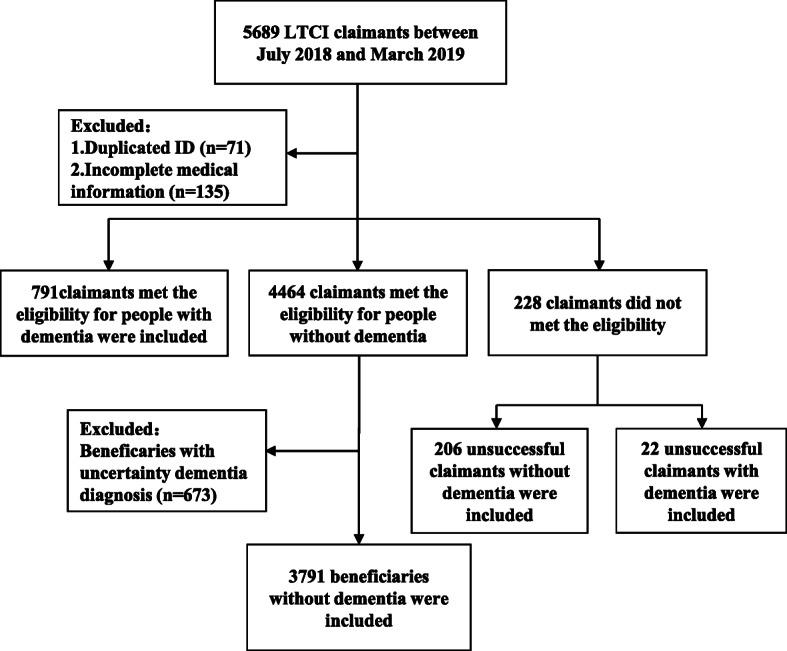
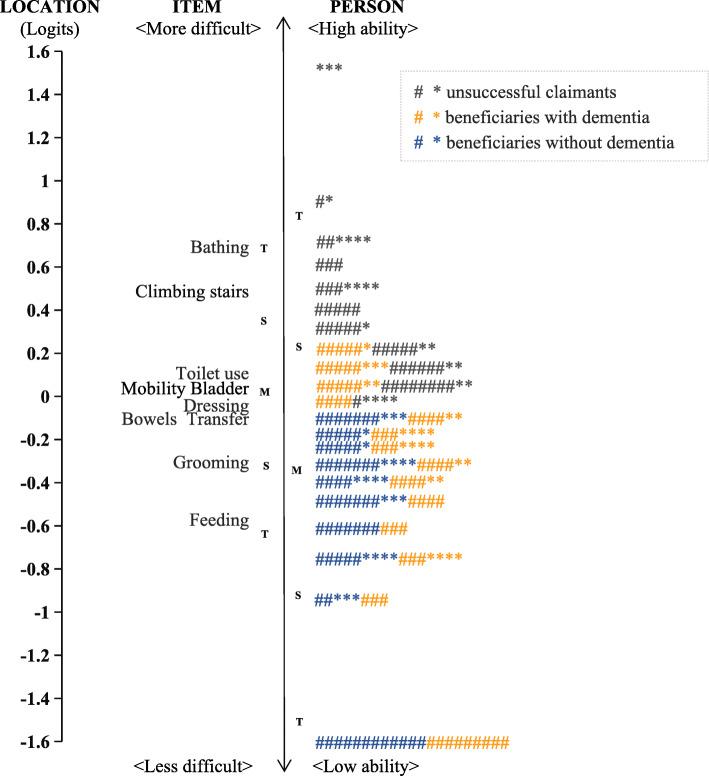
Among 4810 claimants included, 4582 (95.3%) obtained LTCI benefits. Of these beneficiaries, 4357 (95.1%) were ≧ 60 years old, and 791 (17.3%) had dementia. Among 228 (4.7%) unsuccessful claimants, 22 (0.5%) had dementia. The prevalence of stroke was high in beneficiaries with (38.1%) or without dementia (56.6%), as well as in unsuccessful claimants with (40.9%) or without dementia (52.4%). Beneficiaries without dementia needed more support for basic activities of daily living and nursing care than those with dementia, while beneficiaries with dementia were more likely to be institutionalized. Five (22.7%) unsuccessful claimants with dementia and 48 (23.3%) unsuccessful claimants without dementia were disabled in at least two basic self-care activities. Regarding Barthel Index, Rasch analysis showed threshold disordering in "mobility" and "climbing stairs", and the narrow interval was observed between all the adjacent categories of the ten items (< 1.4 logits).
CONCLUSIONS
Stroke and dementia were two common reasons for needing long-term care in LTCI claimants. The Barthel Index is not suitable for assessing and dividing LTCI claimants, because of inappropriate items and narrow category responses. A comprehensive assessment and grading system is required, together with needs-led care services. The eligibility should be expanded gradually based on balance finance solutions.
背景
中国政府最近启动了一项公共长期护理保险(LTCI)试点研究。广州是十五个试点城市之一,于 2017 年 8 月正式开始提供 LTCI。深入分析试点城市的实验数据可能为制定公平有效的 LTCI 制度提供建议。本研究旨在通过探索申请人的特征和护理需求以及评估工具的性能来评估 LTCI 试点。
方法
本研究采用回顾性的横断面研究,对 2018 年 7 月至 2019 年 3 月期间广州试点的理赔数据进行了分析。纳入研究期间的 LTCI 理赔申请人。护理需求根据申请人的日常生活活动功能(由巴氏量表评估)和医疗状况来确定。Rasch 分析用于探索巴氏量表的性能。
结果
在纳入的 4810 名申请人中,有 4582 名(95.3%)获得了 LTCI 福利。其中,4357 名(95.1%)申请人年龄≥60 岁,791 名(17.3%)申请人患有痴呆症。在 22 名(0.5%)未获得理赔的申请人中,有 22 名(0.5%)患有痴呆症。患有痴呆症的受益人和无痴呆症的受益人(38.1%和 56.6%)的中风患病率均较高,患有痴呆症的未获得理赔申请人和无痴呆症的未获得理赔申请人(40.9%和 52.4%)的中风患病率也较高。无痴呆症的受益人的基本日常生活活动和护理需求比有痴呆症的受益人的需求更多,而有痴呆症的受益人的机构化程度更高。在患有痴呆症的 5 名(22.7%)未获得理赔的申请人和患有痴呆症的 48 名(23.3%)未获得理赔的申请人中,有至少两项基本自理活动能力丧失。关于巴氏量表,Rasch 分析显示“移动”和“爬楼梯”两个项目存在阈值紊乱,十个项目的所有相邻类别之间的间隔较窄(<1.4 对数单位)。
结论
中风和痴呆症是 LTCI 理赔申请人需要长期护理的两个常见原因。由于项目不适当和类别反应狭窄,巴氏量表不适合用于评估和划分 LTCI 理赔申请人。需要一个综合的评估和分级系统,以及以需求为导向的护理服务。应根据平衡的财务解决方案逐步扩大资格范围。
 Zotero 插件