
改善轻度认知障碍和轻度阿尔茨海默病睡眠的药物和非药物干预措施:一项系统综述。
Pharmacological and non-pharmacological interventions to enhance sleep in mild cognitive impairment and mild Alzheimer's disease: A systematic review.
作者信息
Blackman Jonathan, Swirski Marta, Clynes James, Harding Sam, Leng Yue, Coulthard Elizabeth
机构信息
North Bristol NHS Trust, Bristol, UK.
Bristol Medical School, University of Bristol, Bristol, UK.
出版信息
J Sleep Res. 2021 Aug;30(4):e13229. doi: 10.1111/jsr.13229. Epub 2020 Dec 2.
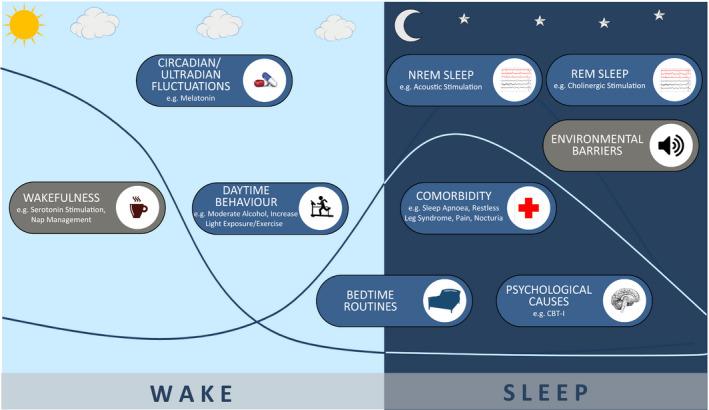
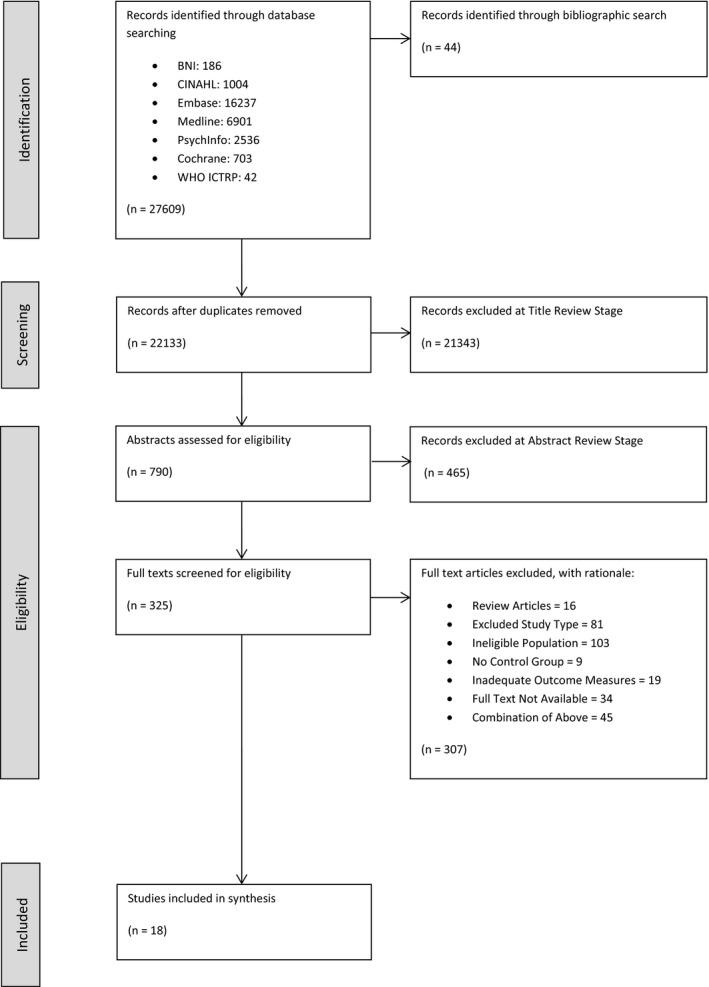
Suboptimal sleep causes cognitive decline and probably accelerates Alzheimer's Disease (AD) progression. Several sleep interventions have been tested in established AD dementia cases. However early intervention is needed in the course of AD at Mild Cognitive Impairment (MCI) or mild dementia stages to help prevent decline and maintain good quality of life. This systematic review aims to summarize evidence on sleep interventions in MCI and mild AD dementia. Seven databases were systematically searched for interventional studies where ≥ 75% of participants met diagnostic criteria for MCI/mild AD dementia, with a control group and validated sleep outcome measures. Studies with a majority of participants diagnosed with Moderate to Severe AD were excluded. After removal of duplicates, 22,133 references were returned in two separate searches (August 2019 and September 2020). 325 full papers were reviewed with 18 retained. Included papers reported 16 separate studies, total sample (n = 1,056), mean age 73.5 years. 13 interventions were represented: Cognitive Behavioural Therapy - Insomnia (CBT-I), A Multi-Component Group Based Therapy, A Structured Limbs Exercise Programme, Aromatherapy, Phase Locked Loop Acoustic Stimulation, Transcranial Stimulation, Suvorexant, Melatonin, Donepezil, Galantamine, Rivastigmine, Tetrahydroaminoacridine and Continuous Positive Airway Pressure (CPAP). Psychotherapeutic approaches utilising adapted CBT-I and a Structured Limbs Exercise Programme each achieved statistically significant improvements in the Pittsburgh Sleep Quality Index with one study reporting co-existent improved actigraphy variables. Suvorexant significantly increased Total Sleep Time and Sleep Efficiency whilst reducing Wake After Sleep Onset time. Transcranial Stimulation enhanced cortical slow oscillations and spindle power during daytime naps. Melatonin significantly reduced sleep latency in two small studies and sleep to wakefulness transitions in a small sample. CPAP demonstrated efficacy in participants with Obstructive Sleep Apnoea. Evidence to support other interventions was limited. Whilst new evidence is emerging, there remains a paucity of evidence for sleep interventions in MCI and mild AD highlighting a pressing need for high quality experimental studies exploring alternative sleep interventions.
睡眠不佳会导致认知能力下降,并可能加速阿尔茨海默病(AD)的进展。已有多项睡眠干预措施在确诊的AD痴呆病例中进行了测试。然而,在AD病程中的轻度认知障碍(MCI)或轻度痴呆阶段需要进行早期干预,以帮助预防病情恶化并维持良好的生活质量。本系统评价旨在总结关于MCI和轻度AD痴呆睡眠干预措施的证据。我们系统检索了七个数据库,以查找干预性研究,其中≥75%的参与者符合MCI/轻度AD痴呆的诊断标准,设有对照组并采用了经过验证的睡眠结局测量指标。排除了大多数参与者被诊断为中度至重度AD的研究。去除重复项后,在两次独立检索(2019年8月和2020年9月)中返回了22,133条参考文献。共审查了325篇全文,保留了18篇。纳入的论文报告了16项独立研究,总样本量(n = 1,056),平均年龄73.5岁。涉及13种干预措施:认知行为疗法-失眠(CBT-I)、基于多成分小组的疗法、结构化肢体锻炼计划、芳香疗法、锁相环声刺激、经颅刺激、苏沃雷生、褪黑素、多奈哌齐、加兰他敏、卡巴拉汀、他克林和持续气道正压通气(CPAP)。采用改良CBT-I的心理治疗方法和结构化肢体锻炼计划在匹兹堡睡眠质量指数上均取得了统计学上的显著改善,一项研究报告同时存在活动记录仪变量的改善。苏沃雷生显著增加了总睡眠时间和睡眠效率,同时减少了睡眠后觉醒时间。经颅刺激增强了白天小睡期间的皮层慢振荡和纺锤波功率。褪黑素在两项小型研究中显著缩短了睡眠潜伏期,并在一个小样本中减少了睡眠至觉醒的转换次数。CPAP在阻塞性睡眠呼吸暂停患者中显示出疗效。支持其他干预措施的证据有限。虽然新证据不断涌现,但MCI和轻度AD睡眠干预措施的证据仍然匮乏,这凸显了迫切需要开展高质量的实验研究来探索其他睡眠干预措施。


 Zotero 插件