
评估非持久性化学物质暴露需要多少尿液样本?用于科学家、研究赞助商和风险经理的生物标志物可靠性评估工具 (BRAT)。
How Many Urine Samples Are Needed to Accurately Assess Exposure to Non-Persistent Chemicals? The Biomarker Reliability Assessment Tool (BRAT) for Scientists, Research Sponsors, and Risk Managers.
机构信息
Department of Occupational and Environmental Health, School of Public Health, Université de Montréal, Montreal, QC H3T 1A8, Canada.
Centre de Recherche en Santé Publique, Université de Montréal et CIUSSS du Centre-Sud-de-l'Île-de-Montréal, Montreal, QC H3C 3J7, Canada.
出版信息
Int J Environ Res Public Health. 2020 Dec 6;17(23):9102. doi: 10.3390/ijerph17239102.
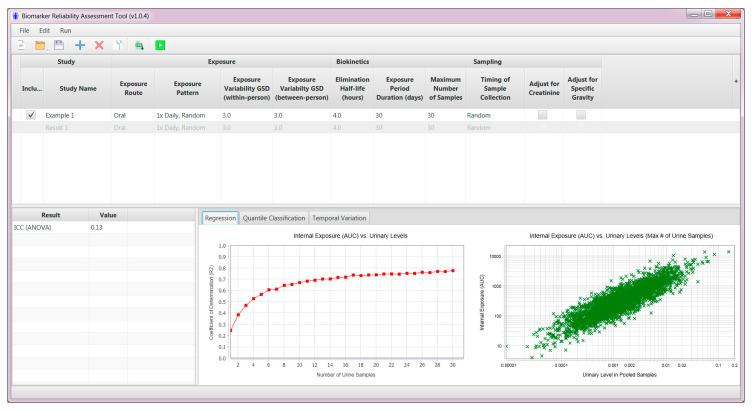
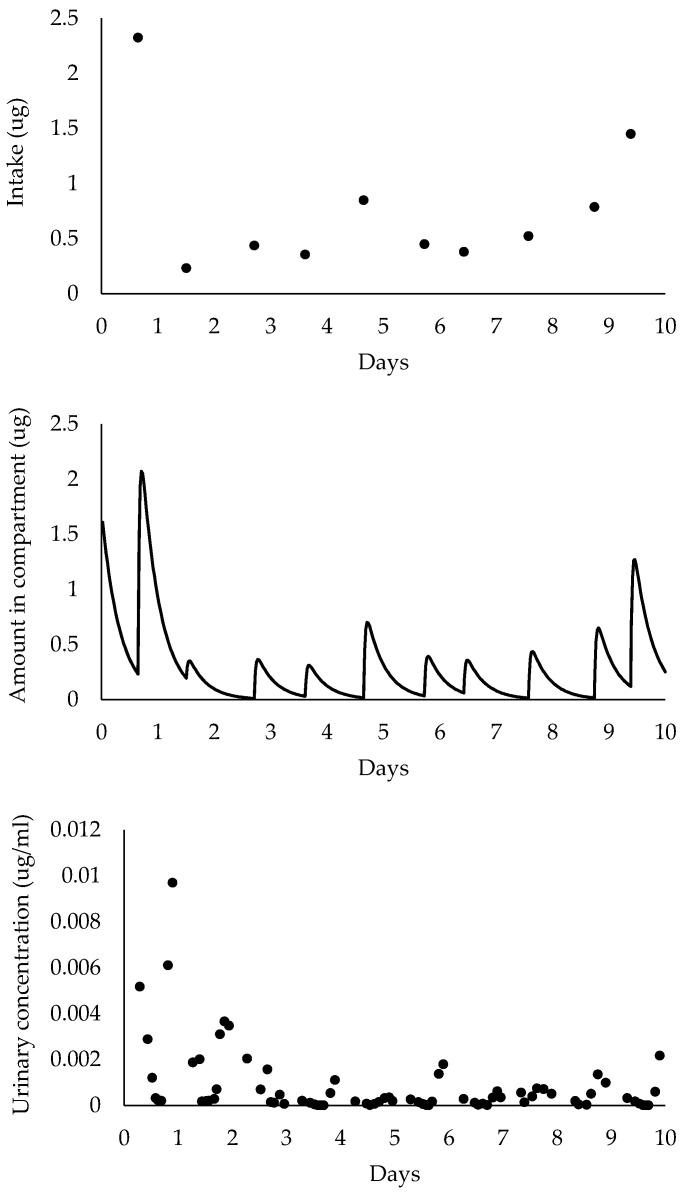
In epidemiologic and exposure research, biomonitoring is often used as the basis for assessing human exposure to environmental chemicals. Studies frequently rely on a single urinary measurement per participant to assess exposure to non-persistent chemicals. However, there is a growing consensus that single urine samples may be insufficient for adequately estimating exposure. The question then arises: how many samples would be needed for optimal characterization of exposure? To help researchers answer this question, we developed a tool called the Biomarker Reliability Assessment Tool (BRAT). The BRAT is based on pharmacokinetic modeling simulations, is freely available, and is designed to help researchers determine the approximate number of urine samples needed to optimize exposure assessment. The BRAT performs Monte Carlo simulations of exposure to estimate internal levels and resulting urinary concentrations in individuals from a population based on user-specified inputs (e.g., biological half-life, within- and between-person variability in exposure). The BRAT evaluates-through linear regression and quantile classification-the precision/accuracy of the estimation of internal levels depending on the number of urine samples. This tool should guide researchers towards more robust biomonitoring and improved exposure classification in epidemiologic and exposure research, which should in turn improve the translation of that research into decision-making.
在流行病学和暴露研究中,生物监测通常被用作评估人类接触环境化学物质的基础。研究通常依赖于每个参与者的单次尿液测量来评估非持久性化学物质的暴露情况。然而,越来越多的共识认为,单次尿液样本可能不足以充分估计暴露情况。那么问题来了:为了最佳描述暴露情况,需要多少个样本?为了帮助研究人员回答这个问题,我们开发了一种称为生物标志物可靠性评估工具(BRAT)的工具。BRAT 基于药代动力学建模模拟,是免费提供的,旨在帮助研究人员确定优化暴露评估所需的尿液样本的大致数量。BRAT 通过暴露的蒙特卡罗模拟来估计个体内部水平和由此产生的尿液浓度,这是基于用户指定的输入(例如,生物半衰期、个体内和个体间暴露的变异性)进行的。BRAT 通过线性回归和分位数分类来评估根据尿液样本数量,内部水平估计的精度/准确性。该工具应指导研究人员进行更强大的生物监测和改进的流行病学和暴露研究中的暴露分类,这反过来又应改善将该研究转化为决策的工作。

 Zotero 插件