
一项针对中风幸存者的早期职业康复与常规护理的个体随机对照多中心实用试验,其中嵌入了经济和过程评估:RETAKE 试验(中风后重返工作岗位研究)研究方案。
An individually randomised controlled multi-centre pragmatic trial with embedded economic and process evaluations of early vocational rehabilitation compared with usual care for stroke survivors: study protocol for the RETurn to work After stroKE (RETAKE) trial.
机构信息
Division of Rehabilitation and Ageing, School of Medicine, Medical School Queen's Medical Centre, B-Floor, Nottingham, NG7 2UH, UK.
Clinical Trials Research Unit (CTRU), Leeds Institute of Clinical Trials Research, University of Leeds, Level 11 Worsley Building, Leeds, LS2 9JT, UK.
出版信息
Trials. 2020 Dec 9;21(1):1010. doi: 10.1186/s13063-020-04883-1.
BACKGROUND
Return to work (RTW) is achieved by less than 50% of stroke survivors. The rising incidence of stroke among younger people, the UK economic forecast, and clinical drivers highlight the need for stroke survivors to receive support with RTW. However, evidence for this type of support is lacking. This randomised controlled trial (RCT) will investigate whether Early Stroke Specialist Vocational Rehabilitation (ESSVR) plus usual care (UC) (i.e. usual NHS rehabilitation) is more clinically and cost-effective for supporting post-stroke RTW, than UC alone.
METHODS
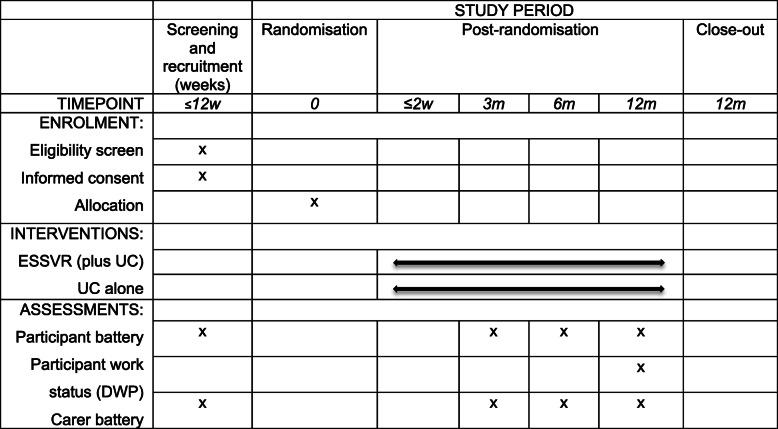
Seven hundred sixty stroke survivors and their carers will be recruited from approximately 20 NHS stroke services. A 5:4 allocation ratio will be employed to randomise participants to receive ESSVR plus UC, or UC alone. The individually tailored ESSVR intervention will commence within 12 weeks of stroke onset and be delivered for up to 12 months as necessary by trained RETAKE occupational therapists in the community, participants' homes or workplaces, and outpatient/inpatient therapy settings, via telephone, email, or SMS text message. Outcome data will be collected via self-report questionnaires administered by post or online at 3, 6, and 12 months follow-up. The primary outcome will be self-reported RTW and job retention at 12 months (minimum 2 h/week). Secondary outcomes will include mood, function, participation, health-related quality of life, confidence, intervention compliance, health and social care resource use, and mortality. An embedded economic evaluation will estimate cost-effectiveness and cost-utility analyses from National Health Service (NHS) and Personal Social Services (PSS) perspectives. An embedded process evaluation will employ a mixed methods approach to explore ESSVR implementation, contextual factors linked to outcome variation, and factors affecting NHS roll-out.
DISCUSSION
This article describes the protocol for a multi-centre RCT evaluating the clinical- and cost-effectiveness of an early vocational rehabilitation intervention aimed at supporting adults to return to work following a stroke. Evidence favouring the ESSVR intervention would support its roll-out in NHS settings.
TRIAL REGISTRATION
ISRCTN, ISRCTN12464275 . Registered on 26 February 2018.
背景
重返工作岗位(RTW)的卒中幸存者不足 50%。在英国,年轻人中风发病率上升、经济预测和临床驱动因素都突显了卒中幸存者需要在重返工作岗位方面获得支持。然而,这种支持的证据却缺乏。本随机对照试验(RCT)将调查早期卒中专科职业康复(ESSVR)加常规护理(UC)(即常规 NHS 康复)是否比单独 UC 更能在支持卒中后 RTW 方面具有临床和成本效益。
方法
将从大约 20 个 NHS 卒中服务机构招募 760 名卒中幸存者及其照顾者。将采用 5:4 的分配比例将参与者随机分配到接受 ESSVR 加 UC 或单独 UC。量身定制的 ESSVR 干预措施将在卒中发病后 12 周内开始,并由经过培训的 RETAKE 职业治疗师在社区、参与者的家中或工作场所以及门诊/住院治疗环境中通过电话、电子邮件或短信提供,必要时持续 12 个月。通过邮寄或在线方式在 3、6 和 12 个月的随访时收集自我报告的问卷结果。主要结局指标是 12 个月时自我报告的 RTW 和工作保留率(每周至少 2 小时)。次要结局指标包括情绪、功能、参与度、健康相关生活质量、信心、干预依从性、健康和社会保健资源利用以及死亡率。一项嵌入式经济评估将从国民保健服务(NHS)和个人社会服务(PSS)的角度估计成本效益和成本效用分析。一项嵌入式过程评估将采用混合方法来探索 ESSVR 的实施情况、与结局变化相关的背景因素以及影响 NHS 推广的因素。
讨论
本文描述了一项多中心 RCT 的方案,该 RCT 评估了一项旨在支持成年人在中风后重返工作岗位的早期职业康复干预的临床和成本效益。有利于 ESSVR 干预的证据将支持其在 NHS 环境中的推广。
试验注册
ISRCTN,ISRCTN82025654。于 2018 年 2 月 26 日注册。
 Zotero 插件