
多中心评估 10 种临床实验室中使用的高通量血清学检测方法的临床性能和中和抗体活性预测特性。
Multicenter Evaluation of the Clinical Performance and the Neutralizing Antibody Activity Prediction Properties of 10 High-Throughput Serological Assays Used in Clinical Laboratories.
机构信息
Laboratoire de Santé Publique du Québec, Institut Nationale de Santé Publique, Sainte-Anne-de-Bellevue, Québec, Canada
Laboratoire de Santé Publique du Québec, Institut Nationale de Santé Publique, Sainte-Anne-de-Bellevue, Québec, Canada.
出版信息
J Clin Microbiol. 2021 Feb 18;59(3). doi: 10.1128/JCM.02511-20.
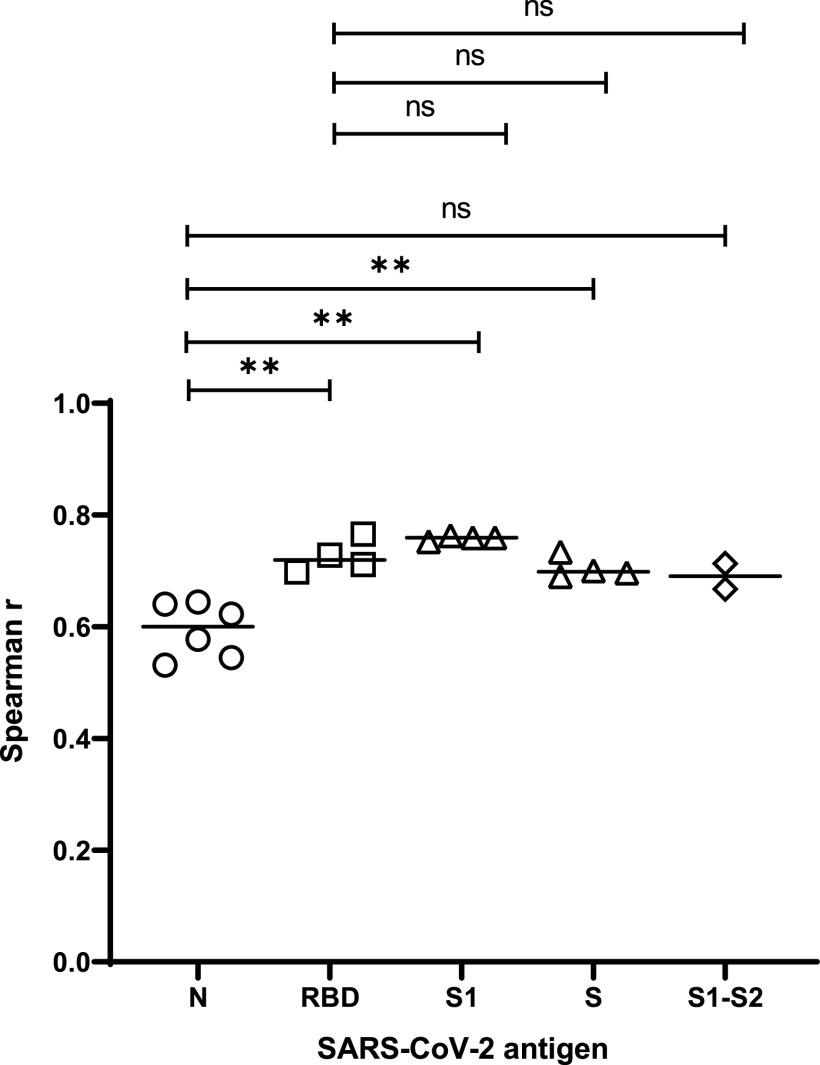
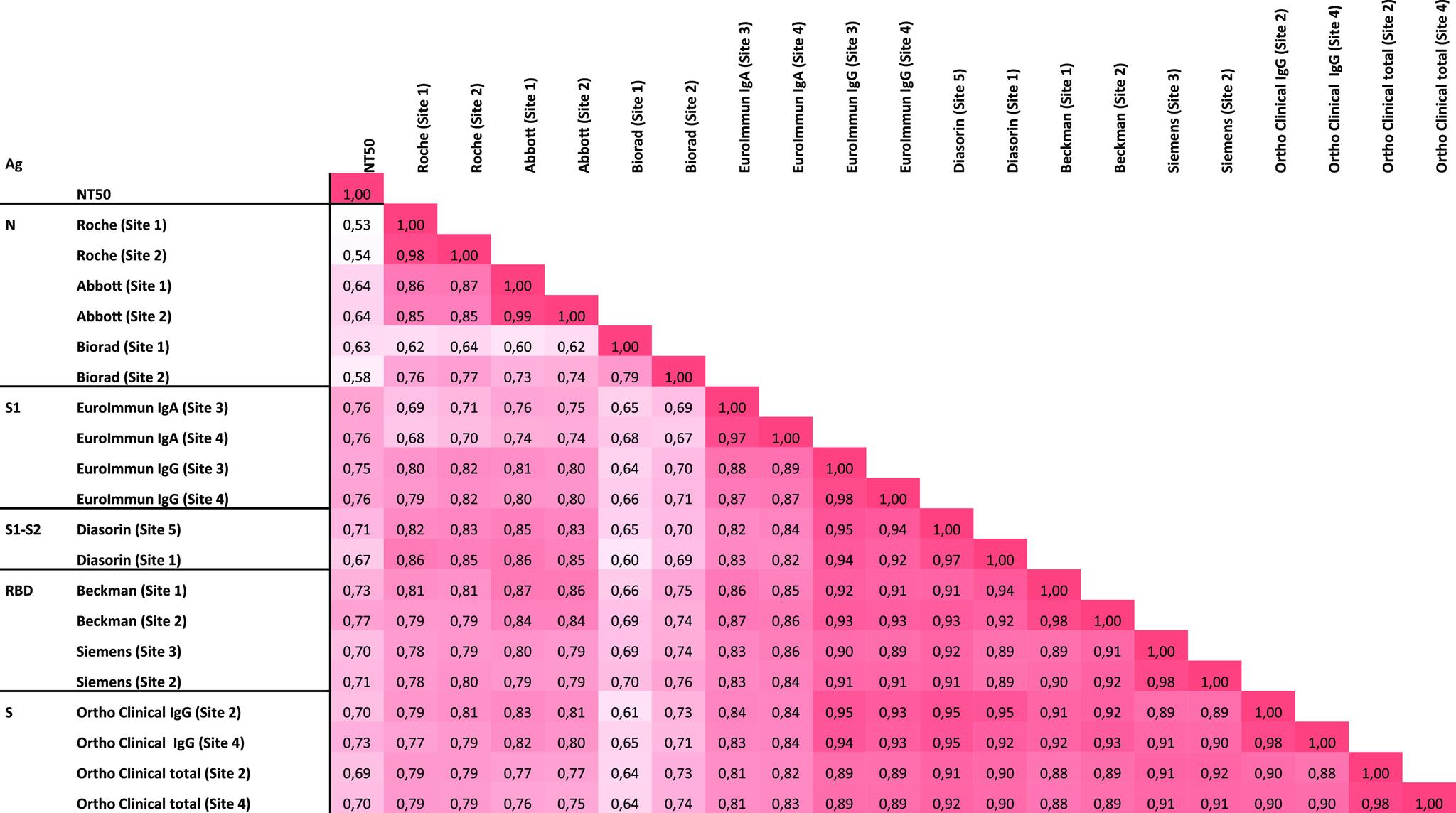
As the coronavirus disease 2019 (COVID-19) pandemic second wave is emerging, it is of the upmost importance to screen the population immunity in order to keep track of infected individuals. Consequently, immunoassays for severe acute respiratory syndrome coronavirus 2 (SARS-CoV-2) with high specificity and positive predictive values are needed to obtain an accurate epidemiological picture. As more data accumulate about the immune responses and the kinetics of neutralizing-antibody (nAb) production in SARS-CoV-2-infected individuals, new applications are forecast for serological assays such as nAb activity prediction in convalescent-phase plasma from recovered patients. This multicenter study, involving six hospital centers, determined the baseline clinical performances, reproducibility, and nAb level correlations of 10 commercially available immunoassays. In addition, three lateral-flow chromatography assays were evaluated, as these devices can be used in logistically challenged areas. All assays were evaluated using the same patient panels in duplicate, thus enabling accurate comparison of the tests. Seven immunoassays examined in this study were shown to have excellent specificity (98 to 100%) and good to excellent positive predictive values (82 to 100%) when used in a low (5%)-seroprevalence setting. We observed sensitivities as low as 74% and as high as 95% at ≥15 days after symptom onset. The determination of optimized cutoff values through receiver operating characteristic (ROC) curve analyses had a significant impact on the diagnostic resolution of several enzyme immunoassays by increasing the sensitivity significantly without a large trade-off in specificity. We found that spike-based immunoassays seem to be better correlates of nAb activity. Finally, the results reported here will add to the general knowledge of the interlaboratory reproducibility of clinical performance parameters of immunoassays and provide new evidence about nAb activity prediction.
随着 2019 年冠状病毒病(COVID-19)大流行的第二波出现,对人群免疫力进行筛查以跟踪感染个体至关重要。因此,需要具有高特异性和阳性预测值的严重急性呼吸综合征冠状病毒 2(SARS-CoV-2)免疫测定法,以获得准确的流行病学图像。随着关于 SARS-CoV-2 感染个体的免疫反应和中和抗体(nAb)产生动力学的更多数据积累,预计将有新的应用用于血清学测定,例如从恢复期患者的恢复期血浆中预测 nAb 活性。这项涉及六个医院中心的多中心研究确定了 10 种市售免疫测定法的基线临床性能、重现性和 nAb 水平相关性。此外,评估了三种侧向流动色谱测定法,因为这些设备可用于物流有挑战的地区。所有测定法均使用相同的患者组进行双重评估,从而可以准确比较测试。在这项研究中检查的七种免疫测定法在低(5%)血清流行率环境中显示出极好的特异性(98 至 100%)和良好至极好的阳性预测值(82 至 100%)。我们观察到在症状出现后≥15 天的敏感性低至 74%,高至 95%。通过接收者操作特征(ROC)曲线分析确定优化的截止值对几种酶免疫测定法的诊断分辨率具有重大影响,在特异性没有明显下降的情况下显著提高了敏感性。我们发现基于刺突的免疫测定法似乎与 nAb 活性更好相关。最后,此处报告的结果将增加对免疫测定法临床性能参数的实验室间重现性的一般认识,并提供有关 nAb 活性预测的新证据。

 Zotero 插件