
斑马鱼中过度运动诱导的病理性心肌肥厚潜在相关基因的鉴定
Identification of Potentially Relevant Genes for Excessive Exercise-Induced Pathological Cardiac Hypertrophy in Zebrafish.
作者信息
Zhou Zuoqiong, Zheng Lan, Tang Changfa, Chen Zhanglin, Zhu Runkang, Peng Xiyang, Wu Xiushan, Zhu Ping
机构信息
Guangdong Cardiovascular Institute, Guangdong Provincial People's Hospital, Guangdong Academy of Medical Sciences, Guangzhou, China.
Key Laboratory of Physical Fitness and Exercise Rehabilitation of Hunan Province, College of Physical Education, Hunan Normal University, Changsha, China.
出版信息
Front Physiol. 2020 Nov 30;11:565307. doi: 10.3389/fphys.2020.565307. eCollection 2020.
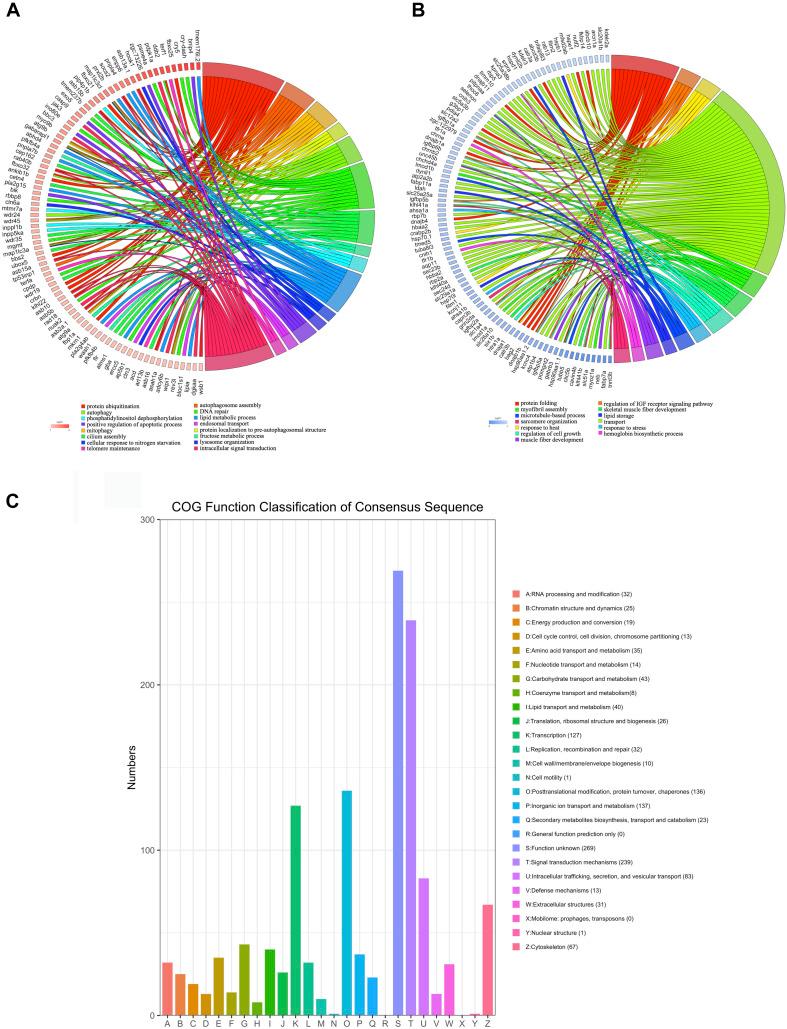
Exercise-induced cardiac remodeling has aroused public concern for some time, as sudden cardiac death is known to occur in athletes; however, little is known about the underlying mechanism of exercise-induced cardiac injury. In the present study, we established an excessive exercise-induced pathologic cardiac hypertrophy model in zebrafish with increased myocardial fibrosis, myofibril disassembly, mitochondrial degradation, upregulated expression of the pathological hypertrophy marker genes in the heart, contractile impairment, and cardiopulmonary function impairment. High-throughput RNA-seq analysis revealed that the differentially expressed genes were enriched in the regulation of autophagy, protein folding, and degradation, myofibril development, angiogenesis, metabolic reprogramming, and insulin and FoxO signaling pathways. FOXO proteins may be the core mediator of the regulatory network needed to promote the pathological response. Further, PPI network analysis showed that , , , , , , , , , , , , , , , , , , , and are the hub genes that correlate with the pathogenesis of pathological cardiac hypertrophy. The underlying regulatory pathways and cardiac pressure-responsive molecules identified in the present study will provide valuable insights for the supervision and clinical treatment of pathological cardiac hypertrophy induced by excessive exercise.
运动诱导的心脏重塑已经引起公众关注一段时间了,因为已知运动员会发生心源性猝死;然而,关于运动诱导的心脏损伤的潜在机制知之甚少。在本研究中,我们在斑马鱼中建立了过度运动诱导的病理性心脏肥大模型,该模型出现心肌纤维化增加、肌原纤维解体、线粒体降解、心脏中病理性肥大标记基因的表达上调、收缩功能受损和心肺功能受损。高通量RNA测序分析显示,差异表达基因富集于自噬调节、蛋白质折叠和降解、肌原纤维发育、血管生成、代谢重编程以及胰岛素和FoxO信号通路。FOXO蛋白可能是促进病理反应所需调节网络的核心介质。此外,蛋白质-蛋白质相互作用(PPI)网络分析表明,[此处原文似乎缺失具体基因名称]是与病理性心脏肥大发病机制相关的枢纽基因。本研究中确定的潜在调节途径和心脏压力反应分子将为过度运动诱导的病理性心脏肥大的监测和临床治疗提供有价值的见解。




 Zotero 插件