
通过反应性共混增塑和相容化制备高强韧聚乳酸/淀粉共混物。
High-Toughness Poly(Lactic Acid)/Starch Blends Prepared through Reactive Blending Plasticization and Compatibilization.
机构信息
Hubei Provincial Key Laboratory of Green Materials for Light Industry, Collaborative Innovation Center of Green Light-Weight Materials and Processing, Hubei University of Technology, Wuhan 430068, China.
出版信息
Molecules. 2020 Dec 16;25(24):5951. doi: 10.3390/molecules25245951.
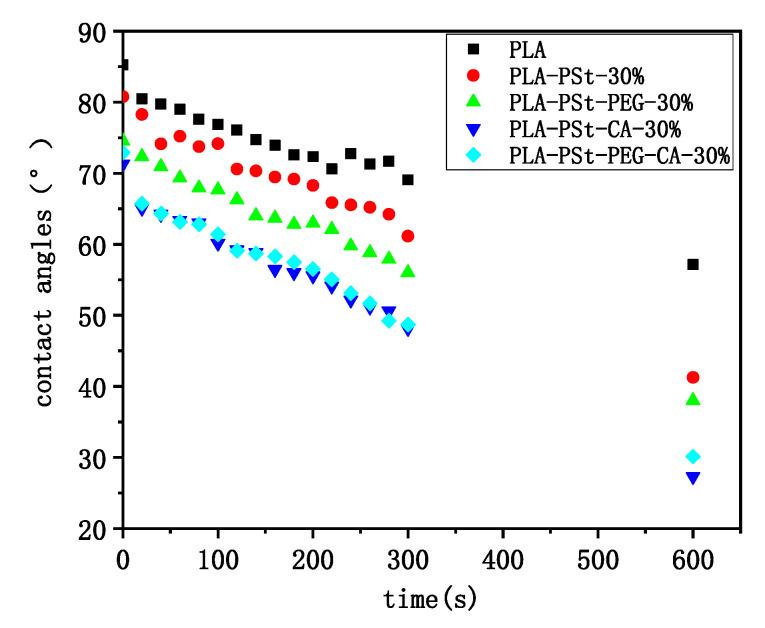
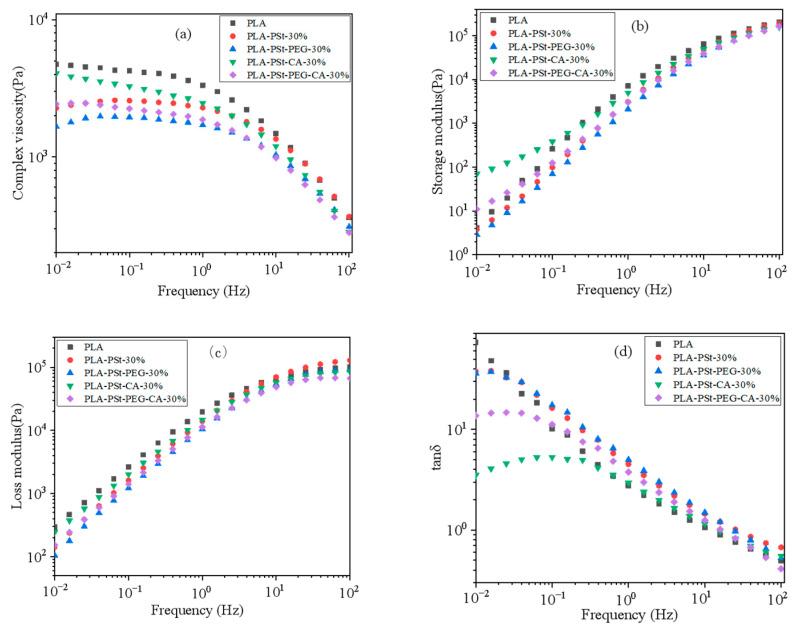
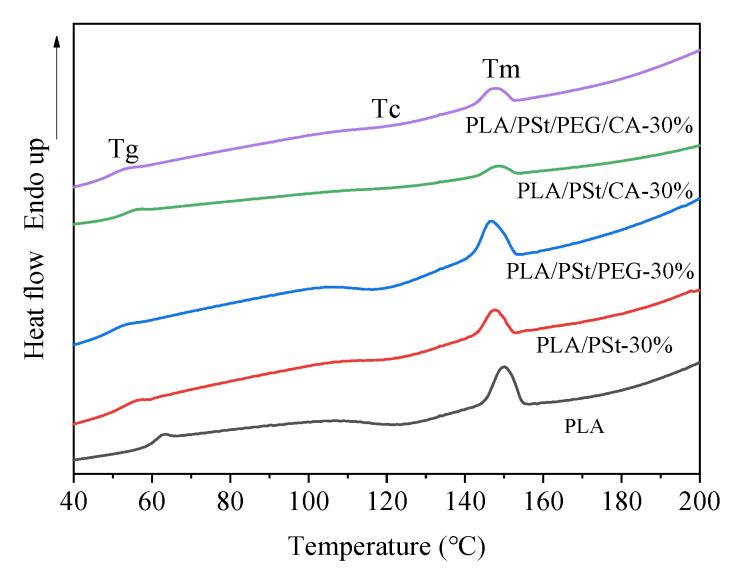
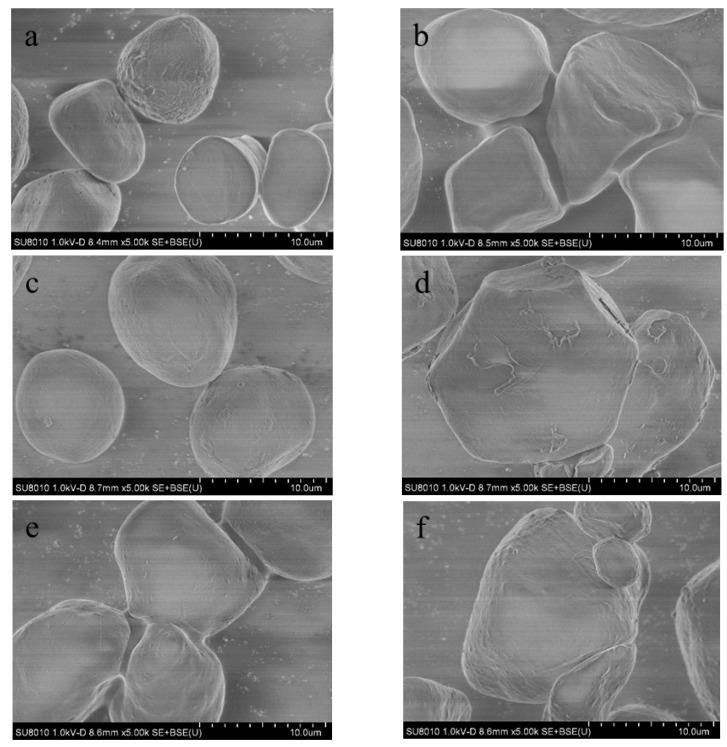
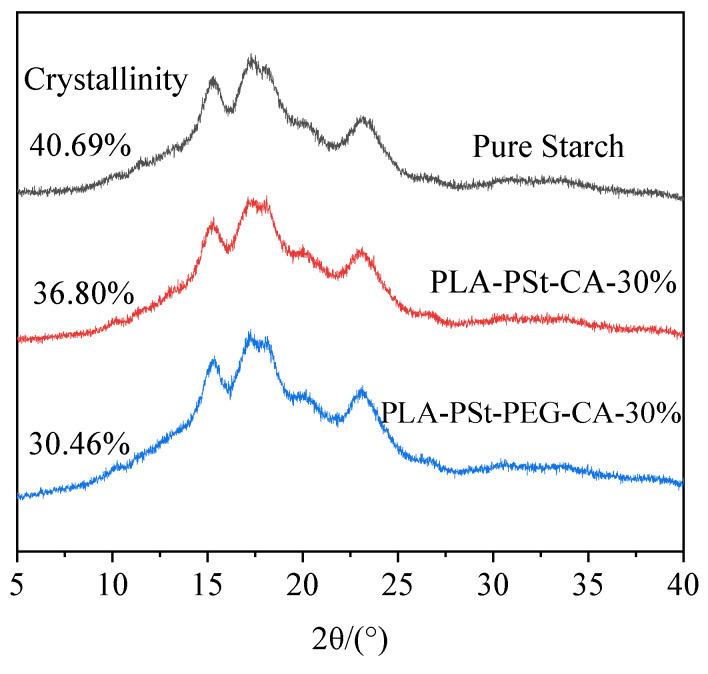
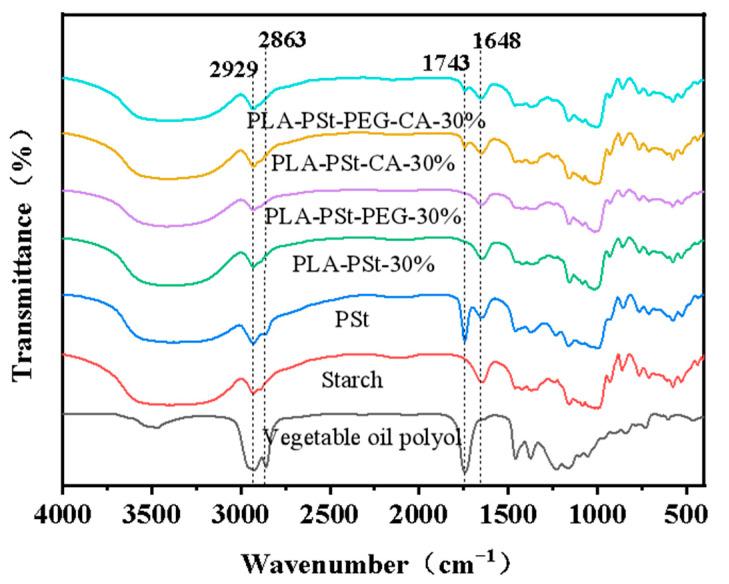
In this study, poly(lactic acid) (PLA)/starch blends were prepared through reactive melt blending by using PLA and starch as raw materials and vegetable oil polyols, polyethylene glycol (PEG), and citric acid (CA) as additives. The effects of CA and PEG on the toughness of PLA/starch blends were analyzed using a mechanical performance test, scanning electron microscope analysis, differential scanning calorimetry, Fourier-transform infrared spectroscopy, X-ray diffraction, rheological analysis, and hydrophilicity test. Results showed that the elongation at break and impact strength of the PLA/premixed starch (PSt)/PEG/CA blend were 140.51% and 3.56 kJ·m, which were 13.4 and 1.8 times higher than those of pure PLA, respectively. The essence of the improvement in the toughness of the PLA/PSt/PEG/CA blend was the esterification reaction among CA, PEG, and starch. During the melt-blending process, the CA with abundant carboxyl groups reacted in the amorphous region of the starch. The shape and crystal form of the starch did not change, but the surface activity of the starch improved and consequently increased the adhesion between starch and PLA. As a plasticizer for PLA and starch, PEG effectively enhanced the mobility of the molecular chains. After PEG was dispersed, it participated in the esterification reaction of CA and starch at the interface and formed a branched/crosslinked copolymer that was embedded in the interface of PLA and starch. This copolymer further improved the compatibility of the PLA/starch blends. PEGs with small molecules and CA were used as compatibilizers to reduce the effect on PLA biodegradability. The esterification reaction on the starch surface improved the compatibilization and toughness of the PLA/starch blend materials and broadens their application prospects in the fields of medicine and high-fill packaging.
在这项研究中,通过使用 PLA 和淀粉作为原料,以及植物油多元醇、聚乙二醇(PEG)和柠檬酸(CA)作为添加剂,通过反应性熔融共混制备了聚乳酸(PLA)/淀粉共混物。使用机械性能测试、扫描电子显微镜分析、差示扫描量热法、傅里叶变换红外光谱、X 射线衍射、流变分析和亲水性测试分析 CA 和 PEG 对 PLA/淀粉共混物韧性的影响。结果表明,断裂伸长率和冲击强度为 140.51%和 3.56 kJ·m 的 PLA/预混合淀粉(PSt)/PEG/CA 共混物分别比纯 PLA 高 13.4 倍和 1.8 倍。PLA/PSt/PEG/CA 共混物韧性提高的本质是 CA、PEG 和淀粉之间的酯化反应。在熔融共混过程中,具有丰富羧基的 CA 在淀粉的无定形区域发生反应。淀粉的形状和晶体形式没有改变,但淀粉的表面活性提高,从而增加了淀粉与 PLA 之间的附着力。作为 PLA 和淀粉的增塑剂,PEG 有效地提高了分子链的流动性。PEG 分散后,它在淀粉和 CA 的界面处参与酯化反应,并形成支化/交联的共聚物,该共聚物嵌入 PLA 和淀粉的界面中。该共聚物进一步提高了 PLA/淀粉共混物的相容性。使用小分子 PEG 和 CA 作为增容剂以减少对 PLA 生物降解性的影响。淀粉表面的酯化反应提高了 PLA/淀粉共混材料的增容性和韧性,拓宽了它们在医学和高填充包装领域的应用前景。


 Zotero 插件