
比较空气超声与接触超声强化黑莓气干过程:传热传质模拟、能耗与品质评价。
Comparison between airborne ultrasound and contact ultrasound to intensify air drying of blackberry: Heat and mass transfer simulation, energy consumption and quality evaluation.
机构信息
College of Food Science and Technology, Nanjing Agricultural University, Nanjing 210095, Jiangsu, China.
School of Chemical and Environmental Engineering, The University of Nottingham, Malaysia Campus, Semenyih, Selangor, Malaysia.
出版信息
Ultrason Sonochem. 2021 Apr;72:105410. doi: 10.1016/j.ultsonch.2020.105410. Epub 2020 Dec 6.
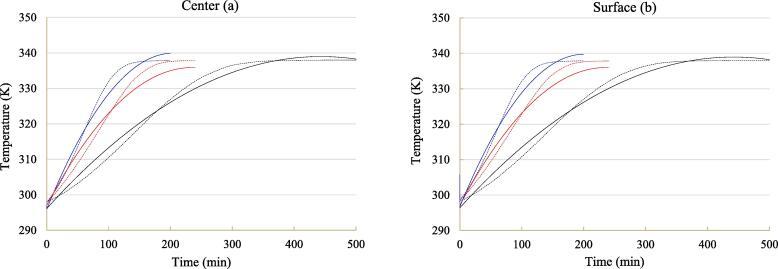
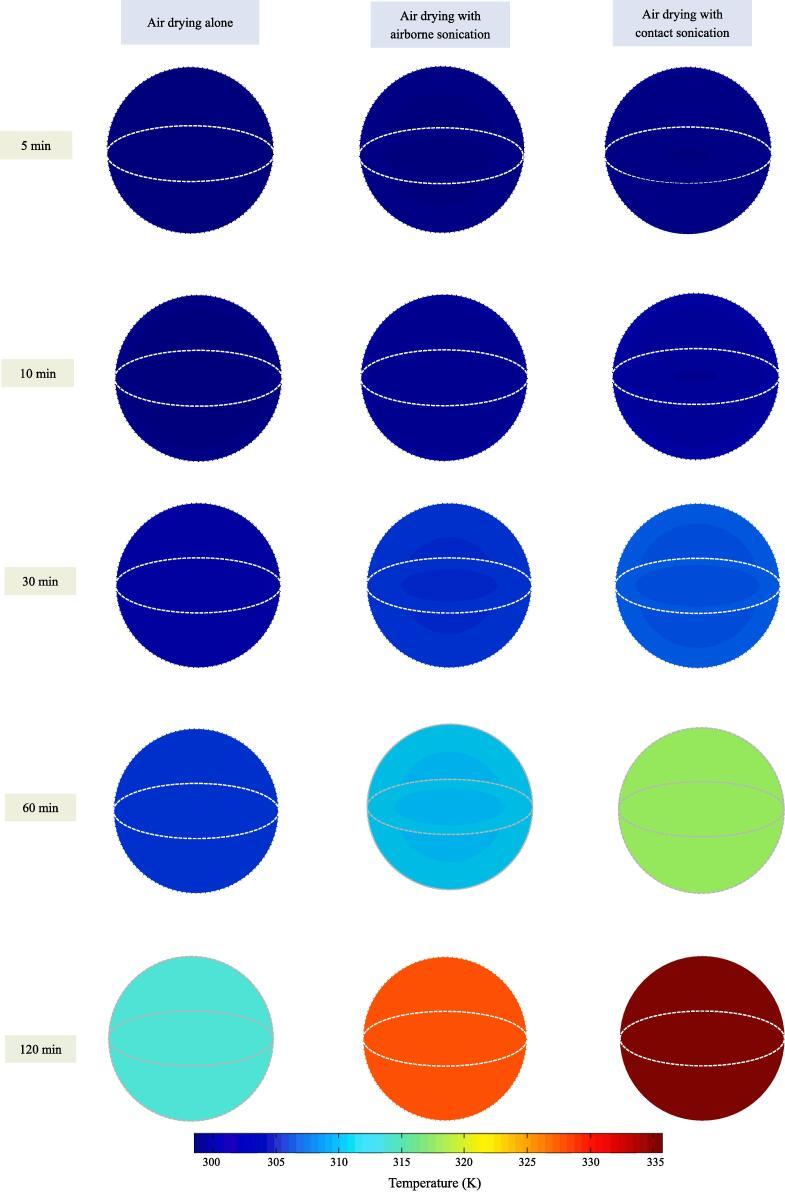
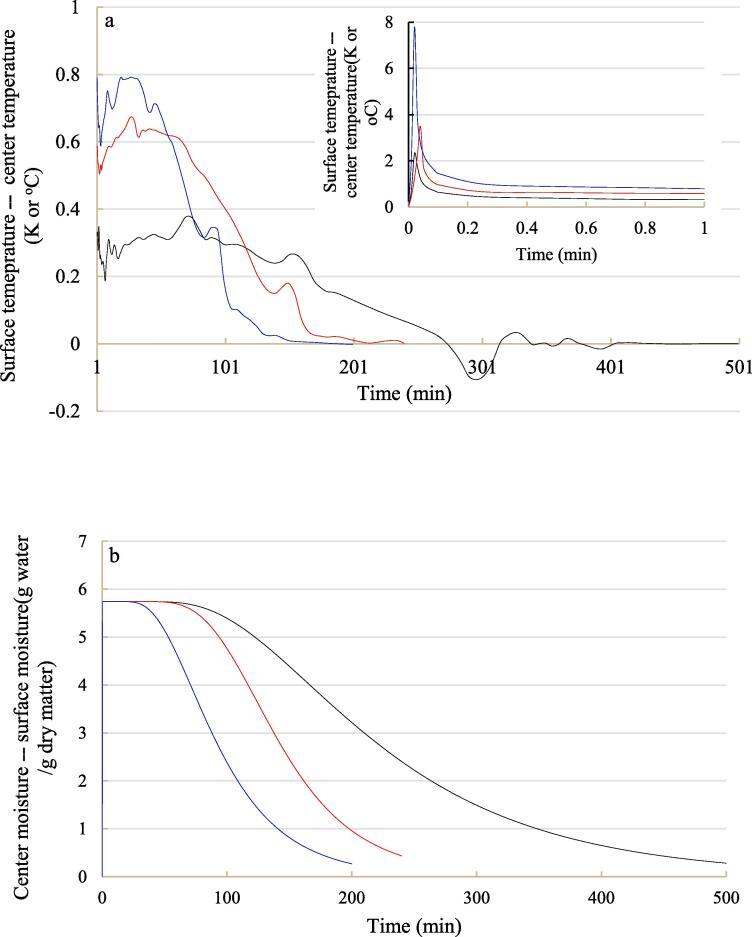
This study aimed at investigating the performances of air drying of blackberries assisted by airborne ultrasound and contact ultrasound. The drying experiments were conducted in a self-designed dryer coupled with a 20-kHz ultrasound probe. A numerical model for unsteady heat and mass transfer considering temperature dependent diffusivity, shrinkage pattern and input ultrasonic energies were applied to explore the drying mechanism, while the energy consumption and quality were analyzed experimentally. Generally, both airborne ultrasound and contact ultrasound accelerated the drying process, reduced the energy consumption and enhanced the retentions of blackberry anthocyanins and organic acids in comparison to air drying alone. At the same input ultrasound intensity level, blackberries received more ultrasound energies under contact sonication (0.299 W) than airborne sonication (0.245 W), thus avoiding the attenuation of ultrasonic energies by air. The modeling results revealed that contact ultrasound was more capable than airborne ultrasound to intensify the inner moisture diffusion and heat conduction, as well as surface exchange of heat and moisture with air. During air drying, contact ultrasound treatment eliminated the gradients of temperature and moisture inside blackberry easier than airborne ultrasound, leading to more homogenous distributions. Moreover, the total energy consumption under air drying with contact ultrasound assistance was 27.0% lower than that with airborne ultrasound assistance. Besides, blackberries dehydrated by contact ultrasound contained more anthocyanins and organic acids than those dried by airborne ultrasound, implying a higher quality. Overall, direct contact sonication can well benefit blackberry drying in both energy and quality aspects.
本研究旨在探究空气干燥过程中辅助使用气载超声和接触超声对黑莓干燥性能的影响。干燥实验在自行设计的干燥器中进行,该干燥器与 20kHz 的超声探头耦合。采用了一个考虑到温度相关扩散系数、收缩模式和输入超声能量的非稳态传热传质数值模型来探究干燥机制,同时通过实验分析了能量消耗和干燥品质。总体而言,与单独空气干燥相比,气载超声和接触超声均能加速干燥过程、降低能耗并提高黑莓花色苷和有机酸的保留率。在相同的输入超声强度水平下,接触超声(0.299W)向黑莓传递的超声能量多于气载超声(0.245W),这避免了超声能量在空气中的衰减。模型结果表明,与气载超声相比,接触超声更能强化内部水分扩散和热传导以及与空气的热湿交换。在空气干燥过程中,接触超声处理比气载超声更能轻易消除黑莓内部的温度和水分梯度,从而实现更均匀的分布。此外,在接触超声辅助空气干燥下的总能耗比气载超声辅助空气干燥低 27.0%。此外,与气载超声干燥相比,接触超声干燥的黑莓含有更多的花色苷和有机酸,表明具有更高的品质。总的来说,直接接触超声在能量和质量方面均能很好地促进黑莓干燥。



 Zotero 插件