
阿片受体配体特异性如何在理解其生理功能方面变得重要。
How Ah Receptor Ligand Specificity Became Important in Understanding Its Physiological Function.
机构信息
Department of Veterinary and Biomedical Sciences, Center for Molecular Toxicology and Carcinogenesis, The Pennsylvania State University, University Park, PA 16802, USA.
出版信息
Int J Mol Sci. 2020 Dec 17;21(24):9614. doi: 10.3390/ijms21249614.
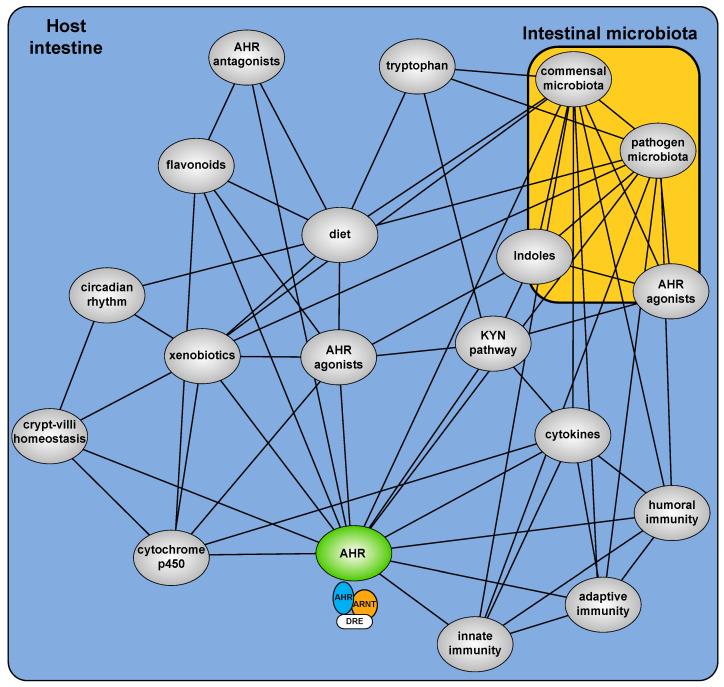
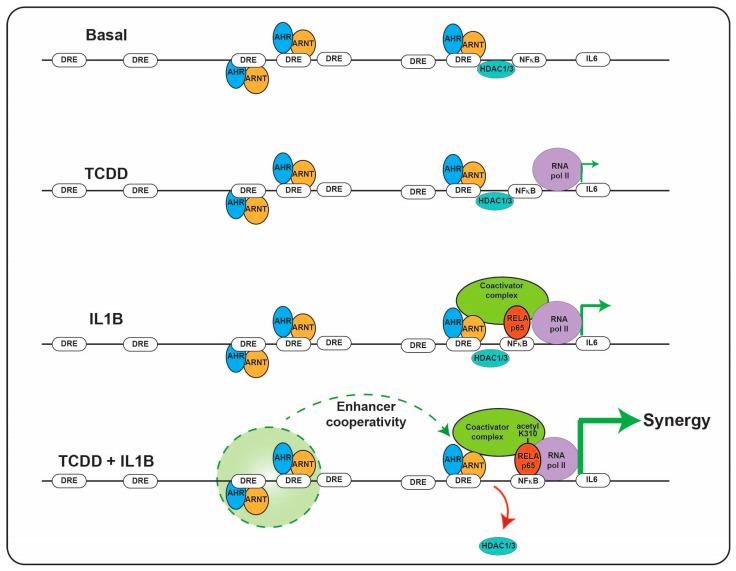
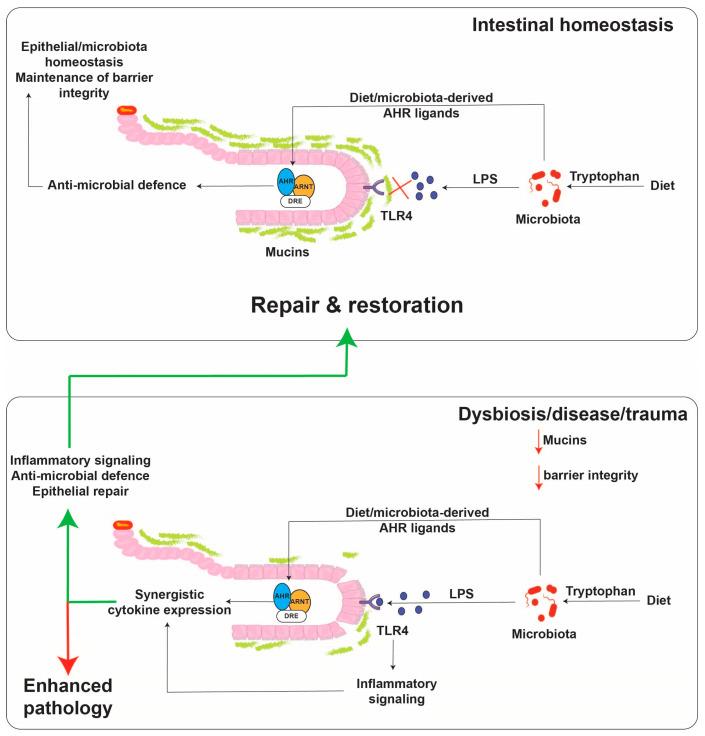
Increasingly, the aryl hydrocarbon receptor (AHR) is being recognized as a sensor for endogenous and pseudo-endogenous metabolites, and in particular microbiota and host generated tryptophan metabolites. One proposed explanation for this is the role of the AHR in innate immune signaling within barrier tissues in response to the presence of microorganisms. A number of cytokine/chemokine genes exhibit a combinatorial increase in transcription upon toll-like receptors and AHR activation, supporting this concept. The AHR also plays a role in the enhanced differentiation of intestinal and dermal epithelium leading to improved barrier function. Importantly, from an evolutionary perspective many of these tryptophan metabolites exhibit greater activation potential for the human AHR when compared to the rodent AHR. These observations underscore the importance of the AHR in barrier tissues and may lead to pharmacologic therapeutic intervention.
芳香烃受体 (AHR) 越来越被认为是内源性和拟内源性代谢物的传感器,尤其是微生物群和宿主产生的色氨酸代谢物的传感器。对此的一个解释是 AHR 在屏障组织中的先天免疫信号传导中的作用,以响应微生物的存在。许多细胞因子/趋化因子基因在 Toll 样受体和 AHR 激活时表现出转录的组合增加,支持了这一概念。AHR 还在促进肠道和皮肤上皮细胞的分化中发挥作用,从而改善屏障功能。重要的是,从进化的角度来看,与啮齿动物 AHR 相比,这些色氨酸代谢物中的许多对人 AHR 具有更大的激活潜力。这些观察结果强调了 AHR 在屏障组织中的重要性,并可能导致药理学治疗干预。

 Zotero 插件