
欧洲温带和寒冷地区的人畜共患蜱传病原体——家畜患病率综述
Zoonotic Tick-Borne Pathogens in Temperate and Cold Regions of Europe-A Review on the Prevalence in Domestic Animals.
作者信息
Springer Andrea, Glass Antje, Topp Anna-Katharina, Strube Christina
机构信息
Institute for Parasitology, Centre for Infection Medicine, University of Veterinary Medicine Hannover, Hanover, Germany.
出版信息
Front Vet Sci. 2020 Dec 10;7:604910. doi: 10.3389/fvets.2020.604910. eCollection 2020.
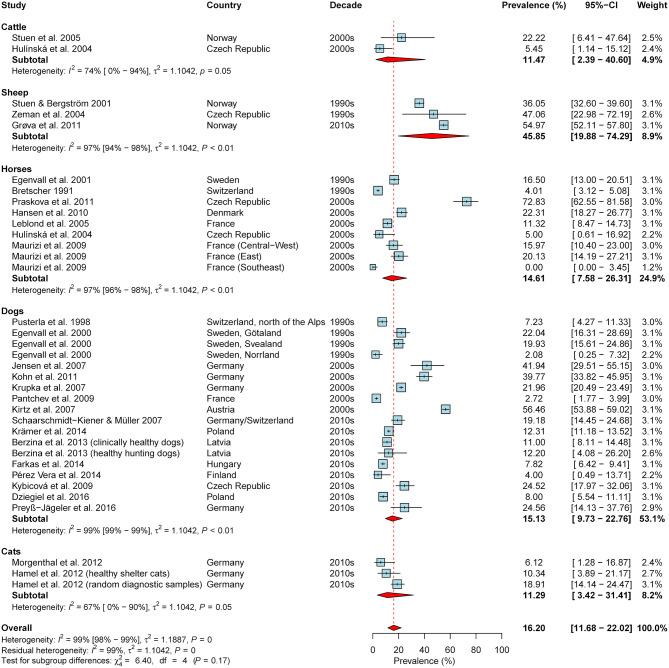
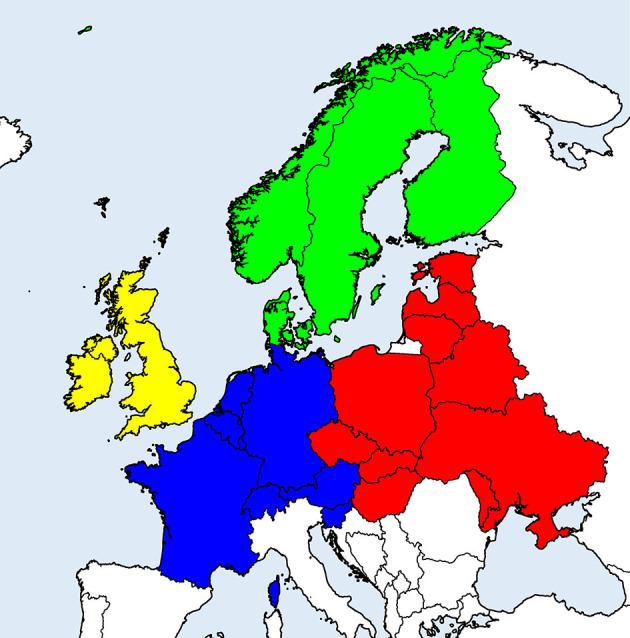
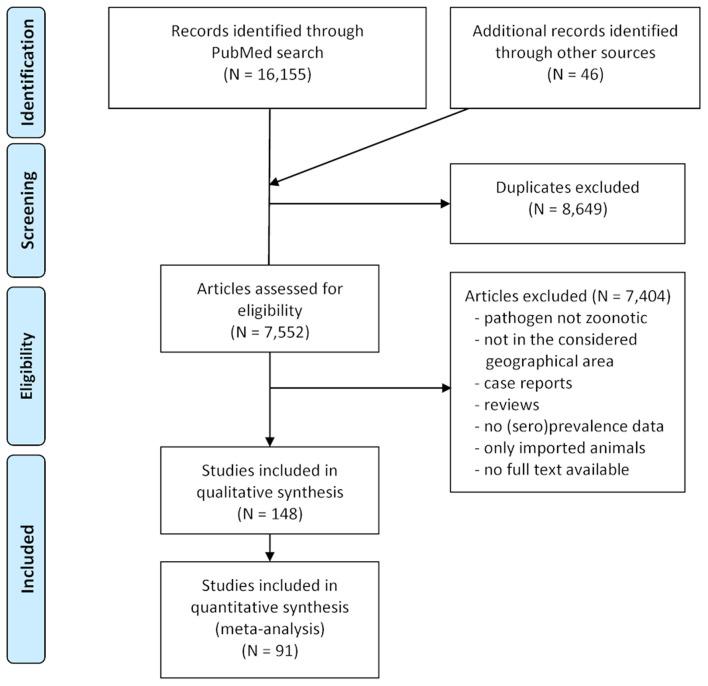
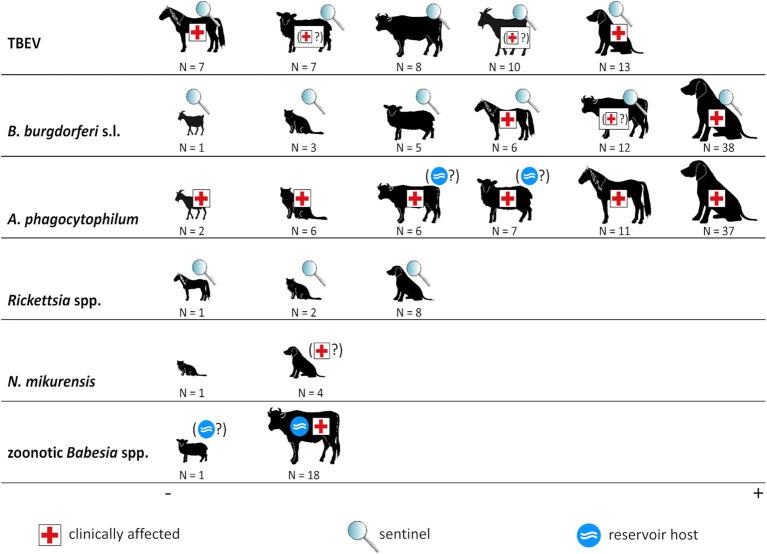
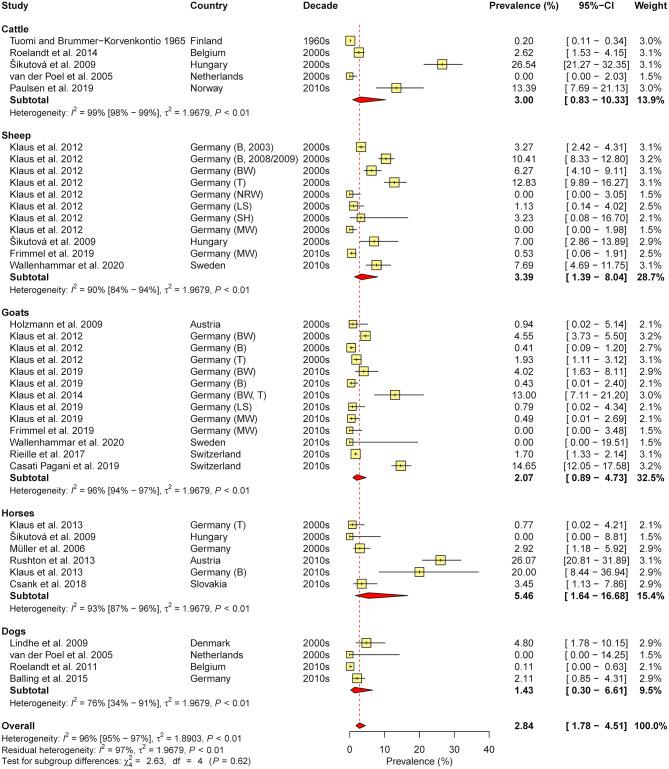
Ticks transmit a variety of pathogens affecting both human and animal health. In temperate and cold regions of Europe (Western, Central, Eastern, and Northern Europe), the most relevant zoonotic tick-borne pathogens are tick-borne encephalitis virus (TBEV), spp. and . More rarely, spp., , and zoonotic spp. are identified as a cause of human disease. Domestic animals may also be clinically affected by these pathogens, and, furthermore, can be regarded as sentinel hosts for their occurrence in a certain area, or even play a role as reservoirs or amplifying hosts. For example, viraemic ruminants may transmit TBEV to humans via raw milk products. This review summarizes the role of domestic animals, including ruminants, horses, dogs, and cats, in the ecology of TBEV, spp., spp., , and zoonotic species. It gives an overview on the (sero-)prevalence of these infectious agents in domestic animals in temperate/cold regions of Europe, based on 148 individual prevalence studies. Meta-analyses of seroprevalence in asymptomatic animals estimated an overall seroprevalence of 2.7% for TBEV, 12.9% for sensu lato (s.l.), 16.2% for and 7.4% for , with a high level of heterogeneity. Subgroup analyses with regard to animal species, diagnostic test, geographical region and decade of sampling were mostly non-significant, with the exception of significantly lower s.l. seroprevalences in dogs than in horses and cattle. More surveillance studies employing highly sensitive and specific test methods and including hitherto non-investigated regions are needed to determine if and how global changes in terms of climate, land use, agricultural practices and human behavior impact the frequency of zoonotic tick-borne pathogens in domestic animals.
蜱虫传播多种影响人类和动物健康的病原体。在欧洲的温带和寒冷地区(西欧、中欧、东欧和北欧),最相关的人兽共患蜱传病原体是蜱传脑炎病毒(TBEV)、[具体物种1]属和[具体物种2]属。更罕见的是,[具体物种3]属、[具体物种4]属和人兽共患的[具体物种5]属被确定为人类疾病的病因。家畜也可能受到这些病原体的临床影响,此外,它们可被视为特定地区这些病原体存在的哨兵宿主,甚至可作为储存宿主或扩增宿主。例如,病毒血症反刍动物可能通过生鲜奶制品将TBEV传播给人类。本综述总结了包括反刍动物、马、狗和猫在内的家畜在TBEV、[具体物种1]属、[具体物种2]属、[具体物种3]属和人兽共患[具体物种5]属生态中的作用。基于148项个体患病率研究,本文概述了这些传染源在欧洲温带/寒冷地区家畜中的(血清)患病率。对无症状动物血清阳性率的荟萃分析估计,TBEV的总体血清阳性率为2.7%,广义[具体物种1]属为12.9%,[具体物种2]属为16.2%,[具体物种3]属为7.4%,异质性水平较高。除狗的广义[具体物种1]属血清阳性率显著低于马和牛外,关于动物物种、诊断试验、地理区域和采样十年的亚组分析大多无显著差异。需要开展更多采用高灵敏度和特异性检测方法且涵盖迄今未调查地区的监测研究,以确定气候、土地利用、农业实践和人类行为等全球变化是否以及如何影响家畜中人兽共患蜱传病原体的发生频率。

 Zotero 插件