
斑马鱼胚胎毒性试验与一般及行为胚胎毒性试验作为化学物质筛选新方法的比较
Comparison of the Zebrafish Embryo Toxicity Assay and the General and Behavioral Embryo Toxicity Assay as New Approach Methods for Chemical Screening.
作者信息
Achenbach John C, Leggiadro Cindy, Sperker Sandra A, Woodland Cindy, Ellis Lee D
机构信息
Aquatic and Crop Resource Development, National Research Council of Canada, Halifax, NS B3H 3Z1, Canada.
New Substances Assessment Control Bureau, Health Canada, Ottawa, ON K1A 0K9, Canada.
出版信息
Toxics. 2020 Dec 21;8(4):126. doi: 10.3390/toxics8040126.
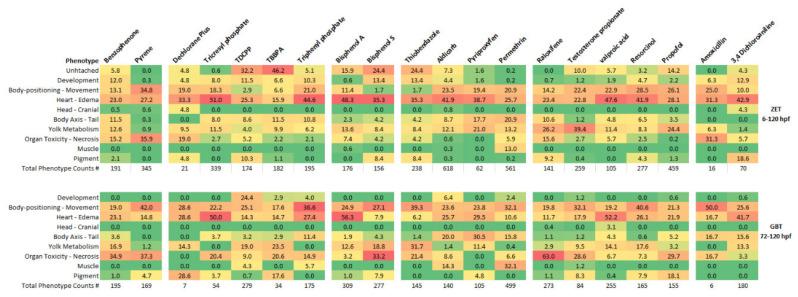
The movement away from mammalian testing of potential toxicants and new chemical entities has primarily led to cell line testing and protein-based assays. However, these assays may not yet be sufficient to properly characterize the toxic potential of a chemical. The zebrafish embryo model is widely recognized as a potential new approach method for chemical testing that may provide a bridge between cell and protein-based assays and mammalian testing. The Zebrafish Embryo Toxicity (ZET) model is increasingly recognized as a valuable toxicity testing platform. The ZET assay focuses on the early stages of embryo development and is considered a more humane model compared to adult zebrafish testing. A complementary model has been developed that exposes larvae to toxicants at a later time point during development where body patterning has already been established. Here we compare the toxicity profiles of 20 compounds for this General and Behavioral Toxicity (GBT) assay to the ZET assay. The results show partially overlapping toxicity profiles along with unique information provided by each assay. It appears from this work that these two assays applied together can strengthen the use of zebrafish embryos/larvae as standard toxicity testing models.
从对潜在毒物和新化学实体进行哺乳动物试验转向主要采用细胞系试验和基于蛋白质的检测方法。然而,这些检测方法可能仍不足以准确表征一种化学物质的潜在毒性。斑马鱼胚胎模型被广泛认为是一种潜在的新化学检测方法,它可能在基于细胞和蛋白质的检测与哺乳动物试验之间架起一座桥梁。斑马鱼胚胎毒性(ZET)模型越来越被视为一个有价值的毒性检测平台。ZET检测聚焦于胚胎发育的早期阶段,与成年斑马鱼检测相比,被认为是一个更人道的模型。已经开发出一种互补模型,在发育后期身体模式已经建立时,将幼虫暴露于毒物中。在此,我们将这种一般和行为毒性(GBT)检测中20种化合物的毒性特征与ZET检测进行比较。结果显示毒性特征部分重叠,同时每种检测都提供了独特信息。从这项工作来看,这两种检测方法一起应用可以加强斑马鱼胚胎/幼虫作为标准毒性检测模型的使用。


 Zotero 插件