
COVID-19、铁衰老和神经退行性变,一篇小型综述。
COVID-19, ferrosenescence and neurodegeneration, a mini-review.
机构信息
Patton State Hospital, California, United States of America.
Loma Linda University, Loma Linda, United States of America.
出版信息
Prog Neuropsychopharmacol Biol Psychiatry. 2021 Jul 13;109:110230. doi: 10.1016/j.pnpbp.2020.110230. Epub 2020 Dec 26.
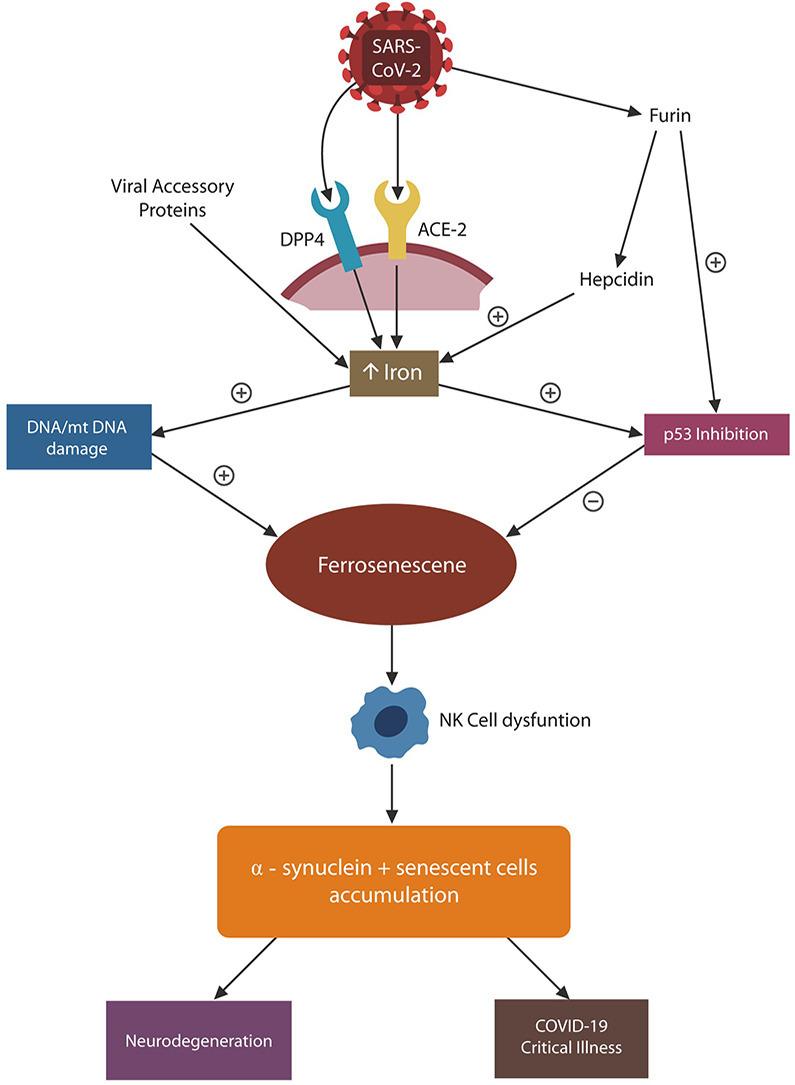
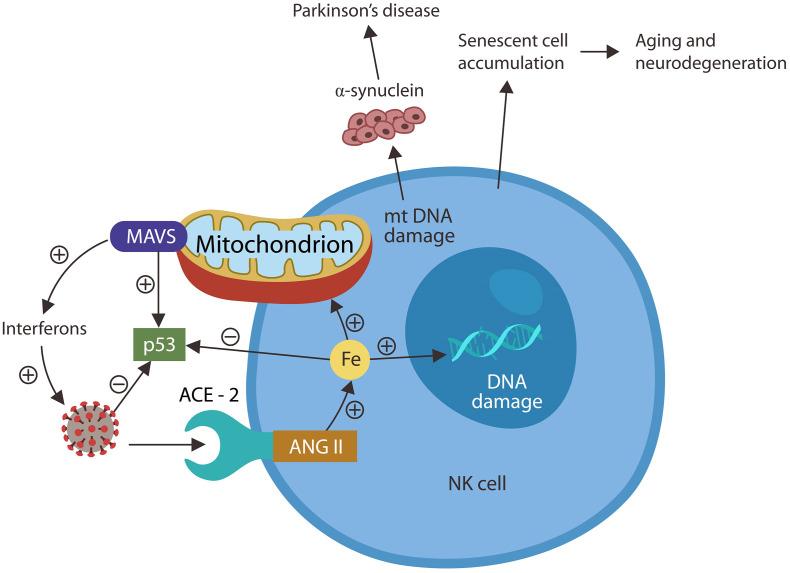
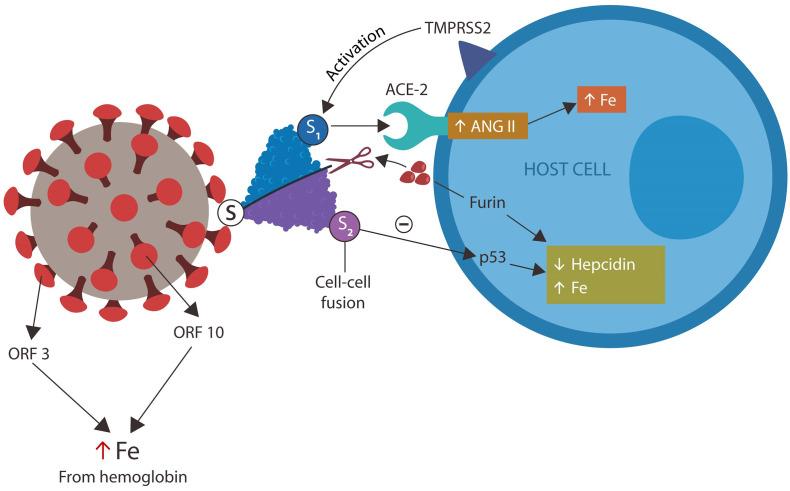
Exacerbation of cognitive, motor and nonmotor symptoms have been described in critically ill COVID-19 patients, indicating that, like prior pandemics, neurodegenerative sequelae may mark the aftermath of this viral infection. Moreover, SARS-CoV-2, the causative agent of COVID-19 disease, was associated with hyperferritinemia and unfavorable prognosis in older individuals, suggesting virus-induced ferrosenescence. We have previously defined ferrosenescence as an iron-associated disruption of both the human genome and its repair mechanisms, leading to premature cellular senescence and neurodegeneration. As viruses replicate more efficiently in iron-rich senescent cells, they may have developed the ability to induce this phenotype in host tissues, predisposing to both immune dysfunction and neurodegenerative disorders. In this mini-review, we summarize what is known about the SARS-CoV-2-induced cellular senescence and iron dysmetabolism. We also take a closer look at immunotherapy with natural killer cells, angiotensin II receptor blockers ("sartans"), iron chelators and dipeptidyl peptidase 4 inhibitors ("gliptins") as adjunct treatments for both COVID-19 and its neurodegenerative complications.
在重症 COVID-19 患者中,已经描述了认知、运动和非运动症状的恶化,表明与以往的大流行一样,神经退行性后遗症可能标志着这种病毒感染的后果。此外,COVID-19 疾病的病原体 SARS-CoV-2 与老年人的高血铁蛋白血症和不良预后相关,提示病毒诱导的铁衰老。我们之前将铁衰老定义为铁相关的人类基因组及其修复机制的破坏,导致过早的细胞衰老和神经退行性变。由于病毒在富含铁的衰老细胞中更有效地复制,它们可能已经发展出在宿主组织中诱导这种表型的能力,从而导致免疫功能障碍和神经退行性疾病。在这篇迷你综述中,我们总结了已知的 SARS-CoV-2 诱导的细胞衰老和铁代谢紊乱。我们还更仔细地研究了自然杀伤细胞免疫疗法、血管紧张素 II 受体阻滞剂(“沙坦”)、铁螯合剂和二肽基肽酶 4 抑制剂(“gliptin”)作为 COVID-19 及其神经退行性并发症的辅助治疗。

 Zotero 插件