
肾病患者的热量摄入:对矿物质代谢的影响。
Caloric Intake in Renal Patients: Repercussions on Mineral Metabolism.
机构信息
Department Medicina y Cirugia Animal, University of Cordoba, 14071 Cordoba, Spain.
Maimonides Biomedical Research Institute of Cordoba (IMIBIC), University of Cordoba, 14004 Cordoba, Spain.
出版信息
Nutrients. 2020 Dec 23;13(1):18. doi: 10.3390/nu13010018.
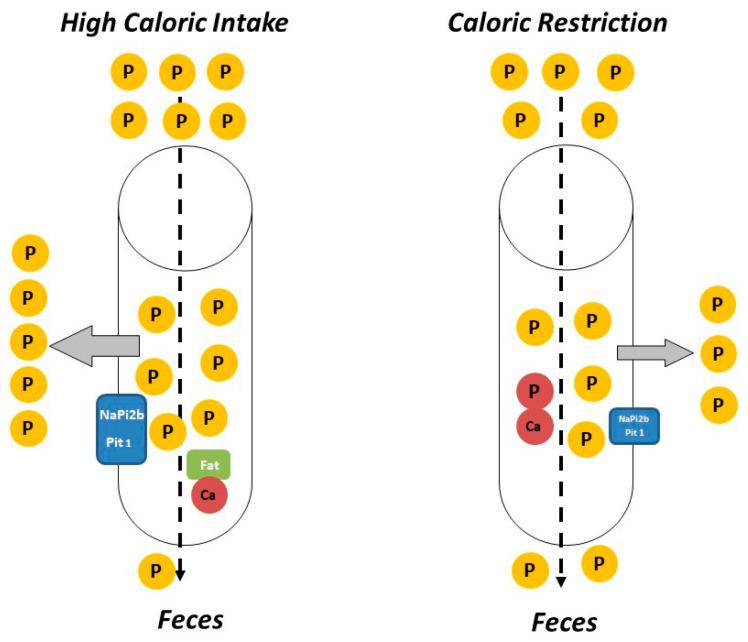
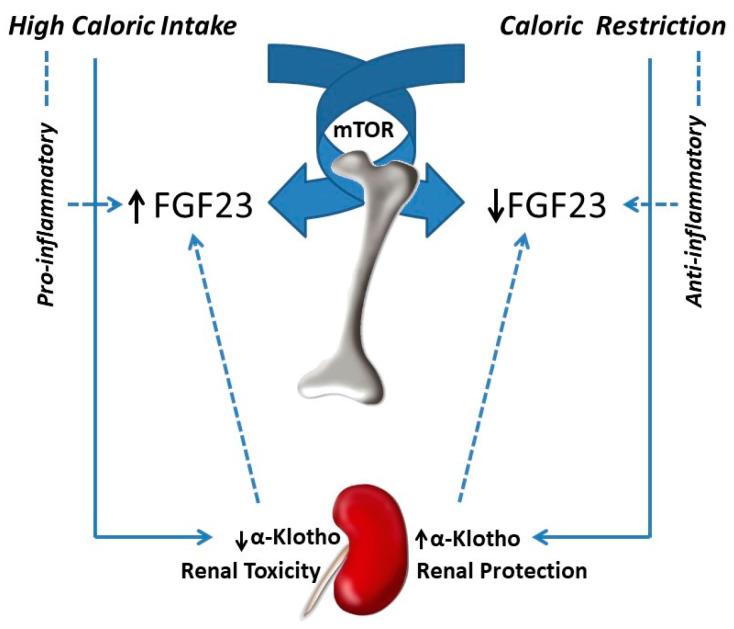
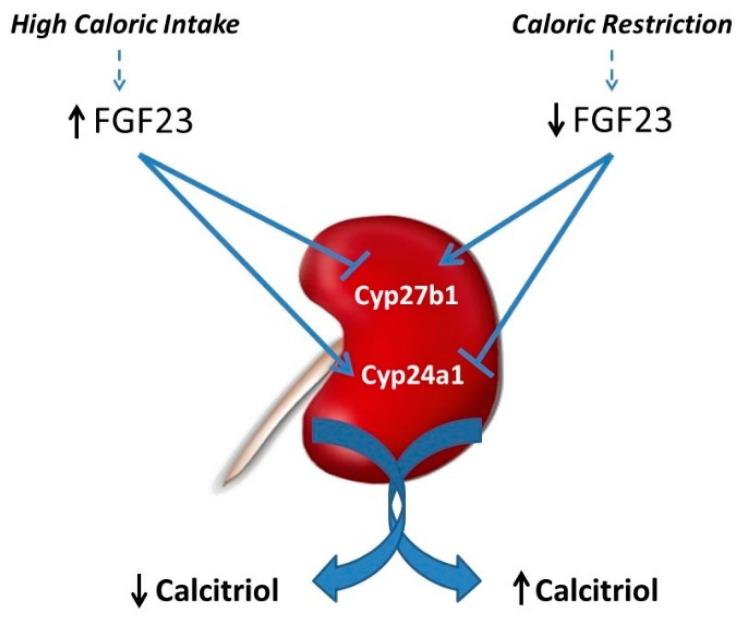
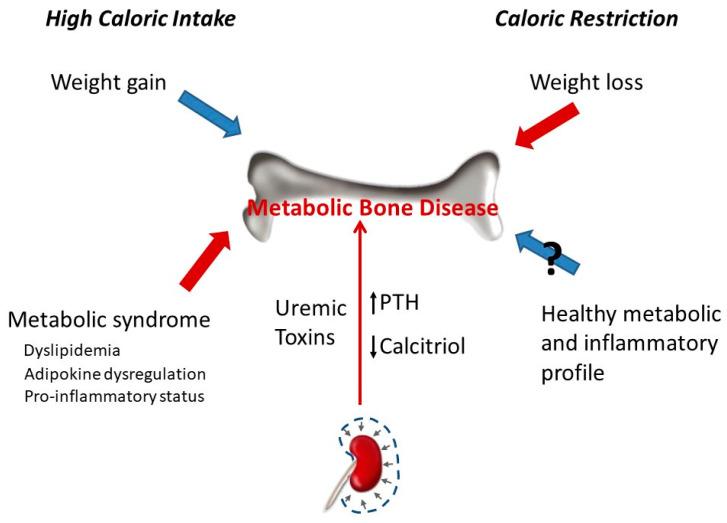
The aim of this paper is to review current knowledge about how calorie intake influences mineral metabolism focussing on four aspects of major interest for the renal patient: (a) phosphate (P) handling, (b) fibroblast growth factor 23 (FGF23) and calcitriol synthesis and secretion, (c) metabolic bone disease, and (d) vascular calcification (VC). Caloric intake has been shown to modulate P balance in experimental models: high caloric intake promotes P retention, while caloric restriction decreases plasma P concentrations. Synthesis and secretion of the phosphaturic hormone FGF23 is directly influenced by energy intake; a direct correlation between caloric intake and FGF23 plasma concentrations has been shown in animals and humans. Moreover, in vitro, energy availability has been demonstrated to regulate FGF23 synthesis through mechanisms in which the molecular target of rapamycin (mTOR) signalling pathway is involved. Plasma calcitriol concentrations are inversely proportional to caloric intake due to modulation by FGF23 of the enzymes implicated in vitamin D metabolism. The effect of caloric intake on bone is controversial. High caloric intake has been reported to increase bone mass, but the associated changes in adipokines and cytokines may as well be deleterious for bone. Low caloric intake tends to reduce bone mass but also may provide indirect (through modulation of inflammation and insulin regulation) beneficial effects on bone. Finally, while VC has been shown to be exacerbated by diets with high caloric content, the opposite has not been demonstrated with low calorie intake. In conclusion, although prospective studies in humans are needed, when planning caloric intake for a renal patient, it is important to take into consideration the associated changes in mineral metabolism.
本文旨在综述热量摄入影响矿物质代谢的现有知识,重点关注肾病患者关注的四个方面:(a)磷(P)处理,(b)成纤维细胞生长因子 23(FGF23)和 1,25-二羟维生素 D3 合成和分泌,(c)代谢性骨病,以及(d)血管钙化(VC)。研究表明,热量摄入可调节实验模型中的 P 平衡:高热量摄入促进 P 潴留,而热量限制则降低血浆 P 浓度。能量摄入直接影响磷酸酶激素 FGF23 的合成;动物和人类均显示出热量摄入与 FGF23 血浆浓度之间存在直接相关性。此外,体外研究表明,能量可用性可通过涉及雷帕霉素(mTOR)信号通路的分子靶标调节 FGF23 合成的机制来调节 FGF23 的合成。由于 FGF23 对参与维生素 D 代谢的酶的调节,血浆 1,25-二羟维生素 D3 浓度与热量摄入呈反比。热量摄入对骨骼的影响存在争议。高热量摄入已被报道可增加骨量,但与脂肪因子和细胞因子相关的变化也可能对骨骼有害。低热量摄入往往会减少骨量,但也可能通过调节炎症和胰岛素调节对骨骼产生间接(有益)影响。最后,虽然高卡路里饮食会加剧 VC,但低热量摄入并没有表现出相反的效果。总之,尽管需要进行前瞻性的人类研究,但在为肾病患者计划热量摄入时,重要的是要考虑到矿物质代谢的相关变化。

 Zotero 插件