
棉花(L.)的稳定介导转化及通过胚胎发生从转化的毛状根再生植株
A Stable -Mediated Transformation of Cotton ( L.) and Plant Regeneration From Transformed Hairy Root via Embryogenesis.
作者信息
Cui Min-Long, Liu Chen, Piao Chun-Lan, Liu Chuan-Liang
机构信息
College of Agriculture and Food Sciences, Zhejiang A & F University, Hangzhou, China.
College of Bioscience and Biotechnology, Shenyang Agricultural University, Shenyang, China.
出版信息
Front Plant Sci. 2020 Dec 14;11:604255. doi: 10.3389/fpls.2020.604255. eCollection 2020.
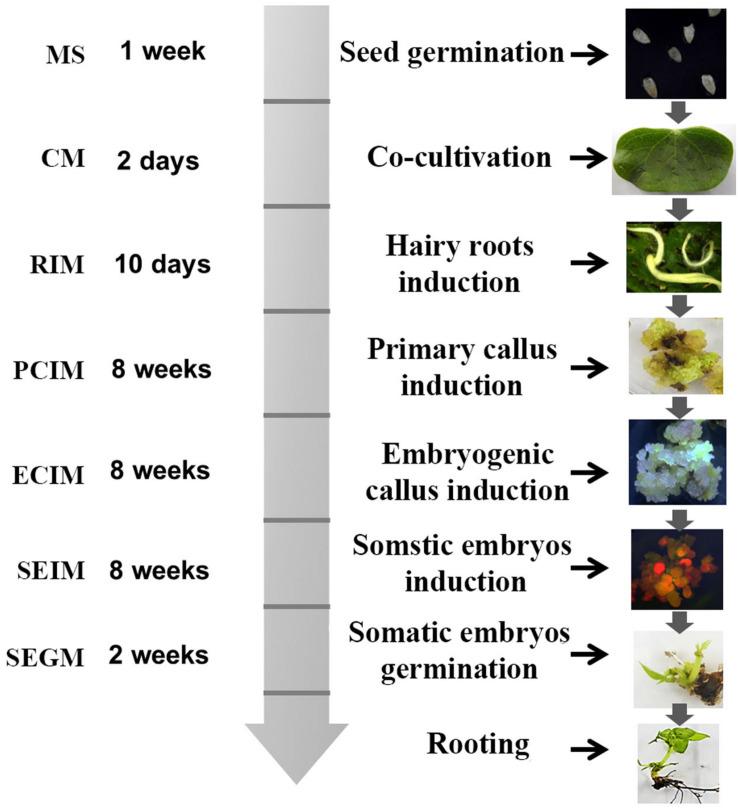
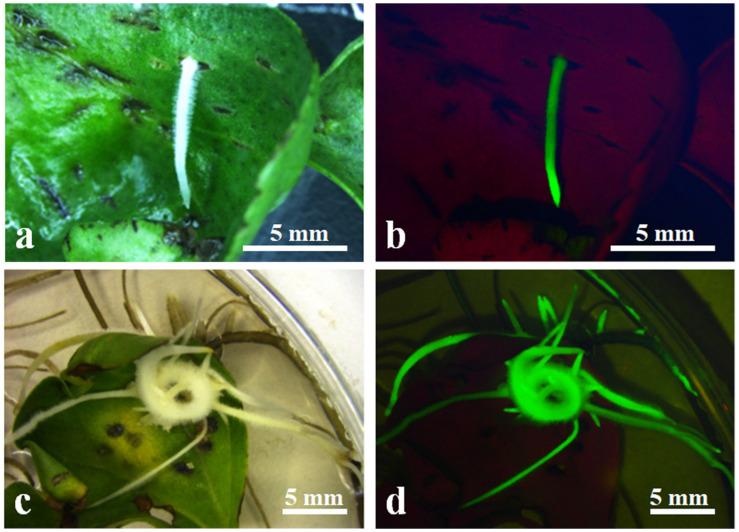
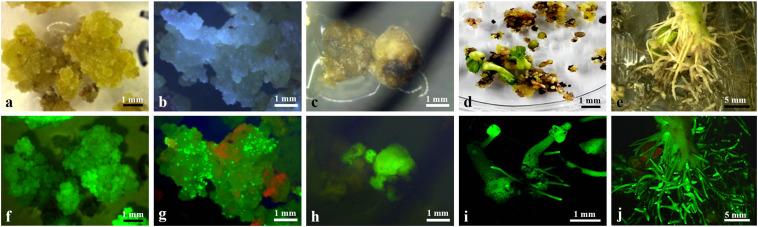
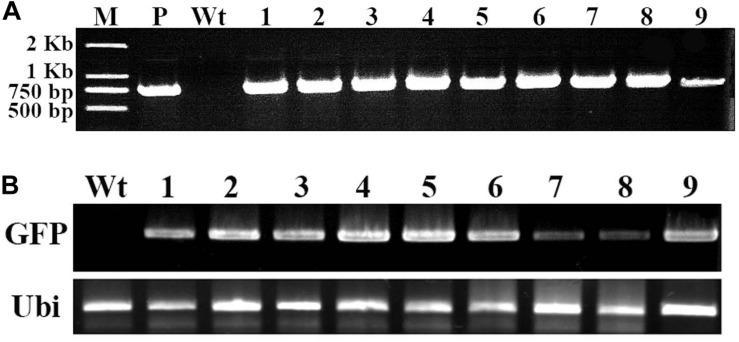
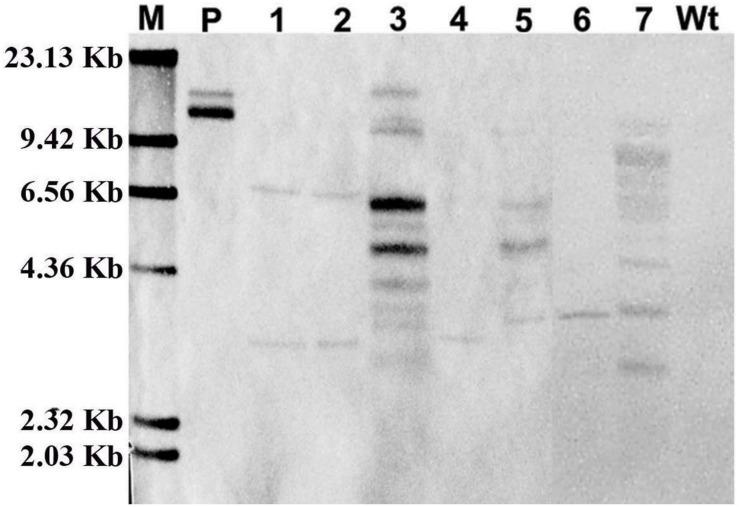
Genetic transformation is a powerful tool to study gene function, secondary metabolism pathways, and molecular breeding in crops. Cotton ( L.) is one of the most important economic crops in the world. Current cotton transformation methods take at least seven to culture and are labor-intensive and limited to some cultivars. In this study, we first time achieved plantlet regeneration of cotton via embryogenesis from transformed hairy roots. We inoculated the cotyledon explants of a commercial cultivar Zhongmian-24 with strain AR1193, harboring a binary vector pBI-35S::GFP that contained the (neomycin phosphotransferase) gene and the (green fluorescent protein) gene as a fluorescent marker in the T-DNA region. 82.6% explants produced adventitious roots, of which 53% showed GFP expression after transformation. 82% of transformed hairy roots produced embryonic calli, 12% of which regenerated into stable transformed cotton plants after 7 months of culture. The integration of in the transformed cotton genomes were confirmed by PCR (Polymerase chain reaction) and Southern blot analysis as well as the stable expression of GFP were also detected by semi-quantitative RT-PCR analysis. The resultant transformed plantlets were phenotypically, thus avoiding Ri syndrome. Here we report a stable and reproducible method for -mediated transformation of using cotyledon as explants, which provides a useful and reliable platform for gene function analysis of cotton.
遗传转化是研究作物基因功能、次生代谢途径和分子育种的有力工具。棉花(陆地棉)是世界上最重要的经济作物之一。目前的棉花转化方法至少需要7天进行培养,且劳动强度大,并且仅限于某些品种。在本研究中,我们首次通过转化的毛状根诱导胚状体实现了棉花植株再生。我们用携带二元载体pBI-35S::GFP的AR1193菌株接种商业品种中棉24的子叶外植体,该二元载体在T-DNA区域含有nptⅡ(新霉素磷酸转移酶)基因和gfp(绿色荧光蛋白)基因作为荧光标记。82.6%的外植体产生不定根,其中53%在转化后显示出GFP表达。82%的转化毛状根产生胚性愈伤组织,其中12%在培养7个月后再生为稳定的转化棉花植株。通过PCR(聚合酶链反应)和Southern杂交分析证实了nptⅡ在转化棉花基因组中的整合,同时通过半定量RT-PCR分析也检测到了GFP的稳定表达。所得的转化苗在表型上正常,从而避免了Ri综合征。在此,我们报道了一种以子叶为外植体的根癌农杆菌介导的棉花稳定且可重复的转化方法,该方法为棉花基因功能分析提供了一个有用且可靠的平台。

 Zotero 插件