
微小RNA-7-5p对脑出血后脑水肿的影响及其可能机制
miR-7-5p Affects Brain Edema After Intracerebral Hemorrhage and Its Possible Mechanism.
作者信息
Chen Xiqian, Deng Shuwen, Lei Qiang, He Qiang, Ren Yijun, Zhang Yiliu, Nie Jingjing, Lu Wei
机构信息
Department of Neurology, The Second Xiangya Hospital, Central South University, Changsha, China.
出版信息
Front Cell Dev Biol. 2020 Dec 16;8:598020. doi: 10.3389/fcell.2020.598020. eCollection 2020.
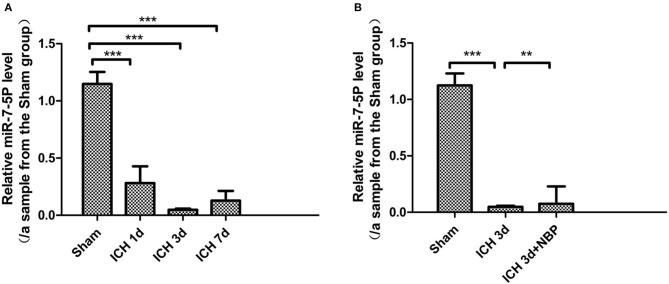
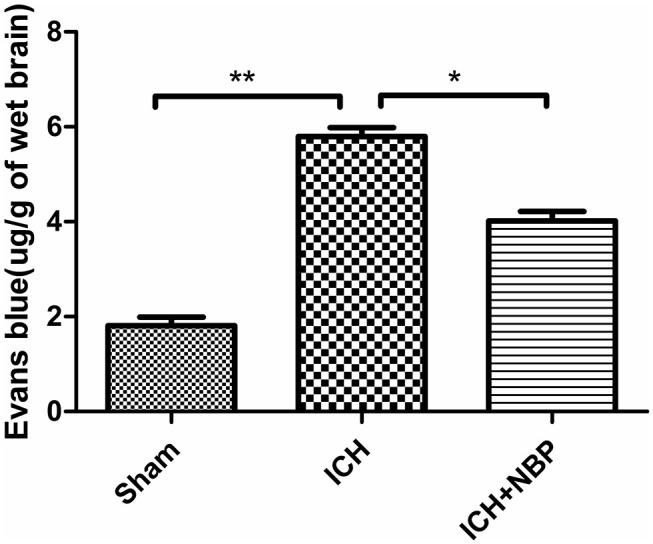
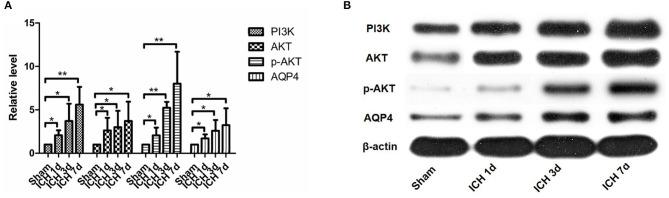
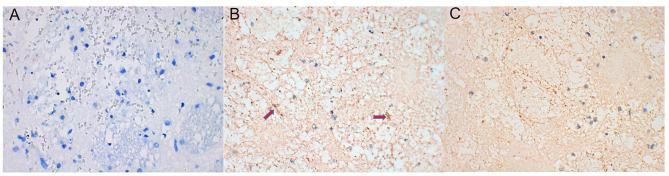
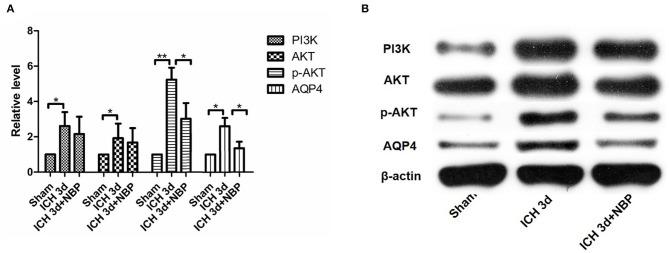
To explore the relationship between miR-7-5p and brain edema after intracerebral hemorrhage and the role of butylphthalide (NBP) in brain edema after intracerebral hemorrhage. Routine blood testing, C-reactive protein results, and computed tomography data were collected 1, 7, and 14 days after intracerebral hemorrhage in six patients. Levels of MMP-9, ZO-1, occludin, IL-6, TNF-α, and miR-7-5p were detected in each patient's serum. Sixty male Sprague-Dawley rats were randomly divided into sham operation, intracerebral hemorrhage, and NBP treatment groups. Dry-wet weight was used to assess brain edema, and Evans blue staining was used to assess the permeability of the blood-brain barrier. Expression levels of IL-6, TNF-α, ZO-1 and occludin, PI3K, AKT, p-AKT, AQP4, and miR-7-5p were analyzed in the rat brains. The blood neutrophil-lymphocyte ratio (NLR) on day 1 was associated with the area of brain edema on day 7. The expression of miR-7-5p decreased after intracerebral hemorrhage, and as a result, the inhibition of the PI3K/AKT pathway was weakened. The decreased inhibition of the PI3K/AKT pathway resulted in an increase in AQP4 expression, which further aggravated brain edema. NBP can upregulate the expression of miR-7-5p, affecting these pathways to reduce brain edema. After intracerebral hemorrhage, miR-7-5p expression in brain tissue is reduced, which may increase the expression of AQP4 by activating the PI3K/AKT pathway. NBP can inhibit this process and reduce brain edema.
探讨微小RNA-7-5p(miR-7-5p)与脑出血后脑水肿的关系以及丁苯酞(NBP)在脑出血后脑水肿中的作用。收集6例患者脑出血后1天、7天和14天的血常规、C反应蛋白结果及计算机断层扫描数据。检测每位患者血清中基质金属蛋白酶-9(MMP-9)、紧密连接蛋白-1(ZO-1)、闭合蛋白、白细胞介素-6(IL-6)、肿瘤坏死因子-α(TNF-α)和miR-7-5p的水平。将60只雄性Sprague-Dawley大鼠随机分为假手术组、脑出血组和NBP治疗组。采用干湿重法评估脑水肿,伊文思蓝染色法评估血脑屏障通透性。分析大鼠脑组织中IL-6、TNF-α、ZO-1和闭合蛋白、磷脂酰肌醇-3激酶(PI3K)、蛋白激酶B(AKT)、磷酸化AKT(p-AKT)、水通道蛋白4(AQP4)和miR-7-5p的表达水平。第1天的血液中性粒细胞与淋巴细胞比值(NLR)与第7天的脑水肿面积相关。脑出血后miR-7-5p表达降低,导致PI3K/AKT通路的抑制减弱。PI3K/AKT通路抑制减弱导致AQP4表达增加,进而加重脑水肿。NBP可上调miR-7-5p的表达,影响这些通路以减轻脑水肿。脑出血后,脑组织中miR-7-5p表达降低,可能通过激活PI3K/AKT通路增加AQP4的表达。NBP可抑制这一过程并减轻脑水肿。



 Zotero 插件