
多能干细胞成肌分化中的关键途径和枢纽基因的鉴定:生物信息学和实验研究。
Identification of key pathways and hub genes in the myogenic differentiation of pluripotent stem cell: a bioinformatics and experimental study.
机构信息
Sports Medicine Department, Northern Jiangsu People's Hospital, Clinical Medical College, Yangzhou University, 98# Nantong xi Road, Yangzhou, 225001, China.
Dalian Medical University, Dalian, 116044, Dalian, China.
出版信息
J Orthop Surg Res. 2021 Jan 4;16(1):4. doi: 10.1186/s13018-020-01979-x.
BACKGROUND
The regeneration of muscle cells from stem cells is an intricate process, and various genes are included in the process such as myoD, mf5, mf6, etc. The key genes and pathways in the differentiating stages are various. Therefore, the differential expression of key genes after 4 weeks of differentiation were investigated in our study.
METHOD
Three published gene expression profiles, GSE131125, GSE148994, and GSE149055, about the comparisons of pluripotent stem cells to differentiated cells after 4 weeks were obtained from the Gene Expression Omnibus (GEO) database. Common differentially expressed genes (DEGs) were obtained for further analysis such as protein-protein interaction (PPI) network, Gene Ontology (GO), Kyoto Encyclopedia of Genes and Genomes (KEGG), and GSEA analysis. After hub genes and key pathways were obtained, we manipulated in vitro cell research for substantiation such as immunohistochemical staining and semi-quantitative analysis and quantitative real-time PCR.
RESULTS
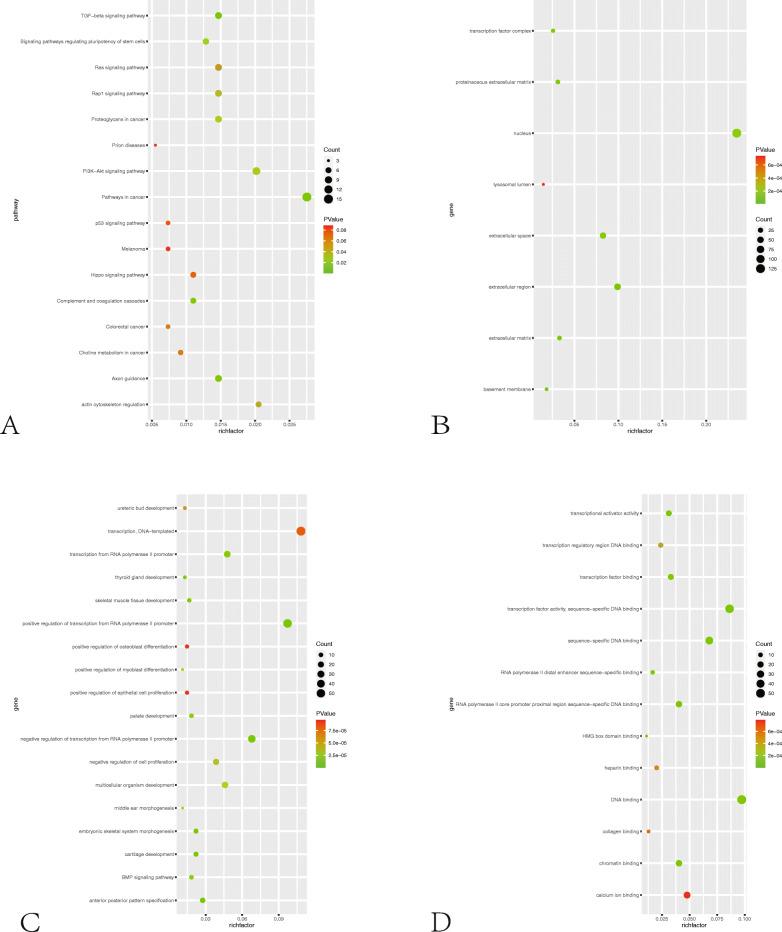
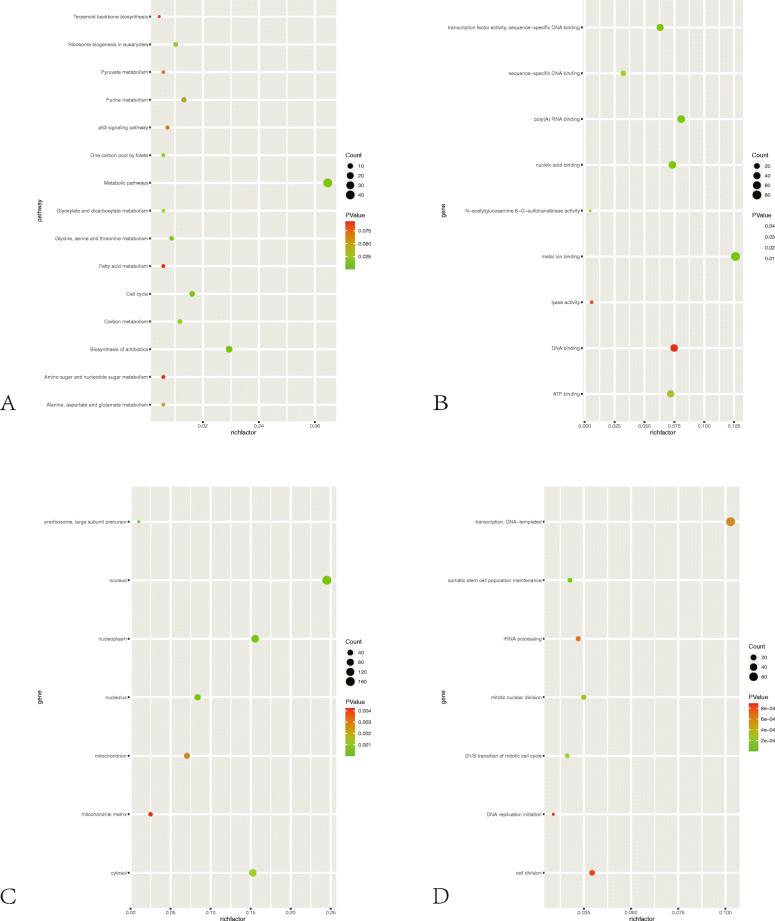
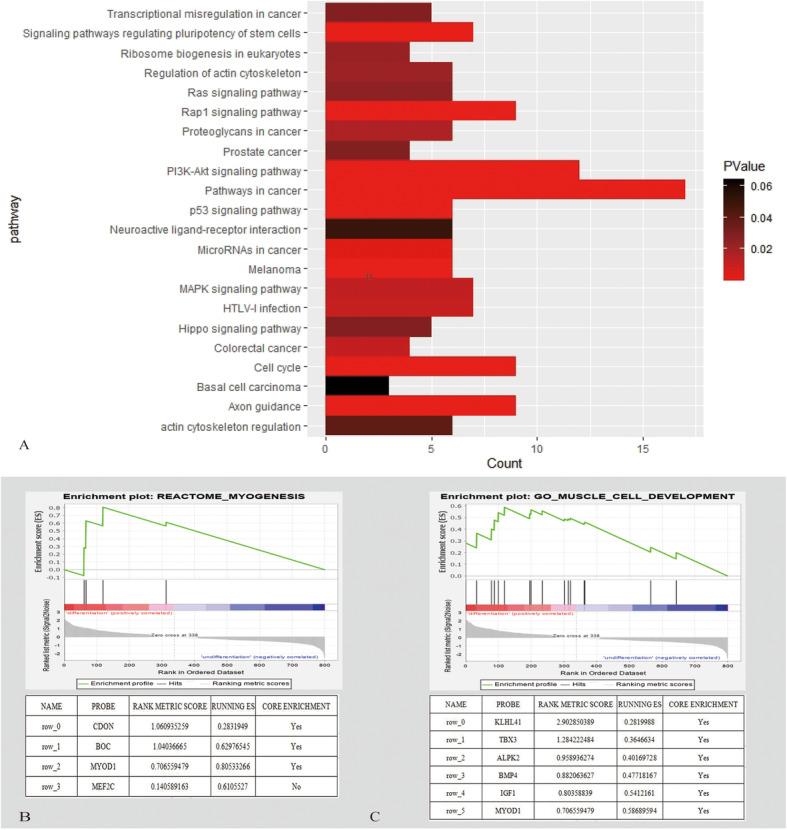
A total of 824 DEGs including 350 upregulated genes and 474 downregulated genes were identified in the three GSEs. Nineteen hub genes were identified from the PPI network. The GO and KEGG pathway analyses confirmed that myogenic differentiation at 4 weeks was strongly associated with pathway in cancer, PI3K pathway, actin cytoskeleton regulation and metabolic pathway, biosynthesis of antibodies, and cell cycle. GSEA analysis indicated the differentiated cells were enriched in muscle cell development and myogenesis. Meanwhile, the core genes in each pathway were identified from the GSEA analysis. The in vitro cell research revealed that actin cytoskeleton and myoD were upregulated after 4-week differentiation.
CONCLUSIONS
The research revealed the potential hub genes and key pathways after 4-week differentiation of stem cells which contribute to further study about the molecular mechanism of myogenesis regeneration, paving a way for more accurate treatment for muscle dysfunction.
背景
肌肉干细胞的再生是一个复杂的过程,在此过程中包含了多种基因,如 myoD、mf5、mf6 等。在分化阶段,关键基因和途径多种多样。因此,我们研究了分化 4 周后关键基因的差异表达。
方法
从基因表达综合数据库(GEO)中获取了三个关于多能干细胞分化 4 周后与分化细胞比较的已发表基因表达谱 GSE131125、GSE148994 和 GSE149055,获得共同差异表达基因(DEGs)进行进一步分析,如蛋白-蛋白相互作用(PPI)网络、基因本体论(GO)、京都基因与基因组百科全书(KEGG)和 GSEA 分析。获得枢纽基因和关键途径后,我们进行了体外细胞研究,如免疫组织化学染色和半定量及实时定量 PCR 进行验证。
结果
在这三个 GSE 中,共鉴定出 824 个 DEGs,包括 350 个上调基因和 474 个下调基因。从 PPI 网络中鉴定出 19 个枢纽基因。GO 和 KEGG 通路分析证实,4 周时的肌发生与癌症通路、PI3K 通路、肌动蛋白细胞骨架调节和代谢途径、抗体合成和细胞周期密切相关。GSEA 分析表明,分化细胞富集在肌肉细胞发育和肌发生中。同时,从 GSEA 分析中确定了每个通路的核心基因。体外细胞研究显示,肌动蛋白细胞骨架和 myoD 在分化 4 周后上调。
结论
本研究揭示了干细胞分化 4 周后的潜在枢纽基因和关键途径,有助于进一步研究肌发生再生的分子机制,为肌肉功能障碍的更准确治疗铺平道路。


 Zotero 插件