
哥斯达黎加和乌干达小农户农药使用决定因素的比较分析
Comparative Analysis of Pesticide Use Determinants Among Smallholder Farmers From Costa Rica and Uganda.
作者信息
Staudacher Philipp, Fuhrimann Samuel, Farnham Andrea, Mora Ana M, Atuhaire Aggrey, Niwagaba Charles, Stamm Christian, Eggen Rik Il, Winkler Mirko S
机构信息
Eawag, Swiss Federal Institute of Aquatic Science and Technology, Dübendorf, Switzerland.
Institute of Biogeochemistry and Pollutant Dynamics, CHN, ETH Zürich, Zürich, Switzerland.
出版信息
Environ Health Insights. 2020 Dec 14;14:1178630220972417. doi: 10.1177/1178630220972417. eCollection 2020.
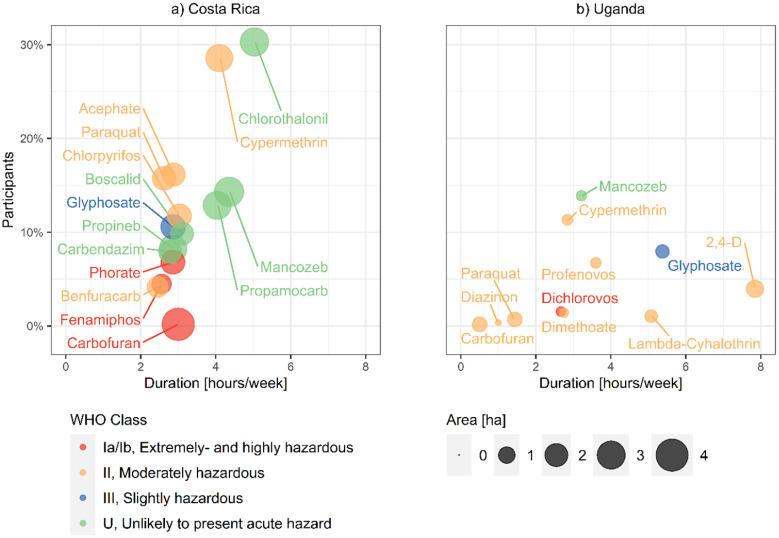
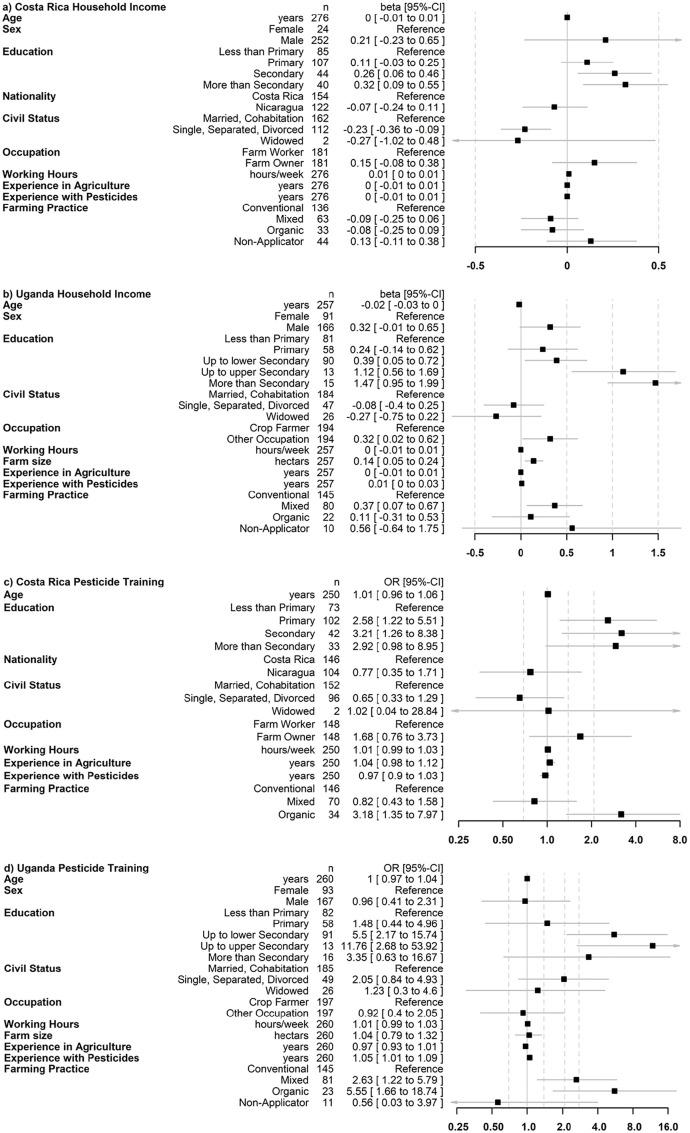
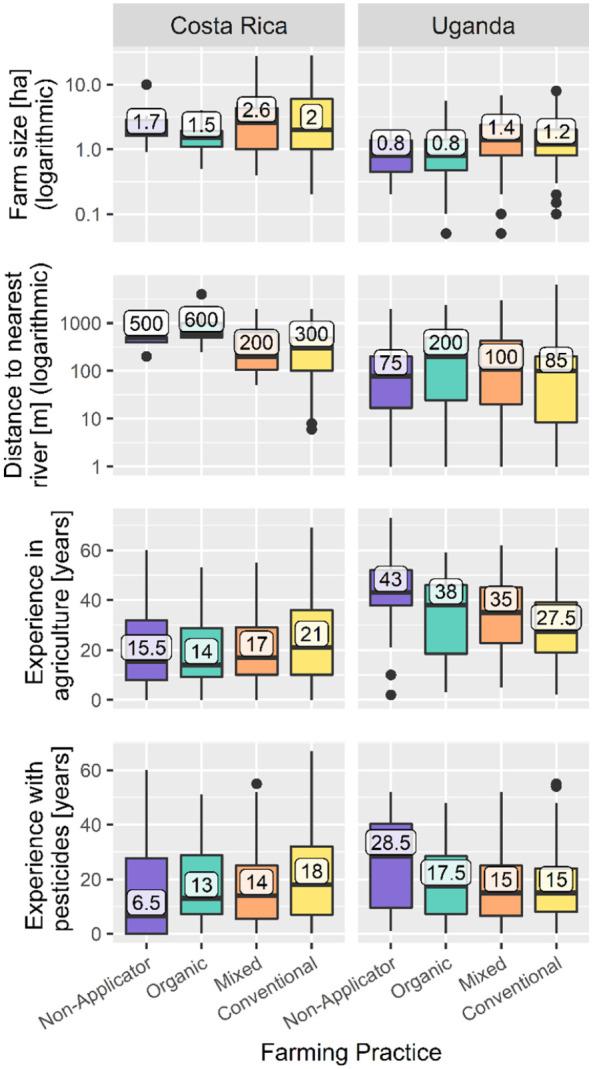
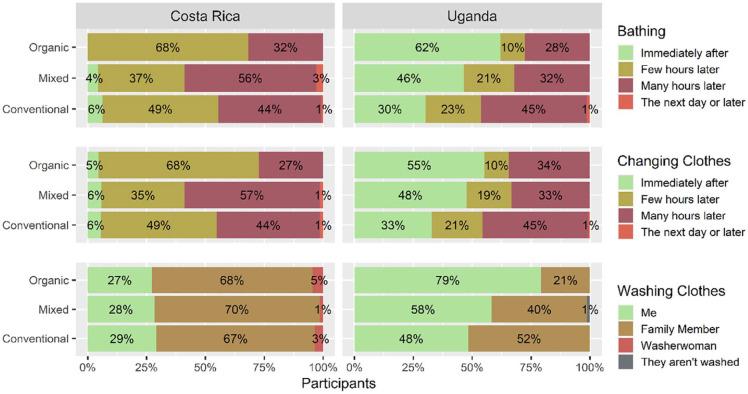
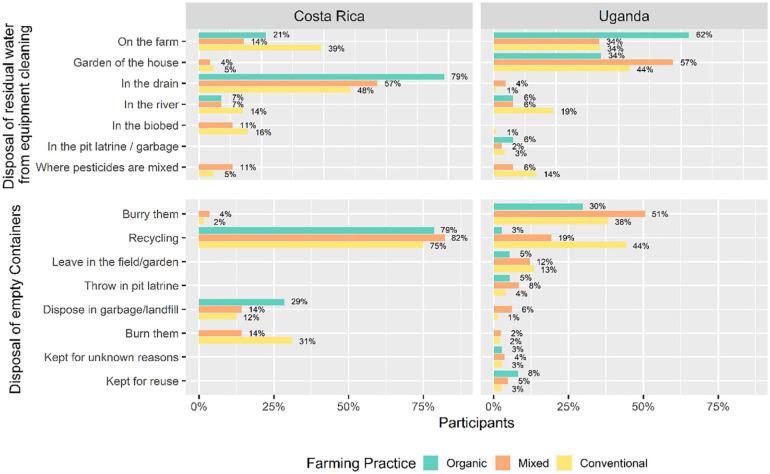
Pesticides are used globally in agriculture and pose a threat to the health of farmers, communities, and the environment. Smallholder farmers in low- and middle-income countries have generally a low socio-economic status and educational level. Consequently, they are particularly vulnerable to negative impacts of pesticides on their health, yields, or land. In a Knowledge, Attitude, and Practices study, we compared the pest management practices between a market-oriented farming system in Zarcero County, Costa Rica, and a subsistence-based farming system in Wakiso District, Uganda. We conducted a cross-sectional survey among smallholder farmers from Costa Rica (n = 300) in 2016 and from Uganda (n = 302) in 2017. We enrolled conventional and organic farmers, but also farmers with mixed practices and non-applicators of any pest management strategy. We found that the majority of pesticides used in both case studies are classified as highly hazardous by the World Health Organization. While more than 90% of smallholder farmers from both countries were aware of the negative health effects of pesticide exposure, <11% in Costa Rica and <2% in Uganda reported using personal protective equipment every time they handled or applied pesticides. Hygiene and other safe use practices were not adopted by all farmers (<61%), especially among farmers applying more hazardous pesticides. Conventional farmers from Costa Rica (14%) and Uganda (19%) reported disposing pesticide residuals into rivers. Using a logistic regression we found that organic farmers were more likely to having been trained on safe pesticide use practices. Using a robust regression, we observed that smallholder household income was primarily driven by education and not directly by the use of synthetic pesticides. Our results suggest that negative effects of pesticides can be managed over the whole life cycle, from purchase, via storage and application to residual and waste management by fostering professionalization of farmers. We advise future safe use and handling interventions to consider the pesticide use-related socioeconomic and demographic findings highlighted in this paper.
农药在全球农业中广泛使用,对农民健康、社区和环境构成威胁。低收入和中等收入国家的小农户社会经济地位和教育水平普遍较低。因此,他们特别容易受到农药对其健康、产量或土地的负面影响。在一项知识、态度和实践研究中,我们比较了哥斯达黎加扎塞罗县以市场为导向的农业系统和乌干达瓦基索区以自给自足为基础的农业系统之间的害虫管理实践。我们在2016年对哥斯达黎加的小农户(n = 300)和2017年对乌干达的小农户(n = 302)进行了横断面调查。我们纳入了传统和有机农户,以及采用混合做法的农户和未采用任何害虫管理策略的农户。我们发现,在这两个案例研究中使用的大多数农药被世界卫生组织列为高度危险农药。虽然两国超过90%的小农户意识到接触农药对健康的负面影响,但在哥斯达黎加只有不到11%的农户,在乌干达只有不到2%的农户报告每次处理或使用农药时都使用个人防护设备。并非所有农户(<61%)都采用了卫生和其他安全使用做法,尤其是在使用更危险农药的农户中。哥斯达黎加(14%)和乌干达(19%)的传统农户报告将农药残留倒入河流。通过逻辑回归,我们发现有机农户接受安全农药使用实践培训的可能性更大。通过稳健回归,我们观察到小农户家庭收入主要受教育驱动,而不是直接受合成农药使用的驱动。我们的结果表明,通过促进农民专业化,可以在农药的整个生命周期内,从购买、储存和使用到残留和废物管理,对农药的负面影响进行管理。我们建议未来的安全使用和处理干预措施考虑本文强调的与农药使用相关的社会经济和人口统计学研究结果。


 Zotero 插件