
根据心算任务表现的 EEG 微观状态特征。
EEG microstate features according to performance on a mental arithmetic task.
机构信息
Department of Biomedical Science and Engineering (BMSE), Institute Integrated Technology (IIT), Gwangju Institute of Science and Technology (GIST), 123 Cheomdan-gwagiro, Buk-gu, Gwangju, 61005, South Korea.
出版信息
Sci Rep. 2021 Jan 11;11(1):343. doi: 10.1038/s41598-020-79423-7.
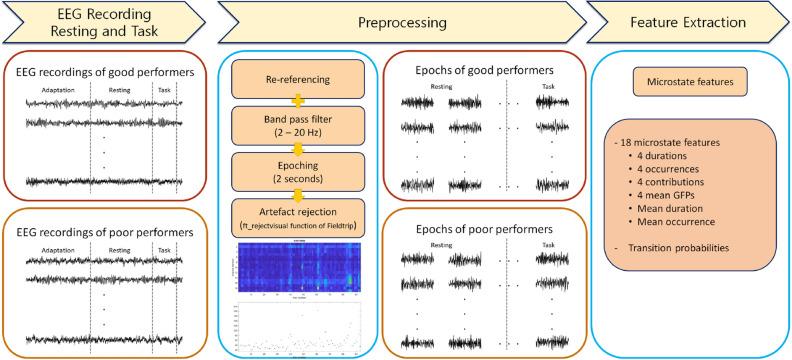
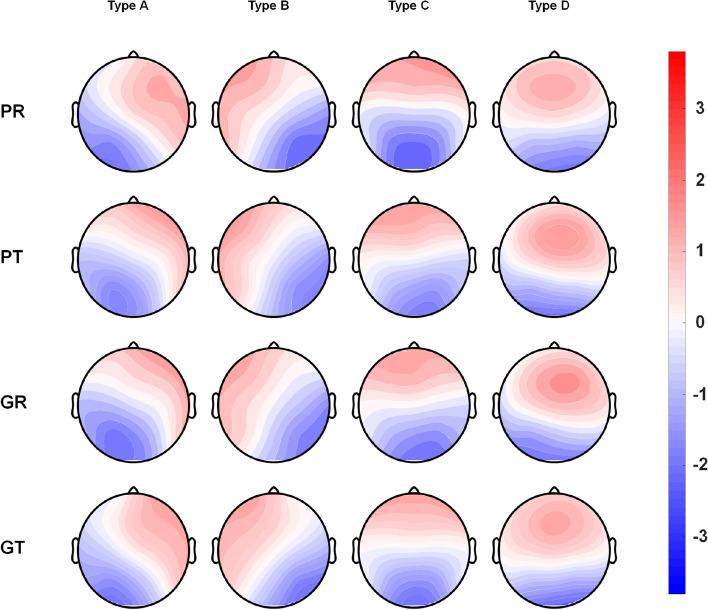
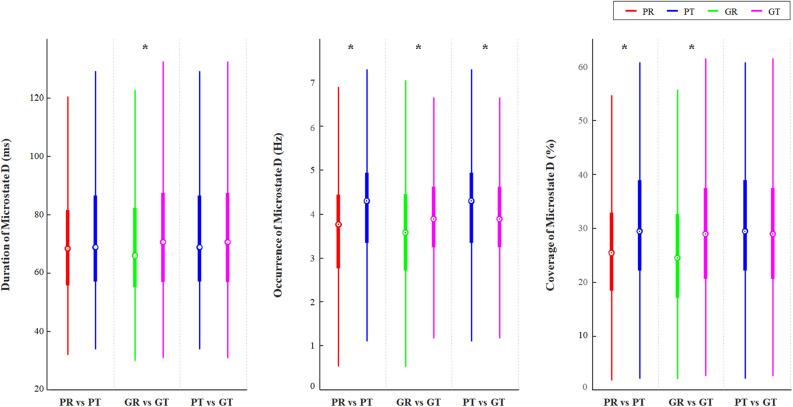
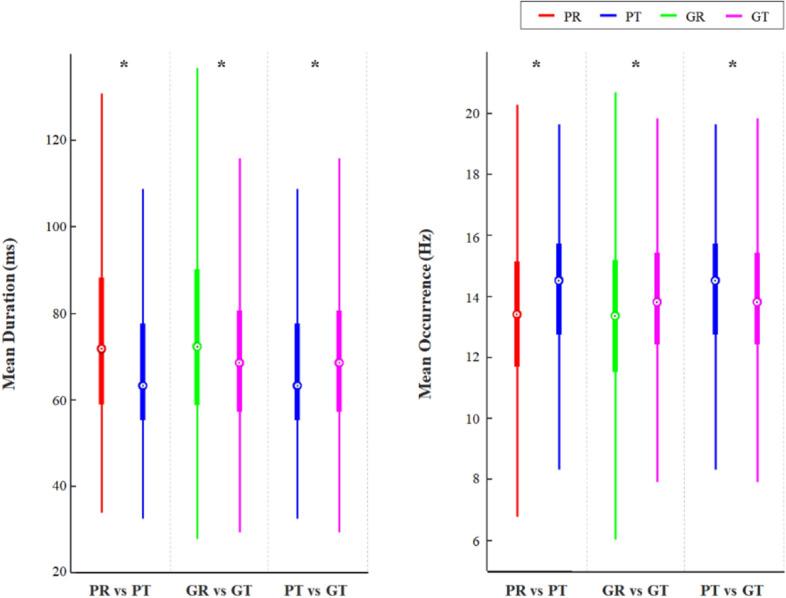
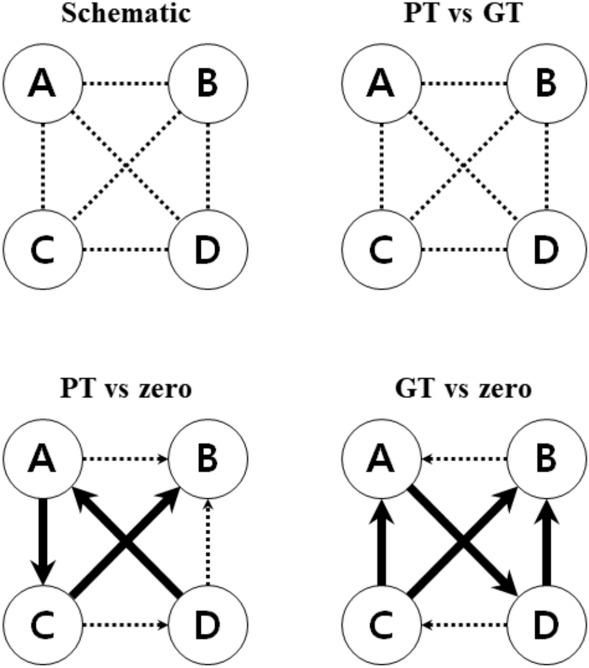
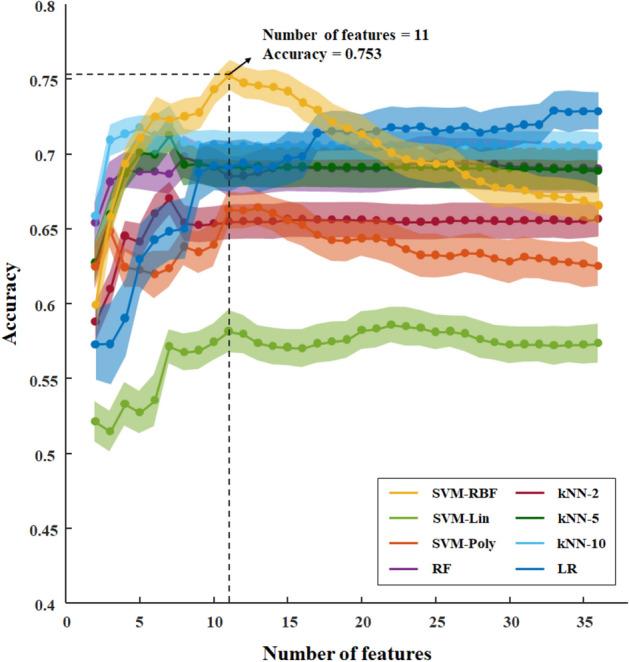
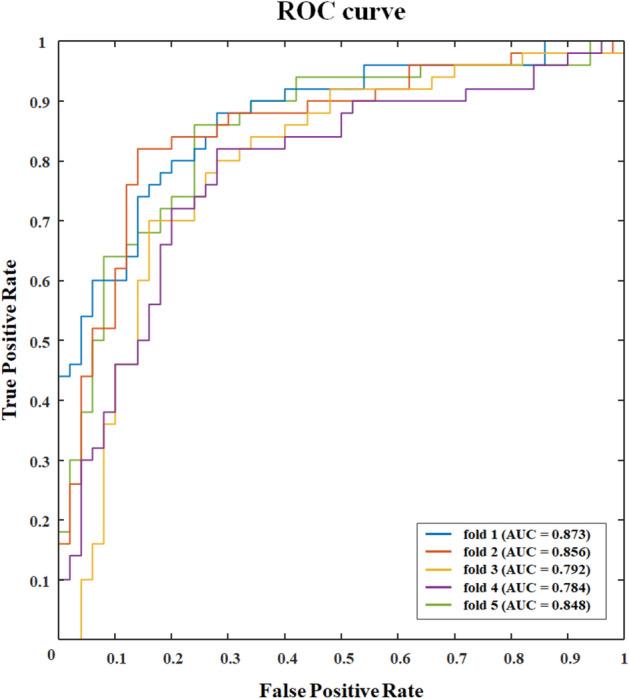
In this study, we hypothesized that task performance could be evaluated applying EEG microstate to mental arithmetic task. This pilot study also aimed at evaluating the efficacy of microstates as novel features to discriminate task performance. Thirty-six subjects were divided into good and poor performers, depending on how well they performed the task. Microstate features were derived from EEG recordings during resting and task states. In the good performers, there was a decrease in type C and an increase in type D features during the task compared to the resting state. Mean duration and occurrence decreased and increased, respectively. In the poor performers, occurrence of type D feature, mean duration and occurrence showed greater changes. We investigated whether microstate features were suitable for task performance classification and eleven features including four archetypes were selected by recursive feature elimination (RFE). The model that implemented them showed the highest classification performance for differentiating between groups. Our pilot findings showed that the highest mean Area Under Curve (AUC) was 0.831. This study is the first to apply EEG microstate features to specific cognitive tasks in healthy subjects, suggesting that EEG microstate features can reflect task achievement.
在这项研究中,我们假设可以通过应用 EEG 微观状态来评估心算任务的表现。这项初步研究还旨在评估微观状态作为区分任务表现的新特征的有效性。36 名受试者根据任务表现的好坏分为表现良好和表现不佳的两组。在休息和任务状态下记录 EEG 以提取微观状态特征。与休息状态相比,在表现良好的组中,C 型微观状态特征减少,D 型微观状态特征增加。平均持续时间和出现次数分别减少和增加。在表现不佳的组中,D 型微观状态特征的出现、平均持续时间和出现次数的变化更大。我们研究了微观状态特征是否适合任务表现分类,并通过递归特征消除(RFE)选择了包括四个原型在内的 11 个特征。实现这些特征的模型在区分组间方面表现出最高的分类性能。我们的初步研究结果表明,平均 AUC 的最高值为 0.831。这是首次将 EEG 微观状态特征应用于健康受试者的特定认知任务,表明 EEG 微观状态特征可以反映任务完成情况。
 Zotero 插件