
NMDA 受体脑炎患者抗原特异性 CD4 T 细胞炎症细胞因子产生减少。
Decreased inflammatory cytokine production of antigen-specific CD4 T cells in NMDA receptor encephalitis.
机构信息
German Center for Neurodegenerative Diseases (DZNE) Berlin, Berlin, Germany.
Department of Neurology and Experimental Neurology, Charité - Universitätsmedizin Berlin, Corporate Member of Freie Universität Berlin, Humboldt-Universität zu Berlin, and Berlin Institute of Health, Charitéplatz 1, 10117, Berlin, Germany.
出版信息
J Neurol. 2021 Jun;268(6):2123-2131. doi: 10.1007/s00415-020-10371-y. Epub 2021 Jan 13.
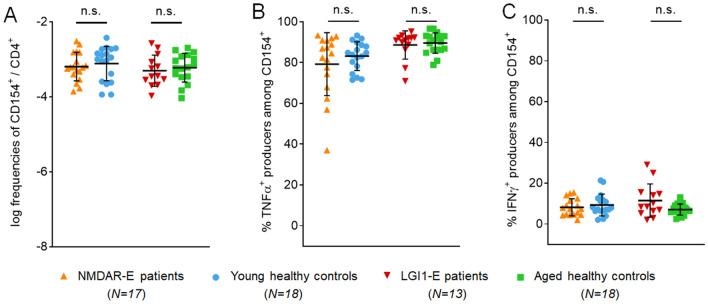
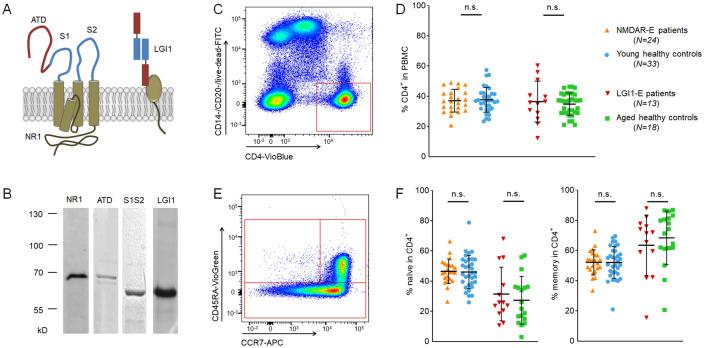
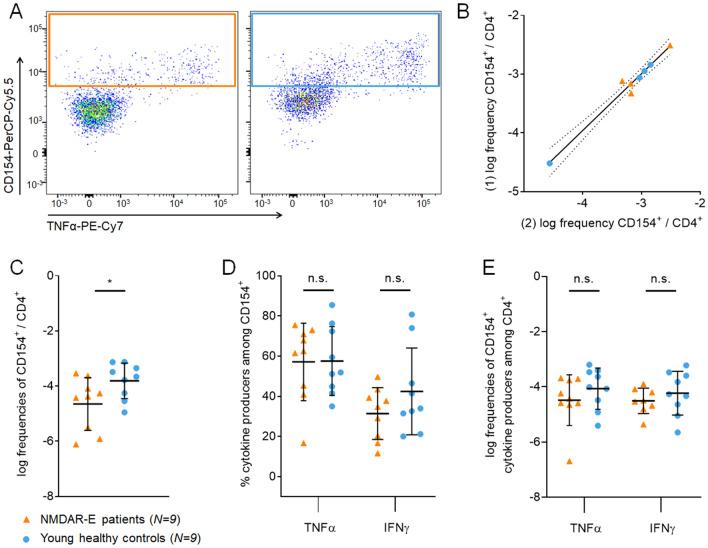
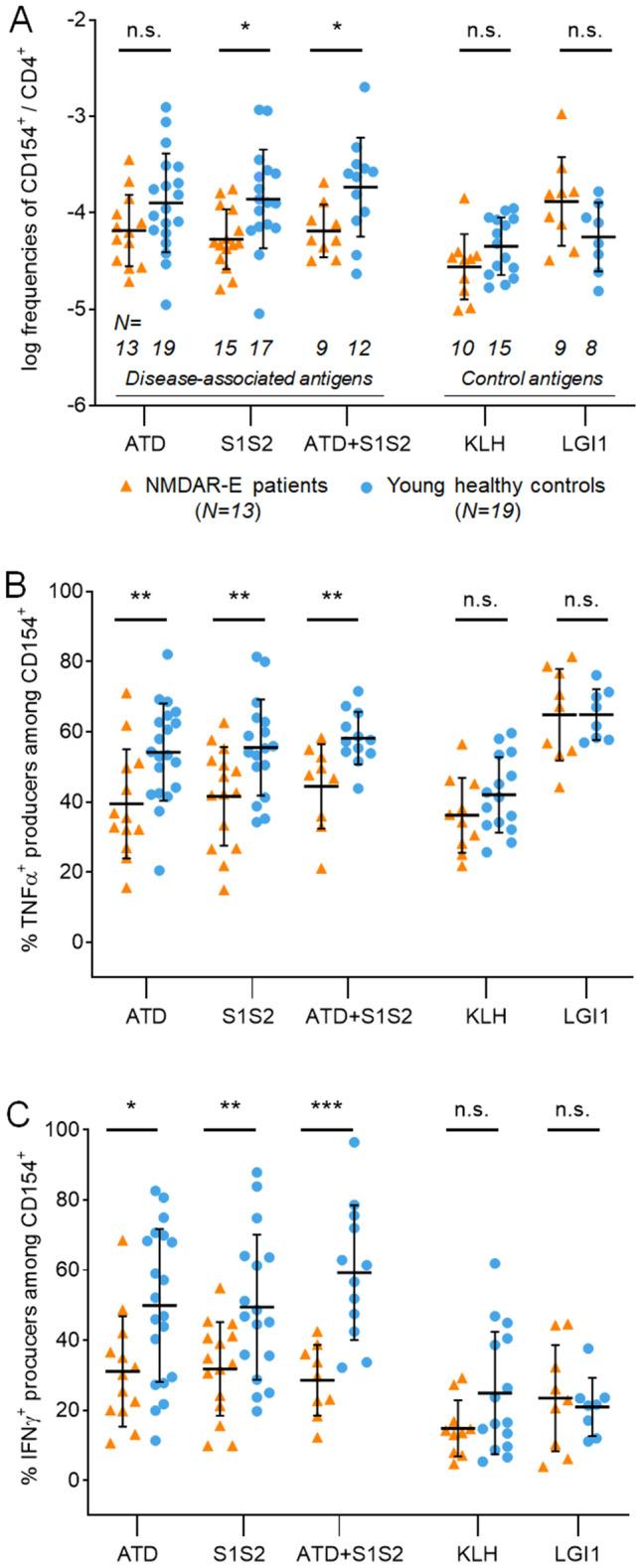
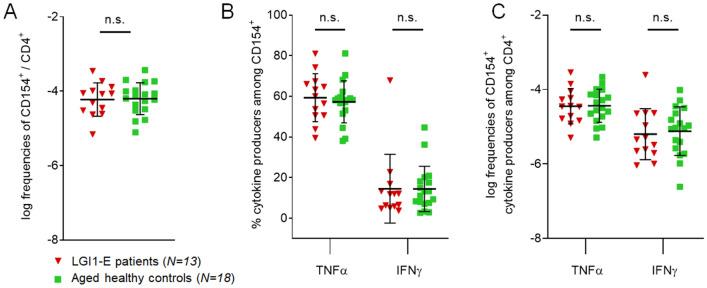
Anti-N-methyl-D-aspartate-receptor (NMDAR) encephalitis is the most common autoimmune encephalitis with psychosis, amnesia, seizures and dyskinesias. The disease is mediated by pathogenic autoantibodies against the NR1 subunit that disrupt NMDAR function. Antibody infusion into mouse brains can recapitulate encephalitis symptoms, while active immunization resulted also in strong T cell infiltration into the hippocampus. However, whether T cells react against NMDAR and their specific contribution to disease development are poorly understood. Here we characterized the ex vivo frequency and phenotype of circulating CD4 T helper (T) cells reactive to NR1 protein using antigen-reactive T cell enrichment (ARTE) in 24 patients with NMDAR encephalitis, 13 patients with LGI1 encephalitis and 51 matched controls. Unexpectedly, patients with NMDAR encephalitis had lower frequencies of CD154-expressing NR1-reactive T cells than healthy controls and produced significantly less inflammatory cytokines. No difference was seen in T cells reactive to the synaptic target LGI1 (Leucine-rich glioma-inactivated 1), ubiquitous Candida antigens or neoantigens, suggesting that the findings are disease-specific and not related to therapeutic immunosuppression. Also, patients with LGI1 encephalitis showed unaltered numbers of LGI1 antigen-reactive T cells. The data reveal disease-specific functional alterations of circulating NMDAR-reactive T cells in patients with NMDAR encephalitis and challenge the idea that increased pro-inflammatory NMDAR-reactive T cells contribute to disease pathogenesis.
抗 N-甲基-D-天冬氨酸受体(NMDAR)脑炎是最常见的伴有精神病、健忘、癫痫发作和运动障碍的自身免疫性脑炎。该疾病由针对 NR1 亚基的致病性自身抗体介导,破坏 NMDAR 功能。将抗体注入小鼠大脑可以重现脑炎症状,而主动免疫也导致 T 细胞强烈浸润海马体。然而,T 细胞是否针对 NMDAR 反应以及它们对疾病发展的具体贡献尚不清楚。在这里,我们使用抗原反应性 T 细胞富集(ARTE)技术,在 24 例 NMDAR 脑炎、13 例 LGI1 脑炎和 51 例匹配对照患者中,对循环 CD4 T 辅助(T)细胞针对 NR1 蛋白的体外频率和表型进行了特征描述。出乎意料的是,与健康对照组相比,NMDAR 脑炎患者的 CD154 表达 NR1 反应性 T 细胞频率较低,并且产生的炎症细胞因子明显较少。对突触靶 LGI1(富含亮氨酸的胶质瘤失活 1)、普遍存在的念珠菌抗原或新抗原反应的 T 细胞没有差异,这表明这些发现是疾病特异性的,与治疗性免疫抑制无关。此外,LGI1 脑炎患者的 LGI1 抗原反应性 T 细胞数量没有改变。这些数据揭示了 NMDAR 脑炎患者循环 NMDAR 反应性 T 细胞的疾病特异性功能改变,并对增加促炎 NMDAR 反应性 T 细胞有助于疾病发病机制的观点提出了挑战。
 Zotero 插件