
来自两个高山栖息地的L.:基于物种植物化学的种群间和种群内变异性
L. from Two High Mountainous Habitats: Inter- and Intrapopulation Variability Based on Species' Phytochemistry.
作者信息
Popović Zorica, Krstić-Milošević Dijana, Marković Milena, Vidaković Vera, Bojović Srđan
机构信息
Department of Ecology, Institute for Biological Research "Siniša Stanković"-National Institute of Republic of Serbia, University of Belgrade, Bulevar despota Stefana 142, 11000 Belgrade, Serbia.
Department of Plant Physiology, Institute for Biological Research "Siniša Stanković"-National Institute of Republic of Serbia, University of Belgrade, Bulevar despota Stefana 142, 11000 Belgrade, Serbia.
出版信息
Plants (Basel). 2021 Jan 12;10(1):140. doi: 10.3390/plants10010140.
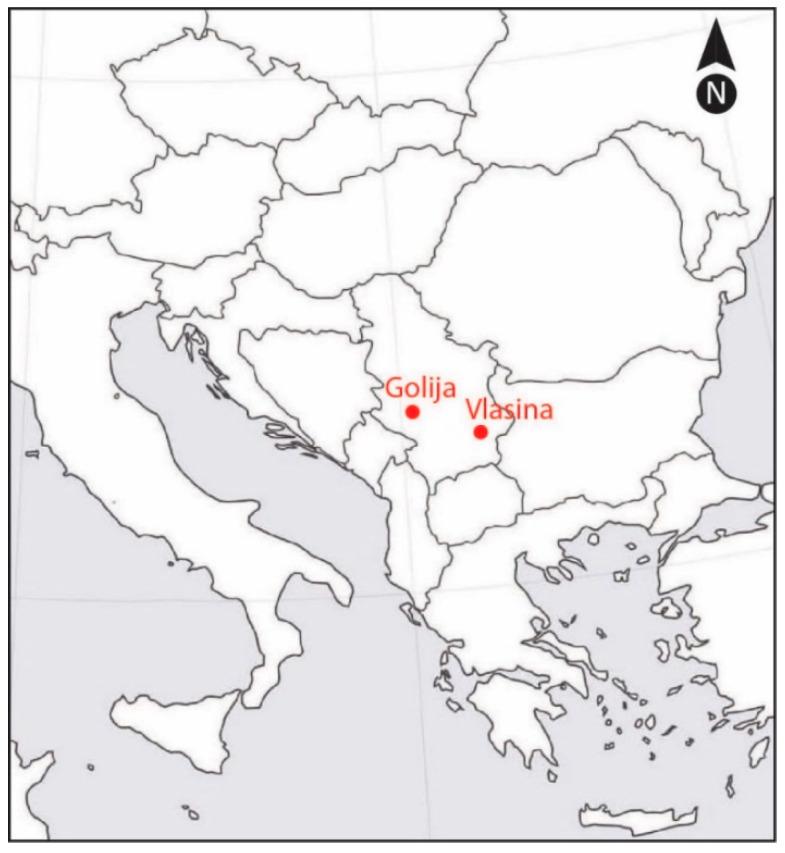
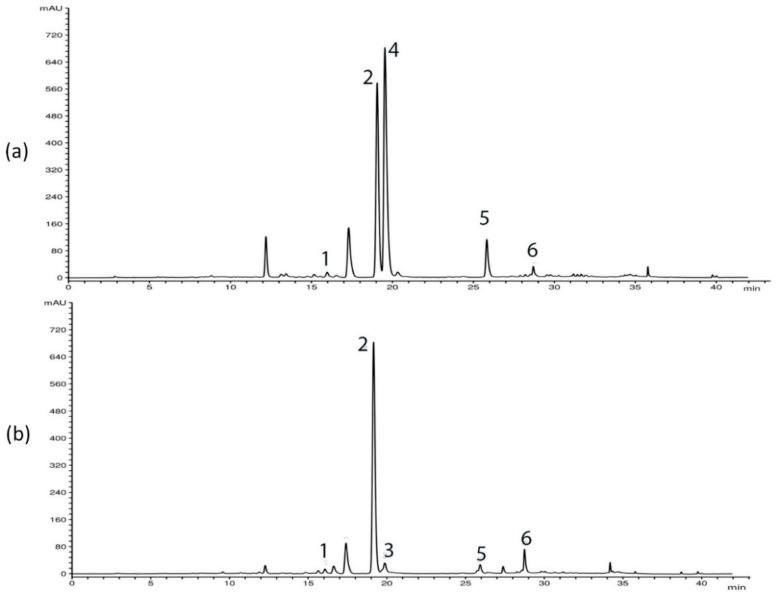
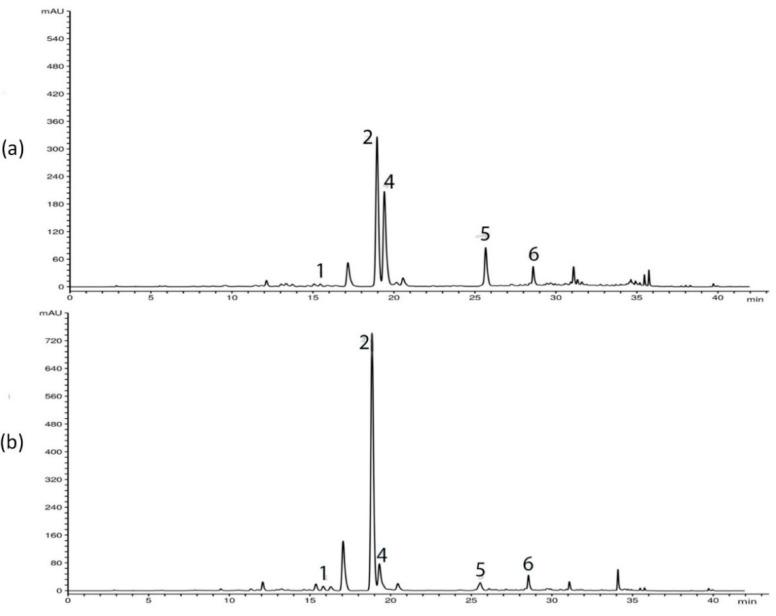
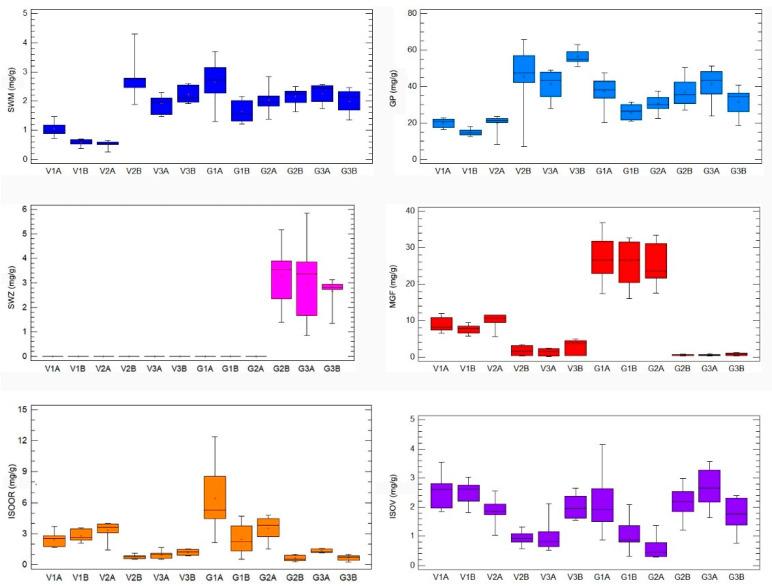
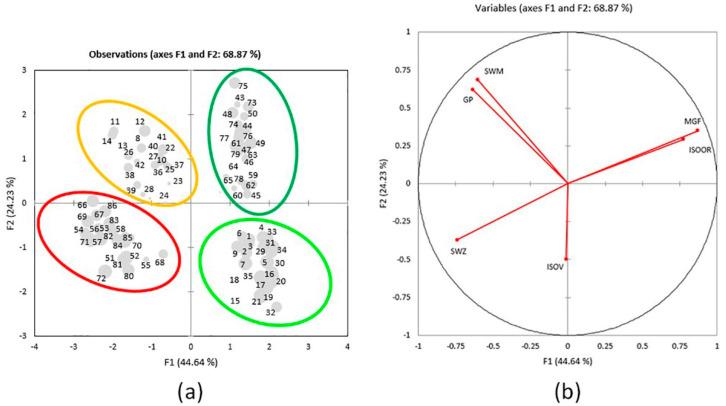
Natural populations of L., located at two mountainous sites, were HPLC-analyzed regarding the contents of six representative secondary metabolites. The contents of swertiamarin (SWM), gentiopicrin (GP), sweroside (SWZ), mangiferin (MGF), isoorientin (ISOOR), and isovitexin (ISOV) were determined in six populations (three per study site), and separately for aboveground and belowground plant parts. PCA showed a clear separation of four groups according to the contents of the analyzed secondary metabolites. Out of six analyzed compounds, five were present in all samples and only one (SWZ) was found in Golija populations (belowground parts) but not in Vlasina populations, and its presence can be indicative of the geolocation of populations. Clear separation of groups was mostly affected by the different contents of chemical compounds in plant parts (aboveground versus belowground) and by the differences related to population origin (higher content of SWM and GP in belowground parts of individuals from Vlasina populations and higher content of MGF and ISOOR of individuals from Golija populations). The results of this study contribute to the spatiochemical profiling of populations and a better understanding of inter- and intrapopulation variability of pharmacologically important compounds.
对位于两个山区的獐牙菜自然种群的六种代表性次生代谢产物含量进行了高效液相色谱分析。测定了六个种群(每个研究地点三个)中獐牙菜苦苷(SWM)、龙胆苦苷(GP)、獐牙菜苷(SWZ)、芒果苷(MGF)、异荭草苷(ISOOR)和异牡荆苷(ISOV)的含量,并分别测定了地上和地下植物部分的含量。主成分分析(PCA)显示,根据分析的次生代谢产物含量,可明显分为四组。在六种分析化合物中,五种存在于所有样品中,只有一种(SWZ)在戈利贾种群(地下部分)中发现,而在弗拉西纳种群中未发现,其存在可指示种群的地理位置。组的明显分离主要受植物部分(地上与地下)中化合物含量的不同以及与种群来源相关的差异影响(弗拉西纳种群个体地下部分中SWM和GP的含量较高,戈利贾种群个体中MGF和ISOOR的含量较高)。本研究结果有助于獐牙菜种群的空间化学图谱分析,并更好地理解具有药理学重要性的化合物在种群间和种群内的变异性。
 Zotero 插件