
芳基烃受体与二恶英相关健康危害——油症带来的教训。
Aryl Hydrocarbon Receptor and Dioxin-Related Health Hazards-Lessons from Yusho.
机构信息
Research and Clinical Center for Yusho and Dioxin, Kyushu University Hospital, Fukuoka 812-8582, Japan.
Department of Dermatology, Graduate School of Medical Sciences, Kyushu University, Fukuoka 812-8582, Japan.
出版信息
Int J Mol Sci. 2021 Jan 12;22(2):708. doi: 10.3390/ijms22020708.
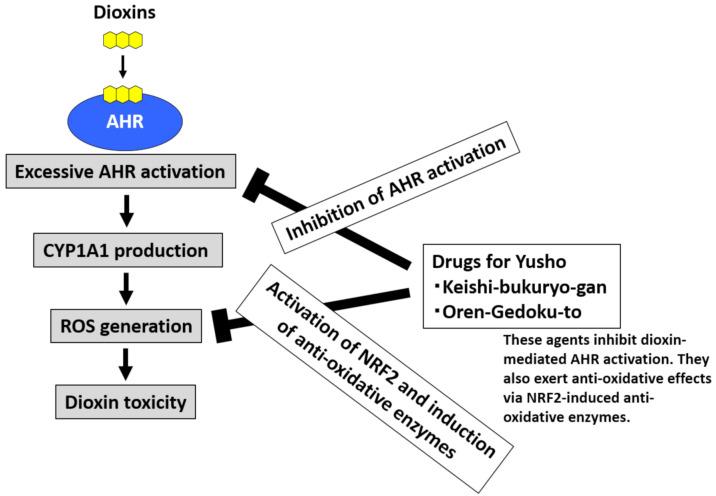
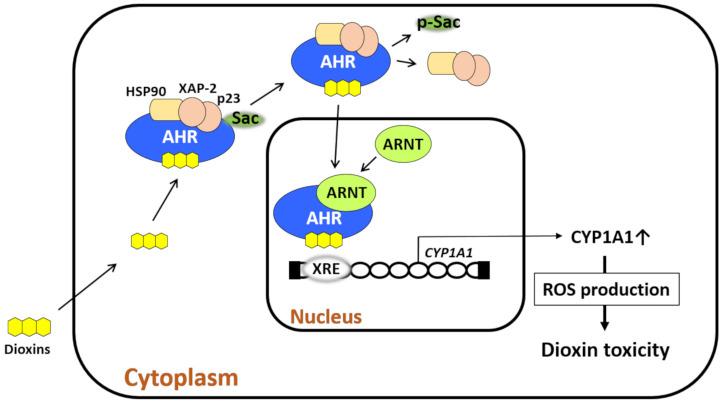
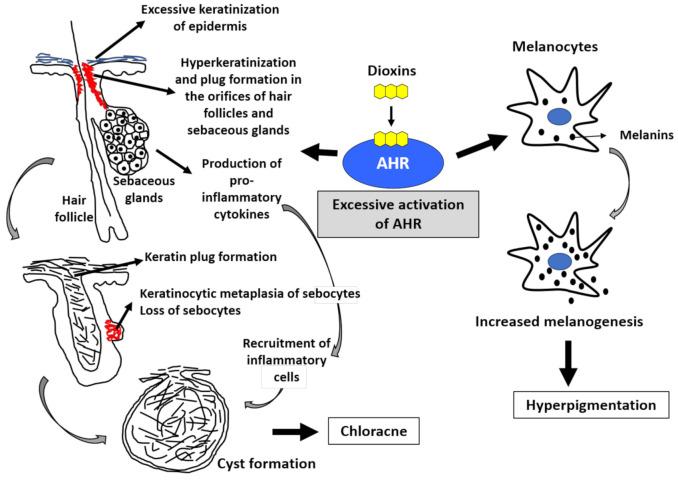
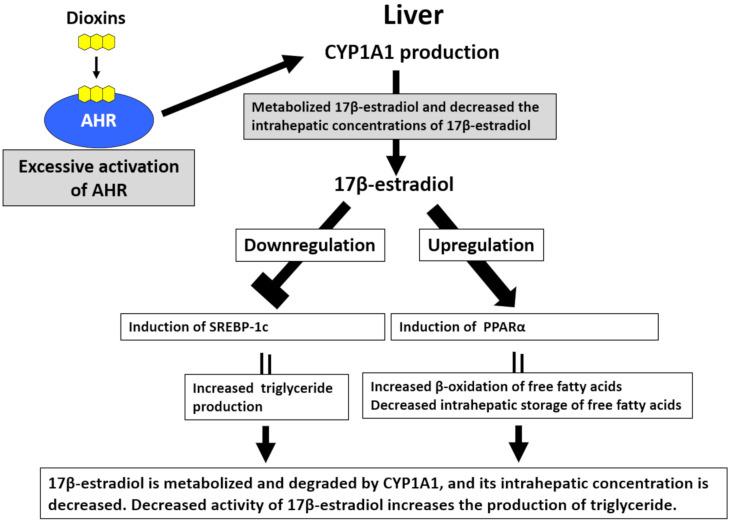
Poisoning by high concentrations of dioxin and its related compounds manifests variable toxic symptoms such as general malaise, chloracne, hyperpigmentation, sputum and cough, paresthesia or numbness of the extremities, hypertriglyceridemia, perinatal abnormalities, and elevated risks of cancer-related mortality. Such health hazards are observed in patients with Yusho (oil disease in Japanese) who had consumed rice bran oil highly contaminated with 2,3,4,7,8-pentachlorodibenzofuran, polychlorinated biphenyls, and polychlorinated quaterphenyls in 1968. The blood concentrations of these congeners in patients with Yusho remain extremely elevated 50 years after onset. Dioxins exert their toxicity via aryl hydrocarbon receptor (AHR) through the generation of reactive oxygen species (ROS). In this review article, we discuss the pathogenic implication of AHR in dioxin-induced health hazards. We also mention the potential therapeutic use of herbal drugs targeting AHR and ROS in patients with Yusho.
高浓度二恶英及其相关化合物中毒表现出多种毒性症状,如全身不适、氯痤疮、色素沉着、咳痰和咳嗽、感觉异常或四肢麻木、高甘油三酯血症、围产期异常以及癌症相关死亡率升高。这些健康危害发生在 1968 年食用高度污染的 2,3,4,7,8-五氯二苯并呋喃、多氯联苯和多氯代四苯的米糠油的油病(日语中的油病)患者中。油病患者的这些同系物的血液浓度在发病 50 年后仍保持极高水平。二恶英通过芳基烃受体 (AHR) 通过产生活性氧物种 (ROS) 发挥其毒性。在这篇综述文章中,我们讨论了 AHR 在二恶英引起的健康危害中的发病机制意义。我们还提到了针对 AHR 和 ROS 的草药药物在油病患者中的潜在治疗用途。

 Zotero 插件