
儿童和早期生活逆境的社会生态学。
The social ecology of childhood and early life adversity.
机构信息
Pain/Stress Neurobiology Lab, Maternal and Child Health Research Institute, Stanford University School of Medicine, Stanford, CA, USA.
Department of Pediatrics, Stanford University School of Medicine, Stanford, CA, USA.
出版信息
Pediatr Res. 2021 Jan;89(2):353-367. doi: 10.1038/s41390-020-01264-x. Epub 2021 Jan 18.
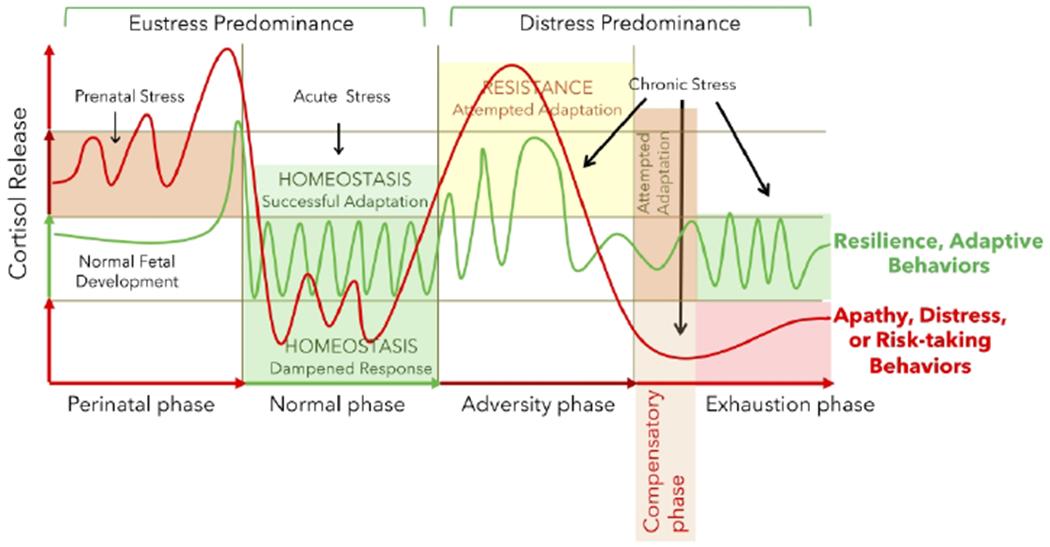
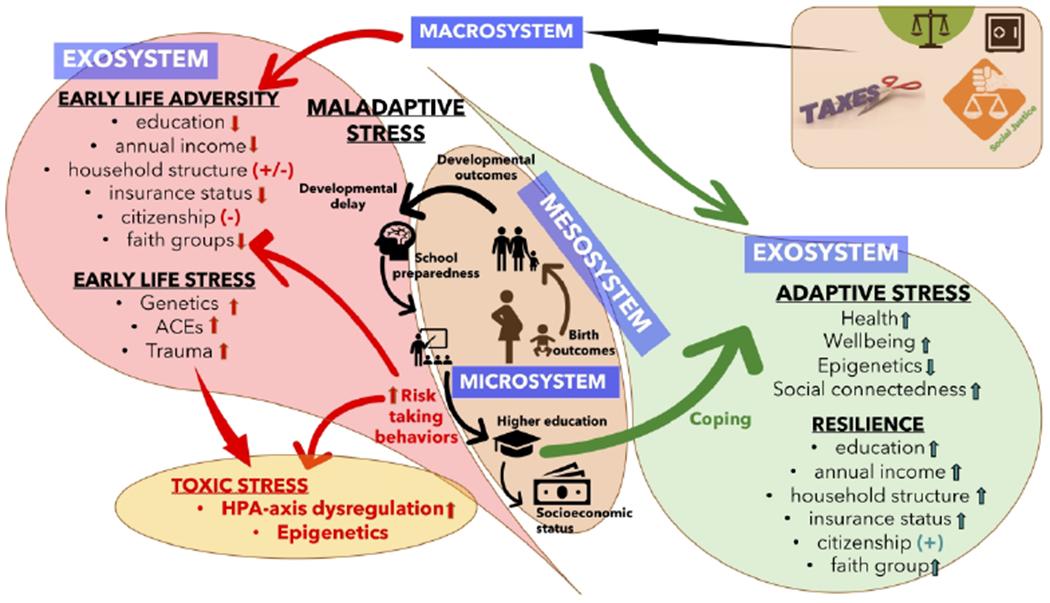
An increasing prevalence of early childhood adversity has reached epidemic proportions, creating a public health crisis. Rather than focusing only on adverse childhood experiences (ACEs) as the main lens for understanding early childhood experiences, detailed assessments of a child's social ecology are required to assess "early life adversity." These should also include the role of positive experiences, social relationships, and resilience-promoting factors. Comprehensive assessments of a child's physical and social ecology not only require parent/caregiver surveys and clinical observations, but also include measurements of the child's physiology using biomarkers. We identify cortisol as a stress biomarker and posit that hair cortisol concentrations represent a summative and chronological record of children's exposure to adverse experiences and other contextual stressors. Future research should use a social-ecological approach to investigate the robust interactions among adverse conditions, protective factors, genetic and epigenetic influences, environmental exposures, and social policy, within the context of a child's developmental stages. These contribute to their physical health, psychiatric conditions, cognitive/executive, social, and psychological functions, lifestyle choices, and socioeconomic outcomes. Such studies must inform preventive measures, therapeutic interventions, advocacy efforts, social policy changes, and public awareness campaigns to address early life adversities and their enduring effects on human potential. IMPACT: Current research does not support the practice of using ACEs as the main lens for understanding early childhood experiences. The social ecology of early childhood provides a contextual framework for evaluating the long-term health consequences of early life adversity. Comprehensive assessments reinforced with physiological measures and/or selected biomarkers, such as hair cortisol concentrations to assess early life stress, may provide critical insights into the relationships between early adversity, stress axis regulation, and subsequent health outcomes.
儿童早期逆境的普遍程度不断增加,已达到流行程度,这构成了公共卫生危机。因此,需要采用儿童社会生态的详细评估来替代仅关注不良儿童经历(ACEs)的方法,以评估“早期生活逆境”。这些评估还应包括积极经历、社会关系和促进韧性的因素。全面评估儿童的身体和社会生态不仅需要家长/照顾者的调查和临床观察,还需要使用生物标志物测量儿童的生理状况。我们将皮质醇确定为应激生物标志物,并假设头发皮质醇浓度代表了儿童暴露于不良经历和其他环境应激源的累积和时间记录。未来的研究应采用社会生态方法,研究不良条件、保护因素、遗传和表观遗传影响、环境暴露以及社会政策之间的强大相互作用,同时考虑儿童的发展阶段。这些因素会影响儿童的身体健康、精神状况、认知/执行功能、社会和心理功能、生活方式选择以及社会经济成果。此类研究必须为预防措施、治疗干预、宣传工作、社会政策变革和公共意识运动提供信息,以解决早期生活逆境及其对人类潜力的持久影响。
影响
目前的研究并不支持将 ACEs 作为理解儿童早期经历的主要视角的做法。儿童早期的社会生态为评估早期生活逆境的长期健康后果提供了一个背景框架。采用全面评估并辅以生理测量和/或选定的生物标志物(如头发皮质醇浓度来评估早期生活应激),可以深入了解早期逆境、应激轴调节以及随后的健康结果之间的关系。

 Zotero 插件