
成人感染性心内膜炎超声心动图(经胸超声心动图或经食管超声心动图)适用评估的临床实践指南评价:评估时间和模式。
An appraisal of clinical practice guidelines for the appropriate use of echocardiography for adult infective endocarditis-the timing and mode of assessment (TTE or TEE).
机构信息
Department of Cardiology, The First Affiliated Hospital of Sun Yat-Sen University; NHC Key Laboratory of Assisted Circulation (Sun Yat-sen University), 58 Zhongshan 2nd Rd, Guangzhou, 510080, People's Republic of China.
Department of Ultrasonography, The First Affiliated Hospital of Sun Yat-Sen University, Guangzhou, People's Republic of China.
出版信息
BMC Infect Dis. 2021 Jan 21;21(1):92. doi: 10.1186/s12879-021-05785-6.
BACKGROUND
Echocardiography (echo) is the primary imaging modality for infective endocarditis (IE). However, the recommendations on timing and mode selection for transesophageal echocardiography (TEE) and transthoracic echocardiography (TTE) vary across guidelines, which can be confusing for clinical decision makers. In this case, we aim to appraise the quality of recommendations by appraising the quality of various guidelines.
METHODS
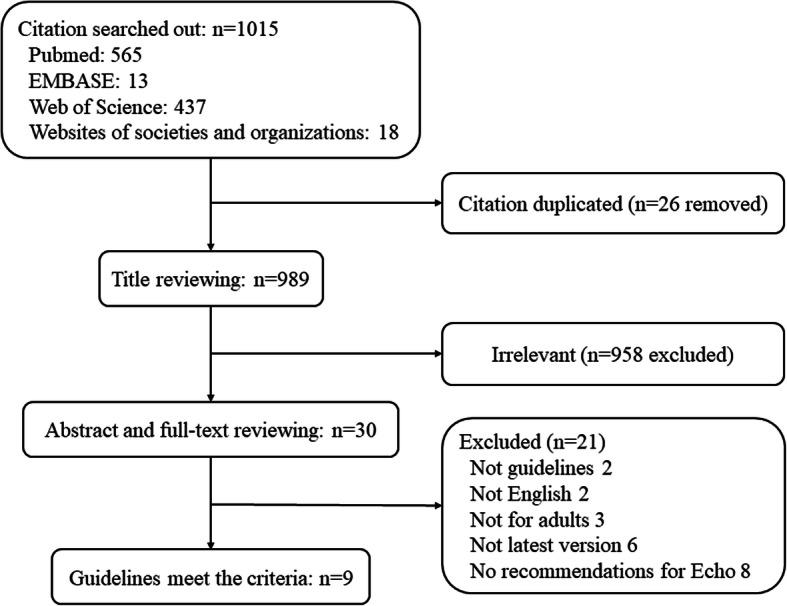
A search of guidelines containing recommendations for the appropriate use of echo in adult IE patients published in English between 2007 and 2019 was conducted. The APPRAISAL OF GUIDELINES FOR RESEARCH & EVALUATION II (AGREE II) instrument was applied independently by two reviewers to assess the integrated quality of the identified guidelines. The recommendations of concern are extracted from related chapters.
RESULTS
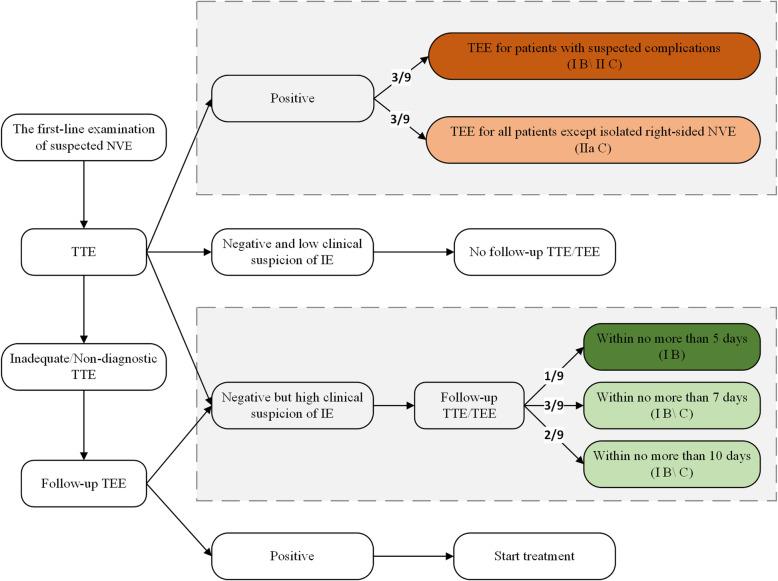
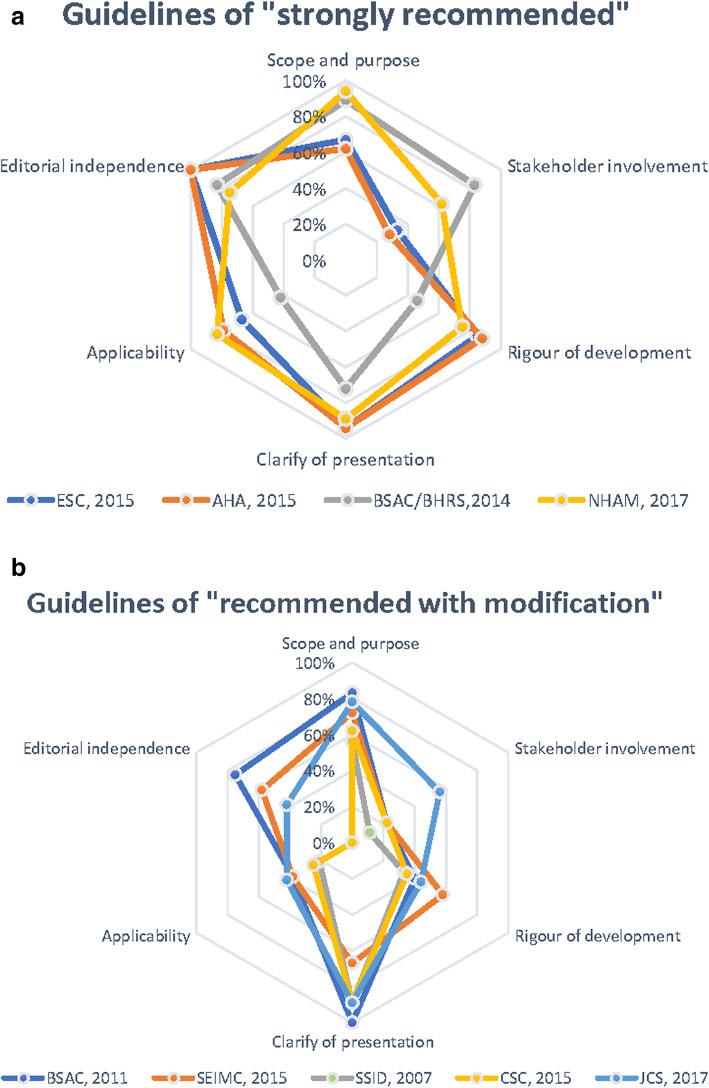
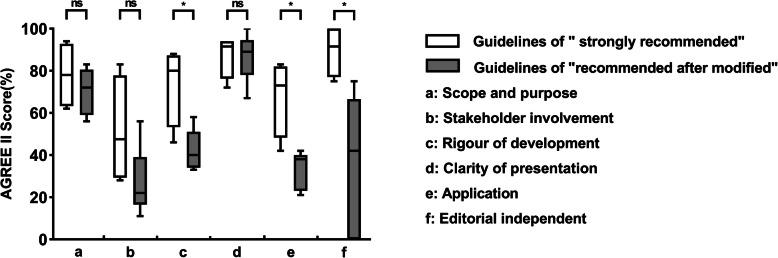
A total of 9 guidelines met the criteria, with AGREE II scores ranging from 36 to 79%, and the domain of "stakeholder involvement" received the lowest score. The most contentious issue is whether a follow-up TEE is mandatory in uncomplicated native valve IE with an initial positive TTE. Conflicting recommendations are presented with a low evidence level based on little evidence.
CONCLUSIONS
In general, the recommendations proposed in the 9 identified guidelines on the appropriate use of echo are satisfying. The guideline quality score can be taken into account by the clinicians when evaluating the recommendations for clinical decisions. Additional studies with high evidence level should be conducted on the most controversial issues of whether a subsequent TEE is mandatory in uncomplicated native valve IE with an initial positive TTE.
背景
超声心动图(echo)是感染性心内膜炎(IE)的主要影像学检查方法。然而,经食管超声心动图(TEE)和经胸超声心动图(TTE)的时机和模式选择建议在不同的指南中有所不同,这可能会让临床决策者感到困惑。在这种情况下,我们旨在通过评估各种指南的质量来评估建议的质量。
方法
检索了 2007 年至 2019 年间以英文发表的关于成人 IE 患者中适当使用 echo 的指南,这些指南包含了建议。使用 APPRAISAL OF GUIDELINES FOR RESEARCH & EVALUATION II(AGREE II)工具由两名评审员独立评估确定指南的综合质量。从相关章节中提取出关注的建议。
结果
共有 9 项指南符合标准,AGREE II 评分范围为 36 至 79%,“利益相关者参与”这一领域的得分最低。最有争议的问题是在初始 TTE 阳性的单纯性原生瓣膜 IE 中,是否需要进行后续 TEE。根据有限的证据,提出了相互矛盾的建议,且证据水平较低。
结论
一般来说,在这 9 项确定的指南中提出的关于适当使用 echo 的建议是令人满意的。在评估临床决策建议时,临床医生可以考虑指南质量评分。应就初始 TTE 阳性的单纯性原生瓣膜 IE 中是否需要后续 TEE 这一最具争议的问题进行具有高证据水平的额外研究。
 Zotero 插件