
2020 年 3 月至 10 月智利的 COVID-19 传播动态与控制
Transmission dynamics and control of COVID-19 in Chile, March-October, 2020.
机构信息
Department of Population Health Sciences, School of Public Health, Georgia State University, Atlanta, Georgia, United States of America.
Escuela de Gobierno, Pontificia Universidad Católica de Chile, Santiago, Region Metropolitana, Chile.
出版信息
PLoS Negl Trop Dis. 2021 Jan 22;15(1):e0009070. doi: 10.1371/journal.pntd.0009070. eCollection 2021 Jan.
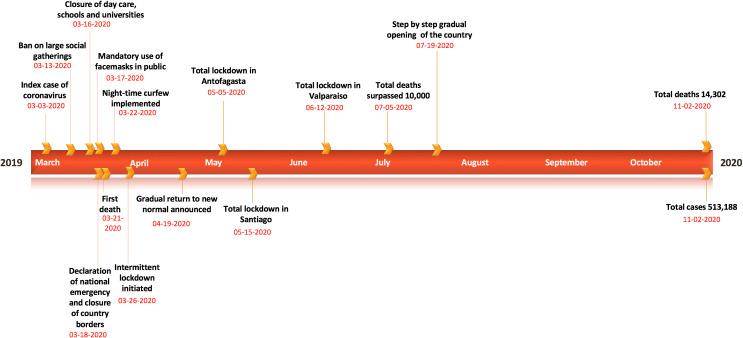
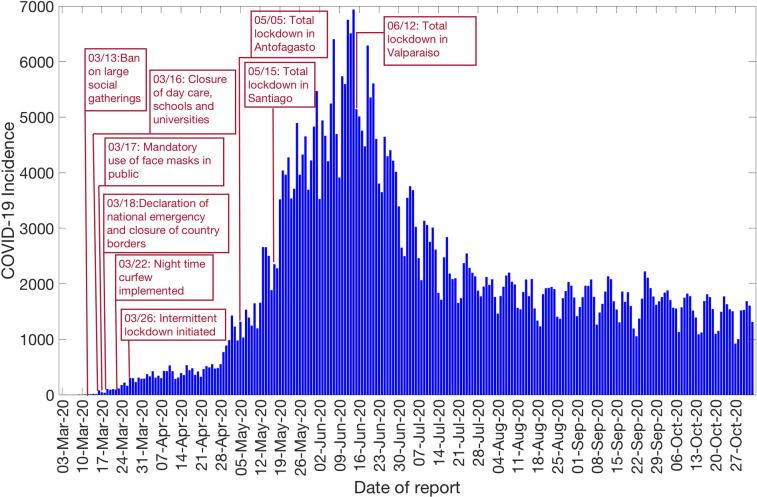
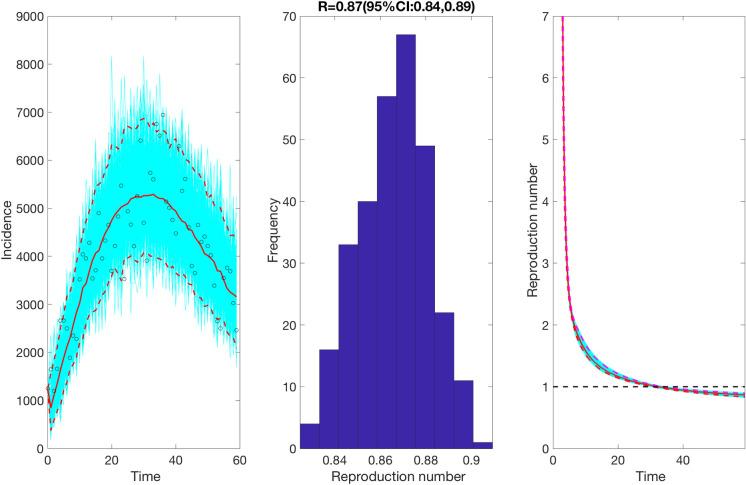
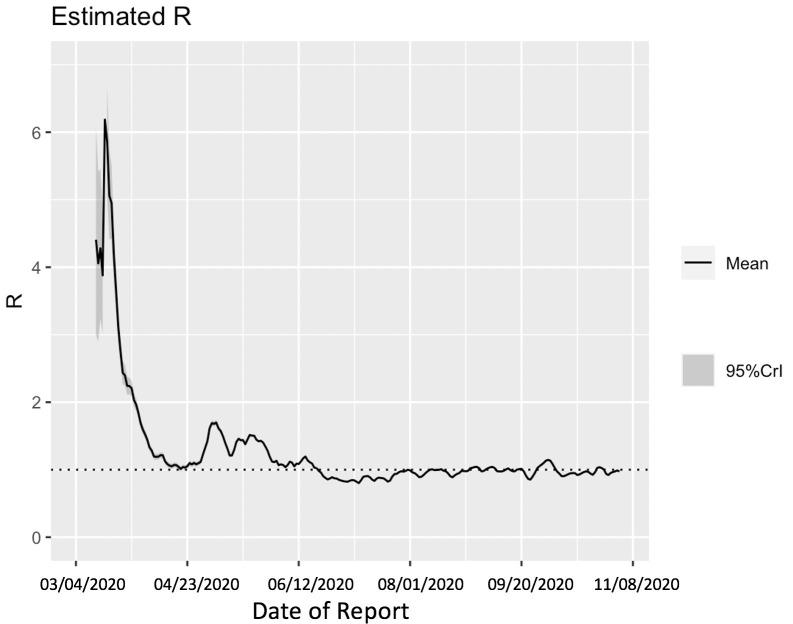
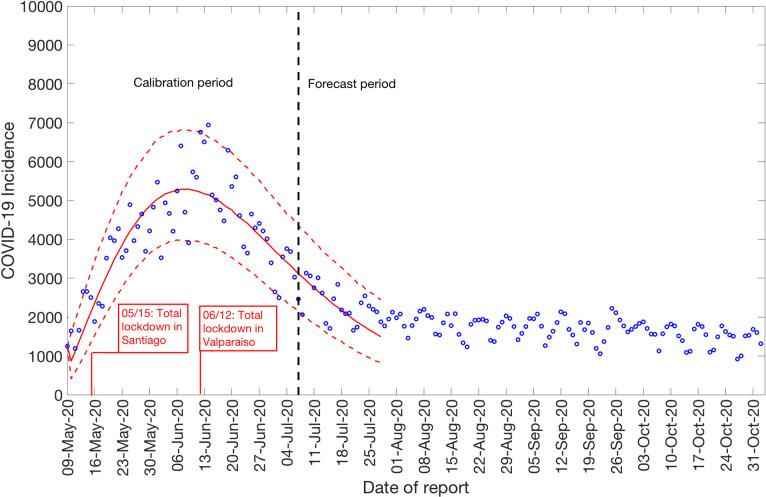
Since the detection of the first case of COVID-19 in Chile on March 3rd, 2020, a total of 513,188 cases, including ~14,302 deaths have been reported in Chile as of November 2nd, 2020. Here, we estimate the reproduction number throughout the epidemic in Chile and study the effectiveness of control interventions especially the effectiveness of lockdowns by conducting short-term forecasts based on the early transmission dynamics of COVID-19. Chile's incidence curve displays early sub-exponential growth dynamics with the deceleration of growth parameter, p, estimated at 0.8 (95% CI: 0.7, 0.8) and the reproduction number, R, estimated at 1.8 (95% CI: 1.6, 1.9). Our findings indicate that the control measures at the start of the epidemic significantly slowed down the spread of the virus. However, the relaxation of restrictions and spread of the virus in low-income neighborhoods in May led to a new surge of infections, followed by the reimposition of lockdowns in Greater Santiago and other municipalities. These measures have decelerated the virus spread with R estimated at ~0.96 (95% CI: 0.95, 0.98) as of November 2nd, 2020. The early sub-exponential growth trend (p ~0.8) of the COVID-19 epidemic transformed into a linear growth trend (p ~0.5) as of July 7th, 2020, after the reimposition of lockdowns. While the broad scale social distancing interventions have slowed the virus spread, the number of new COVID-19 cases continue to accrue, underscoring the need for persistent social distancing and active case detection and isolation efforts to maintain the epidemic under control.
自 2020 年 3 月 3 日智利首次报告 COVID-19 病例以来,截至 2020 年 11 月 2 日,智利共报告 513188 例病例,包括约 14302 例死亡。在这里,我们通过对 COVID-19 早期传播动态进行短期预测,估计了整个智利疫情期间的繁殖数,并研究了控制干预措施的有效性,特别是封锁的有效性。智利的发病率曲线显示出早期亚指数增长动态,增长率参数 p 估计为 0.8(95%置信区间:0.7,0.8),繁殖数 R 估计为 1.8(95%置信区间:1.6,1.9)。我们的研究结果表明,疫情初期的控制措施显著减缓了病毒的传播。然而,五月份限制措施的放松和低收入社区病毒的传播导致了新的感染浪潮,随后大圣地亚哥和其他城市重新实施了封锁。这些措施减缓了病毒的传播,截至 2020 年 11 月 2 日,R 估计值约为 0.96(95%置信区间:0.95,0.98)。自 2020 年 7 月 7 日重新实施封锁以来,COVID-19 疫情的早期亚指数增长趋势(p0.8)转变为线性增长趋势(p0.5)。虽然大规模的社会隔离干预措施减缓了病毒的传播,但新的 COVID-19 病例数量仍在不断增加,这突显了持续的社会隔离和积极的病例检测和隔离努力以保持疫情得到控制的必要性。



 Zotero 插件