
探索肠道微生物群和肿瘤微环境在癌症免疫治疗中的新兴作用。
Exploring the Emerging Role of the Gut Microbiota and Tumor Microenvironment in Cancer Immunotherapy.
机构信息
Graduate School, Guangdong Medical University, Zhanjiang, China.
Guangdong Provincial Key Laboratory of Food Quality and Safety, College of Food Science, South China Agricultural University, Guangzhou, China.
出版信息
Front Immunol. 2021 Jan 7;11:612202. doi: 10.3389/fimmu.2020.612202. eCollection 2020.
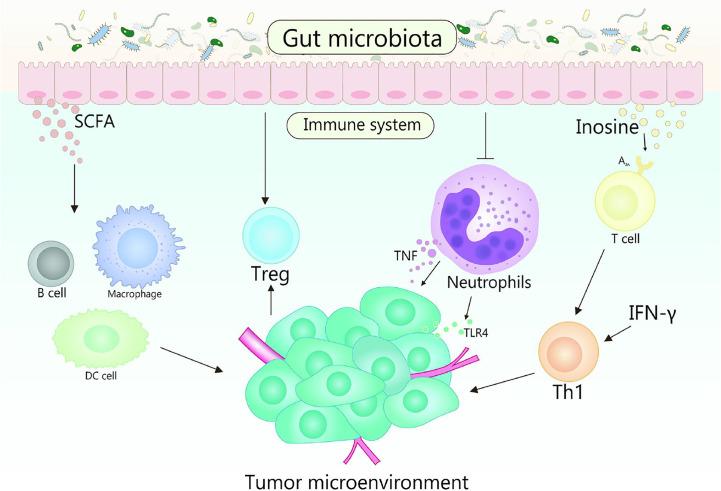
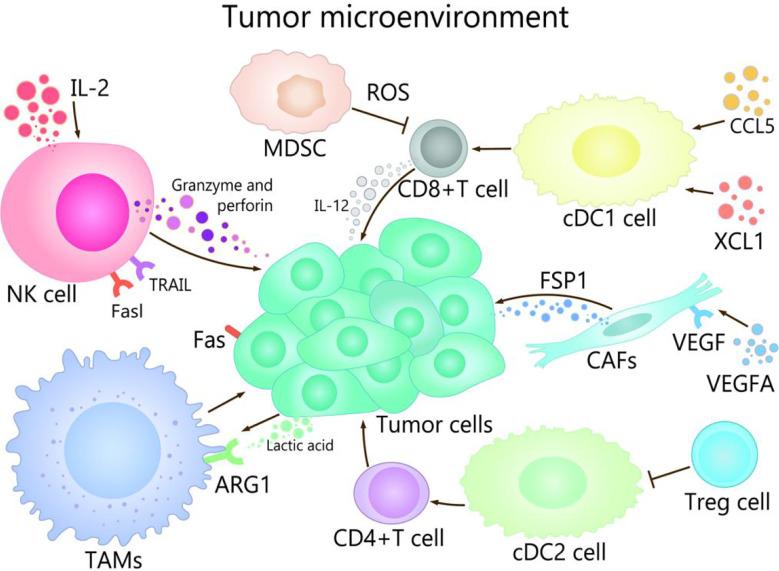
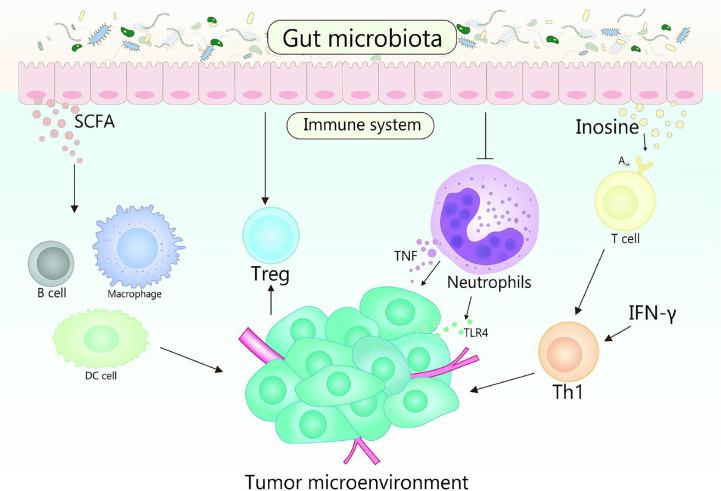
The tumor microenvironment (TME) is a complex ecosystem, which includes many different types of cells, abnormal vascular systems, and immunosuppressive cytokines. TME serves an important function in tumor tolerance and escapes from immune surveillance leading to tumor progression. Indeed, there is increasing evidence that gut microbiome is associated with cancer in a variety of ways, as specific microbial signatures are known to promote cancer development and influence safety, tolerability, and efficacy of therapies. Studies over the past five years have shown that the composition of the intestinal microbiota has a significant impact on the efficacy of anticancer immunosurveillance, which contribute to the therapeutic activity of cancer immunotherapies based on targeting cytotoxic T lymphocyte protein 4 (CTLA-4) or programmed cell death protein 1 (PD-1)-programmed cell death 1 ligand 1 (PD-L1) axis. In this review, we mainly discuss the impact of TME on cancer and immunotherapy through immune-related mechanisms. We subsequently discuss the influence of gut microbiota and its metabolites on the host immune system and the formation of TME. In addition, this review also summarizes the latest research on the role of gut microbiota in cancer immunotherapy.
肿瘤微环境(TME)是一个复杂的生态系统,包括许多不同类型的细胞、异常的血管系统和免疫抑制细胞因子。TME 在肿瘤耐受和逃避免疫监视方面发挥着重要作用,导致肿瘤进展。事实上,越来越多的证据表明,肠道微生物组以多种方式与癌症相关,因为已知特定的微生物特征可促进癌症的发展,并影响治疗的安全性、耐受性和疗效。过去五年的研究表明,肠道微生物群的组成对抗肿瘤免疫监视的疗效有显著影响,有助于基于细胞毒性 T 淋巴细胞相关蛋白 4(CTLA-4)或程序性细胞死亡蛋白 1(PD-1)-程序性细胞死亡配体 1(PD-L1)轴的癌症免疫疗法的治疗活性。在这篇综述中,我们主要通过免疫相关机制讨论 TME 对癌症和免疫疗法的影响。随后,我们讨论了肠道微生物群及其代谢物对宿主免疫系统和 TME 形成的影响。此外,这篇综述还总结了肠道微生物群在癌症免疫治疗中的作用的最新研究。
 Zotero 插件