
六价铬对海洋稻蝗()的跨代效应揭示了子代复杂的跨代适应性。
Transgenerational Effects of Hexavalent Chromium on Marine Medaka () Reveal Complex Transgenerational Adaptation in Offspring.
机构信息
Key Laboratory of the Coastal and Wetland Ecosystems, Ministry of Education, Xiamen University, Xiamen 361005, China.
School of Life Science, Fudan University, Shanghai 200433, China.
出版信息
Biomolecules. 2021 Jan 22;11(2):138. doi: 10.3390/biom11020138.
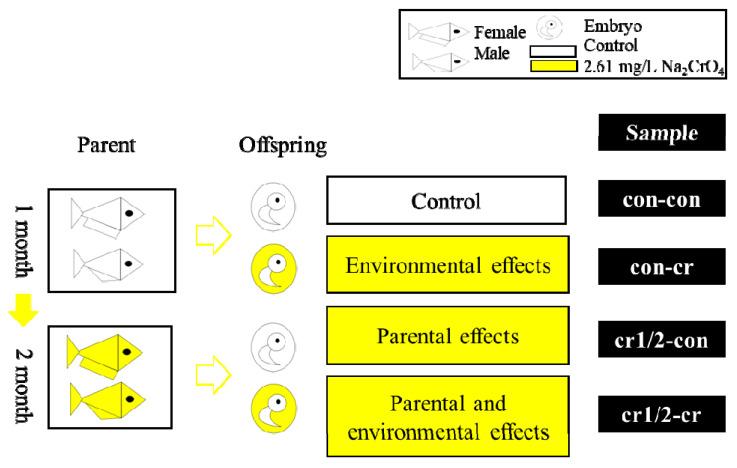
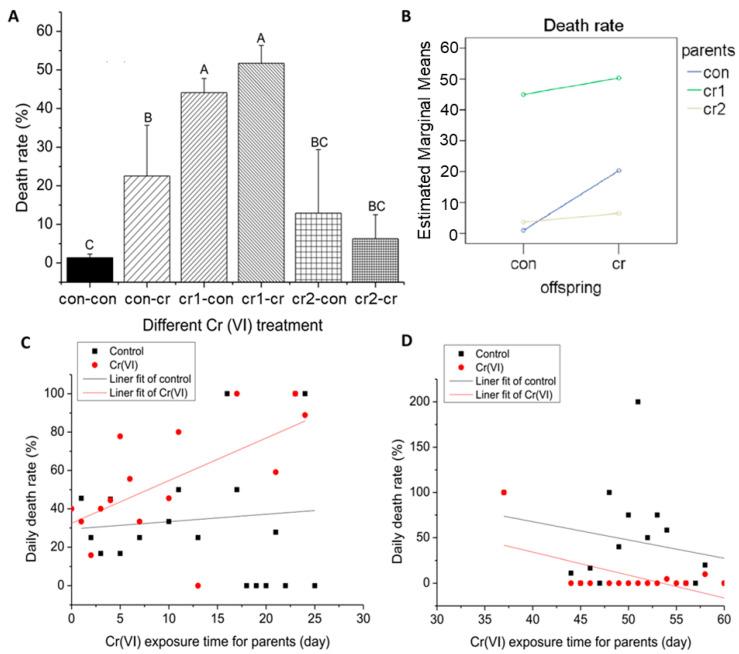
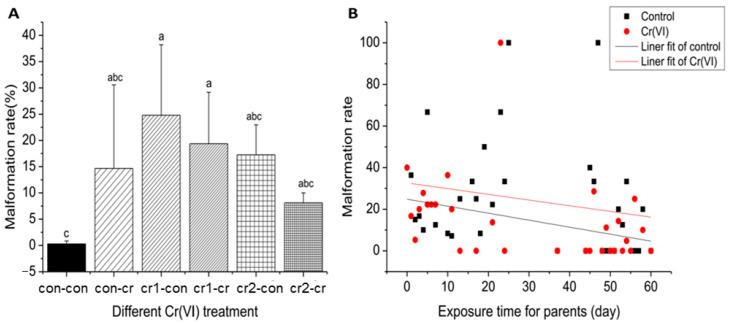
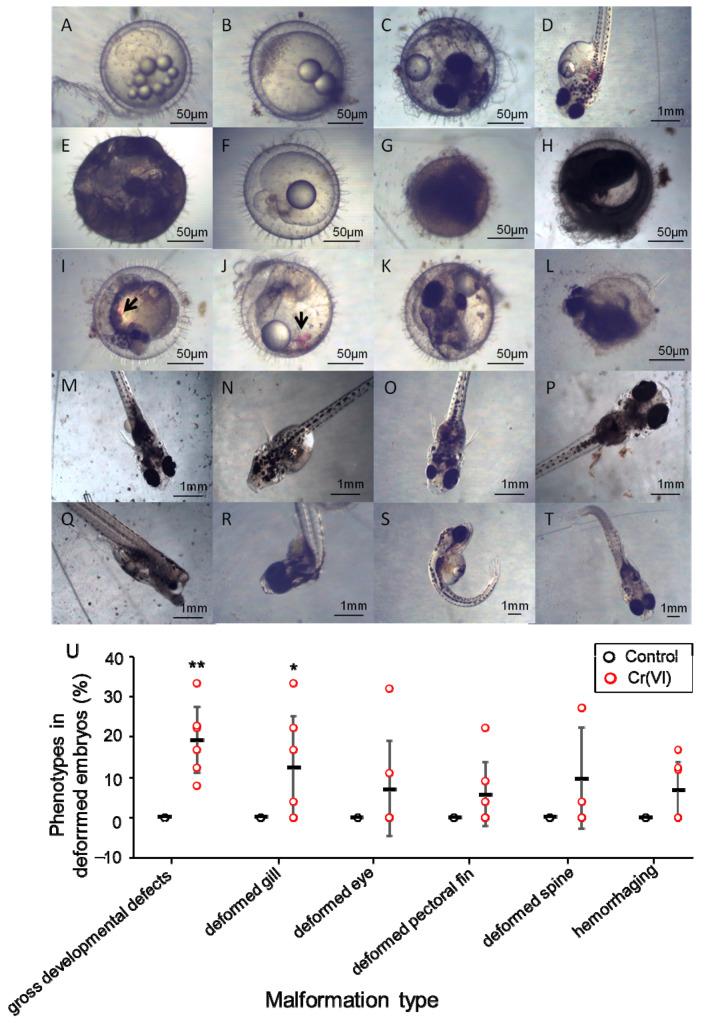
Hexavalent chromium [Cr(VI)] pollution is one of most serious heavy metal pollutants in the coastal area and posed serious threats to marine organisms and human beings. Many studies have been conducted on its toxicological effects on living organisms from morphological to physiological aspects. However, there are few studies about the transgenerational toxicological of Cr(VI). In this study, we exposed adult marine medaka fishes with Cr(VI) and their offspring with Cr(VI) to examine transgenerational effects of Cr(VI). We found that there were mechanisms such as changing reproduction modes in males to compensate for impacts on the reproduction. There were differences and similarities between the parental effect and the environmental effect, with the former one causing more serious adverse effects on the offspring of Cr(VI)-exposed fish. It was noteworthy that there was an interaction between the parental and offspring treatment which leads to the attenuation of the parental effects on offspring when the offspring also underwent the same treatment. In addition, physiological adaptation has also been observed in fish to improve their fitness. Overall, effects of Cr(VI) on fish and their offspring were studied to pave a way to study the of mechanisms of adaptation.
六价铬[Cr(VI)]污染是沿海地区最严重的重金属污染物之一,对海洋生物和人类构成了严重威胁。许多研究已经从形态学和生理学方面研究了其对生物的毒理学效应。然而,关于 Cr(VI)的跨代毒性的研究很少。在这项研究中,我们用 Cr(VI)暴露成年海水马鲛鱼及其后代,以检查 Cr(VI)的跨代毒性。我们发现,雄性通过改变繁殖模式等机制来补偿对繁殖的影响。亲代效应和环境效应既有区别又有相似之处,前者对 Cr(VI)暴露鱼的后代造成更严重的不利影响。值得注意的是,当后代也接受相同的处理时,亲代和后代处理之间存在相互作用,导致亲代对后代的影响减弱。此外,还观察到鱼类的生理适应,以提高其适应性。总之,研究 Cr(VI)对鱼类及其后代的影响,为研究适应机制铺平了道路。




 Zotero 插件