
模型低水分食品中食源性病毒的高级氧化工艺的生存和灭活。
Survival and Inactivation by Advanced Oxidative Process of Foodborne Viruses in Model Low-Moisture Foods.
机构信息
National Food Virology Reference Centre, Bureau of Microbial Hazards, Food Directorate, Health Canada 251 Sir Frederick Banting Driveway, Ottawa, ON, K1A 0K9, Canada.
Department of Biochemistry, Microbiology and Immunology, Faculty of Medicine, University of Ottawa, Ottawa, ON, Canada.
出版信息
Food Environ Virol. 2021 Mar;13(1):107-116. doi: 10.1007/s12560-020-09457-7. Epub 2021 Jan 27.
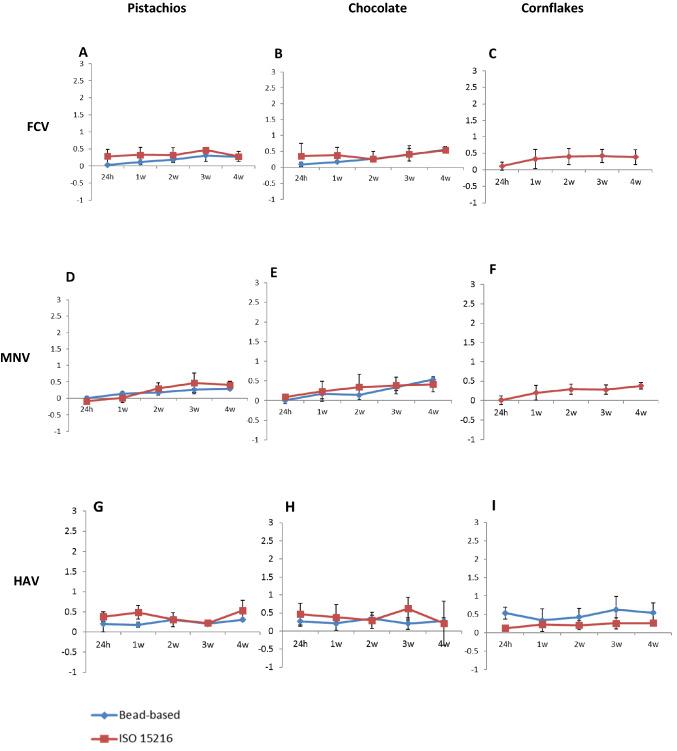
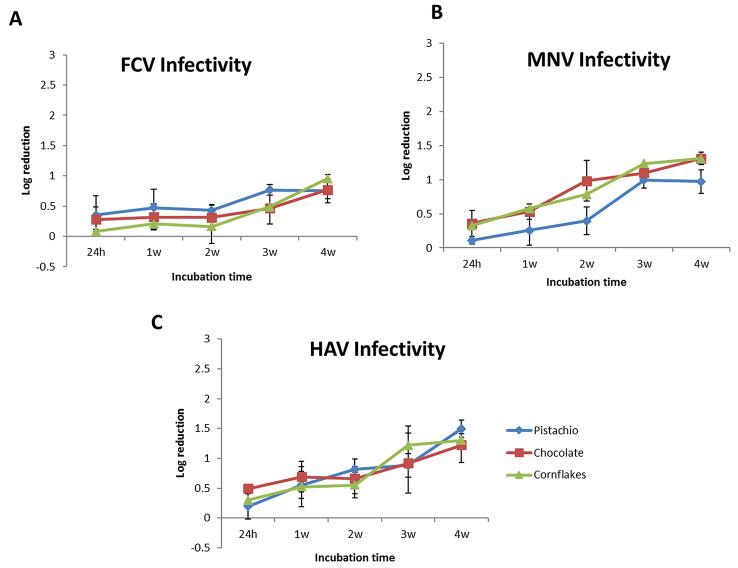
Enteric viruses, such as human norovirus (NoV) and hepatitis A virus (HAV), are the major causes of foodborne illnesses worldwide. These viruses have low infectious dose, and may remain infectious for weeks in the environment and food. Limited information is available regarding viral survival and transmission in low-moisture foods (LMF). LMFs are generally considered as ready-to-eat products, which undergo no or minimal pathogen reduction steps. However, numerous foodborne viral outbreaks associated with LMFs have been reported in recent years. The objective of this study was to examine the survival of foodborne viruses in LMFs during 4-week storage at ambient temperature and to evaluate the efficacy of advanced oxidative process (AOP) treatment in the inactivation of these viruses. For this purpose, select LMFs such as pistachios, chocolate, and cereal were inoculated with HAV and the norovirus surrogates, murine norovirus (MNV) and feline calicivirus (FCV), then viral survival on these food matrices was measured over a four-week incubation at ambient temperature, by both plaque assay and droplet-digital RT-PCR (ddRT-PCR) using the modified ISO-15216 method as well as the magnetic bead assay for viral recovery. We observed an approximately 0.5 log reduction in viral genome copies, and 1 log reduction in viral infectivity for all three tested viruses following storage of select inoculated LMFs for 4 weeks. Therefore, the present study shows that the examined foodborne viruses can persist for a long time in LMFs. Next, we examined the inactivation efficacy of AOP treatment, which combines UV-C, ozone, and hydrogen peroxide vapor, and observed that while approximately 100% (4 log) inactivation can be achieved for FCV, and MNV in chocolate, the inactivation efficiency diminishes to approximately 90% (1 log) in pistachios and 70% (< 1 log) in cereal. AOP treatment could therefore be a good candidate for risk reduction of foodborne viruses from certain LMFs depending on the food matrix and surface of treatment.
肠病毒,如人类诺如病毒(NoV)和甲型肝炎病毒(HAV),是全球食源性疾病的主要原因。这些病毒的感染剂量很低,在环境和食物中可能数周仍具有传染性。关于低水分食品(LMF)中病毒存活和传播的信息有限。LMF 通常被认为是即食产品,在加工过程中不进行或仅进行最低限度的病原体减少步骤。然而,近年来已报告了许多与 LMF 相关的食源性病毒暴发。本研究的目的是在环境温度下储存 4 周期间,研究食源性病毒在 LMF 中的存活情况,并评估高级氧化工艺(AOP)处理在这些病毒失活方面的效果。为此,选择开心果、巧克力和谷物等 LMF 进行甲型肝炎病毒和诺如病毒替代物,鼠诺如病毒(MNV)和猫杯状病毒(FCV)的接种,然后通过平板测定法和使用改进的 ISO-15216 方法的液滴数字 RT-PCR(ddRT-PCR)以及用于病毒回收的磁性珠测定法,在环境温度下储存 4 周后,测量这些食品基质上病毒的存活情况。我们观察到,在选择接种的 LMF 储存 4 周后,所有三种测试病毒的病毒基因组拷贝数减少了约 0.5 个对数,病毒感染力减少了 1 个对数。因此,本研究表明,所研究的食源性病毒可以在 LMF 中长时间存活。接下来,我们研究了 AOP 处理的失活效果,AOP 处理结合了紫外线-C、臭氧和过氧化氢蒸气,结果发现,AOP 处理可使巧克力中的 FCV 和 MNV 达到约 100%(4 个对数)的灭活率,但在开心果中降至约 90%(1 个对数),在谷物中降至 70%(<1 个对数)。因此,AOP 处理可能是降低某些 LMF 中食源性病毒风险的良好候选方法,具体取决于食品基质和处理表面。


 Zotero 插件