
邻苯二甲酸二(2-乙基己基)酯诱导的肿瘤生长受初级纤毛形成通过 HO 生成-胸腺素β-4 基因表达轴调节。
Di-(2-ethylhexyl) phthalate-induced tumor growth is regulated by primary cilium formation via the axis of HO production-thymosin beta-4 gene expression.
机构信息
Department of Bioscience and Biotechnology, Sejong University, Seoul 05006, Republic of Korea.
出版信息
Int J Med Sci. 2021 Jan 14;18(5):1247-1258. doi: 10.7150/ijms.53595. eCollection 2021.
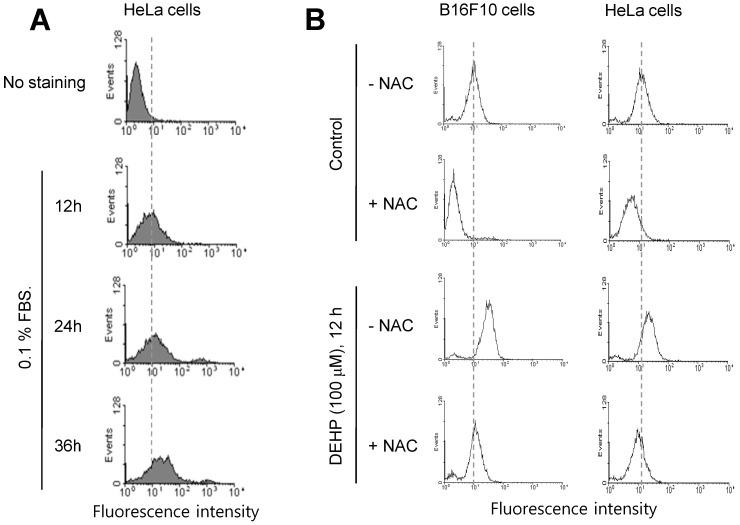
Di-(2-ethylhexyl) phthalate (DEHP) that is one of the most commonly used phthalates in manufacturing plastic wares regulates tumorigenesis. Thymosin beta-4 (TB4), an actin-sequestering protein, has been reported as a novel regulator to form primary cilia that are antenna-like organelles playing a role in various physiological homeostasis and pathological development including tumorigenesis. Here, we investigated whether DEHP affects tumor growth via primary cilium (PC) formation via the axis of TB4 gene expression and the production of reactive oxygen species (ROS). Tumor growth was increased by DEHP treatment that enhanced TB4 expression, PC formation and ROS production. The number of cells with primary cilia was enhanced time-dependently higher in HeLa cells incubated in the culture medium with 0.1% fetal bovine serum (FBS). The number of cells with primary cilia was decreased by the inhibition of TB4 expression. The incubation of cells with 0.1% FBS enhanced ROS production and the transcriptional activity of TB4 that was reduced by ciliobrevin A (CilioA), the inhibitor of ciliogenesis. ROS production was decreased by catalase treatment but not by mito-TEMPO, which affected to PC formation with the same trend. HO production was reduced by siRNA-based inhibition of TB4 expression. HO also increased the number of ciliated cells, which was reduced by siRNA-TB4 or the co-incubation with CilioA. Tumor cell viability was maintained by ciliogenesis, which was correlated with the changes of intracellular ATP amount rather than a simple mitochondrial enzyme activity. TB4 overexpression enhanced PC formation and DEHP-induced tumor growth. Taken together, data demonstrate that DEHP-induced tumor growth might be controlled by PC formation via TB4-HO axis. Therefore, it suggests that TB4 could be a novel bio-marker to expect the risk of DEHP on tumor growth.
邻苯二甲酸二(2-乙基己基)酯(DEHP)是制造塑料器皿中最常用的邻苯二甲酸酯之一,可调节肿瘤发生。胸腺素β-4(TB4)是一种肌动蛋白隔离蛋白,已被报道为一种新的调节因子,可形成初级纤毛,这是一种类似天线的细胞器,在包括肿瘤发生在内的各种生理稳态和病理发展中发挥作用。在这里,我们研究了 DEHP 是否通过 TB4 基因表达轴和活性氧(ROS)的产生来影响肿瘤生长。DEHP 处理可增强 TB4 表达、PC 形成和 ROS 产生,从而促进肿瘤生长。在含有 0.1%胎牛血清(FBS)的培养基中孵育的 HeLa 细胞中,初级纤毛细胞的数量随时间推移呈时间依赖性增加。TB4 表达抑制降低了具有初级纤毛的细胞数量。用 ciliobrevin A(CilioA),纤毛发生抑制剂孵育细胞可增强 ROS 产生和 TB4 的转录活性,该活性被 CilioA 降低。用 catalase 处理可降低 ROS 产生,但不能降低 mito-TEMPO,后者对 PC 形成的影响具有相同的趋势。用 TB4 表达的 siRNA 抑制降低了 HO 的产生。HO 还增加了纤毛细胞的数量,而 siRNA-TB4 或与 CilioA 共孵育则减少了纤毛细胞的数量。纤毛发生维持了肿瘤细胞的活力,这与细胞内 ATP 量的变化相关,而与简单的线粒体酶活性无关。TB4 过表达增强了 PC 形成和 DEHP 诱导的肿瘤生长。综上所述,数据表明 DEHP 诱导的肿瘤生长可能通过 TB4-HO 轴通过 PC 形成来控制。因此,这表明 TB4 可能是一种新的生物标志物,可以预测 DEHP 对肿瘤生长的风险。




 Zotero 插件