
黄酮类化合物山柰酚在 Cu(II) 离子存在下的抗氧化与促氧化剂特性:ROS 清除活性、Fenton 反应和 DNA 损伤研究。
Antioxidant vs. Prooxidant Properties of the Flavonoid, Kaempferol, in the Presence of Cu(II) Ions: A ROS-Scavenging Activity, Fenton Reaction and DNA Damage Study.
机构信息
Institute of Physical Chemistry and Chemical Physics, Faculty of Chemical and Food Technology, Slovak University of Technology, 812 37 Bratislava, Slovakia.
Department of Chemistry, Faculty of Natural Sciences, Constantine the Philosopher University in Nitra, 949 74 Nitra, Slovakia.
出版信息
Int J Mol Sci. 2021 Feb 5;22(4):1619. doi: 10.3390/ijms22041619.
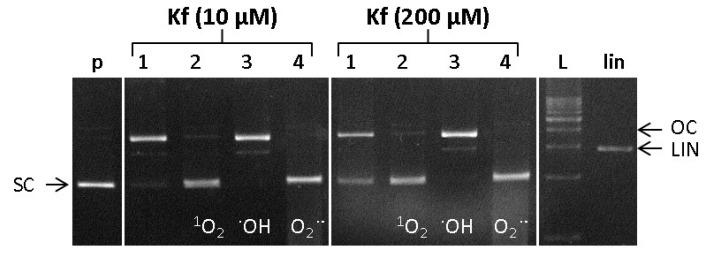
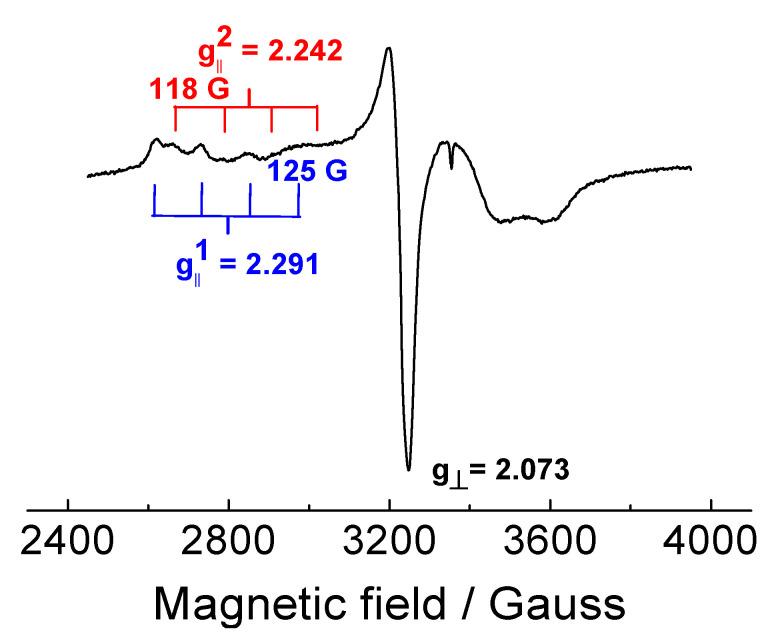
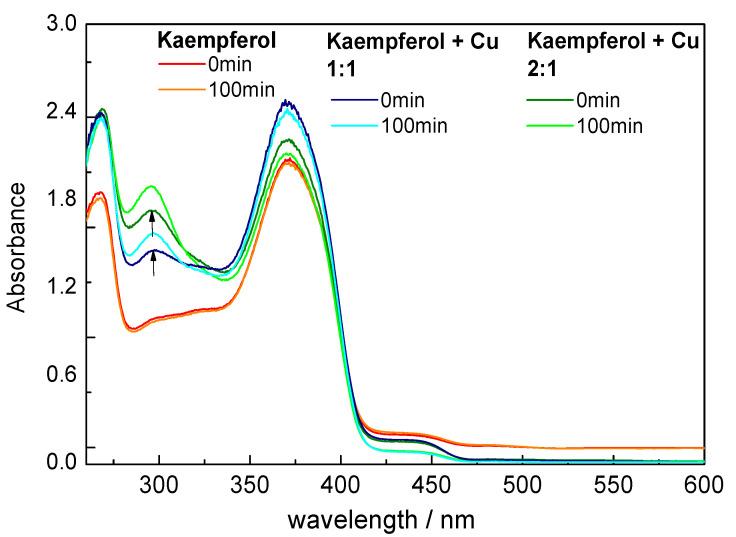
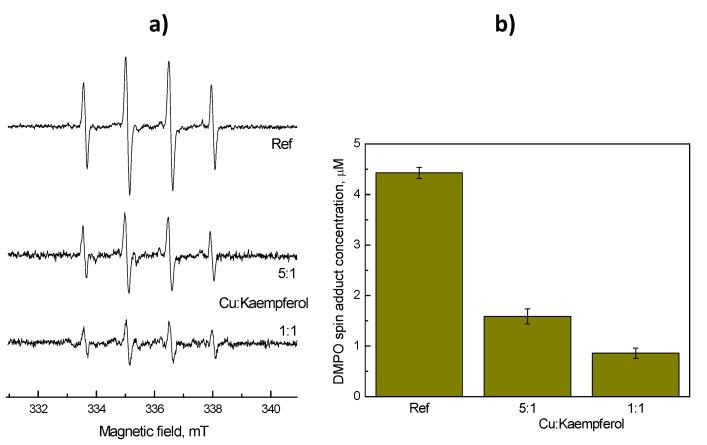
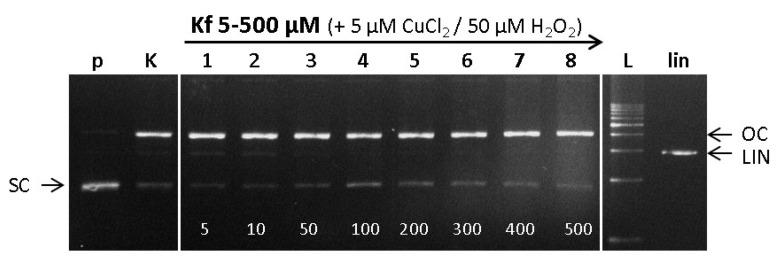
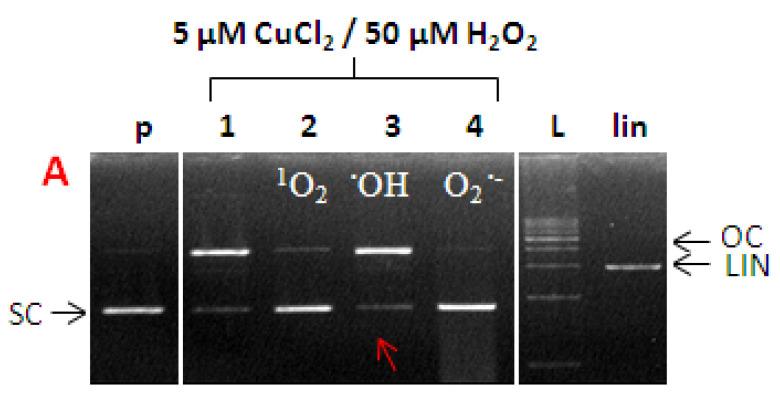
Kaempferol is a flavonoid that occurs in tea and in many vegetables and fruits, including broccoli, cabbage, beans, grapes, apples, and strawberries. The efficacy of Kaempferol has been demonstrated in the treatment of breast, esophageal, cervical, ovarian, and liver cancers and leukemia, which very likely arises from its prooxidant properties and the activation of pro-apoptotic pathways. Indeed, this matter has already been the focus of a number of published studies and reviews. The aim of the present study was to elucidate the antioxidant vs. prooxidant properties of flavonoids in the presence of the redox-active metal, copper (II) ion, by means of the Fenton reaction. The specific motivation of this work is that, since an increased level of Cu(II) ions is known to be associated with many disease states such as neurological conditions (Alzheimer's disease) and cancer, any interaction between these ions and flavonoids might affect the outcome of therapeutic uses of the latter. The structure of the Cu-kaempferol complex in DMSO was investigated by means of low temperature EPR spectroscopy, which confirmed the existence of at least two distinct coordination environments around the copper (II) ion. UV vis-spectra of kaempferol and its Cu(II) complex in DMSO revealed an interaction between the 5-OH (A ring) group and the 4-CO (C ring) group of kaempferol with Cu(II) ions. An ABTS assay confirmed that kaempferol acted as an effective radical scavenger, and that this effect was further enhanced in the form of the Cu(II)-kaempferol complex. Quantitative EPR spin trapping experiments, using DMPO as the spin trap, confirmed suppression of the formation of a mixture of hydroxyl, superoxide, and methyl radicals, in a Fenton reaction system, upon coordination of kaempferol to the redox-active Cu(II) ions, by 80% with respect to the free Cu(II) ions. A viscometric study revealed a better DNA-intercalating ability of the Cu-kaempferol complex than for free kaempferol, essential for conferring anticancer activity of these substances. The results of the viscometric measurements were compared with those from a DNA damage study of Cu-kaempferol complexes in a Fenton reaction system, using gel electrophoresis. At low concentrations of kaempferol (Cu-kaempferol ratios of 1:1 and 1:2), a very weak protective effect on DNA was noted, whereas when kaempferol was present in excess, a significant DNA-protective effect was found. This can be explained if the weakly intercalated kaempferol molecules present at the surface of DNA provide protection against attack by ROS that originate from the Fenton reaction involving intercalated Cu(II)-kaempferol complexes. Following the application of ROS scavengers, L-histidine, DMSO, and SOD, gel electrophoresis confirmed the formation of singlet oxygen, hydroxyl radicals, and superoxide radical anions, respectively. We propose that the prooxidant properties of Cu-kaempferol complexes may provide anticancer activity of these substances. When present in excess, kaempferol displays antioxidant properties under Cu-Fenton conditions. This suggests that kaempferol might prove a suitable candidate for the prevention or treatment of oxidative stress related medical conditions that involve a disturbed metabolism of redox metals such as copper, for example, Menkes disease, and neurological disorders, including Alzheimer's disease. For the potential use of kaempferol in clinical practice, it will be necessary to optimize the dose size and critical age of the patient so that this flavonoid may be beneficial as a preventive drug against cancer and neurological disorders.
山柰酚是一种存在于茶和许多蔬菜和水果中的类黄酮,包括西兰花、白菜、豆类、葡萄、苹果和草莓。山柰酚在治疗乳腺癌、食管癌、宫颈癌、卵巢癌和肝癌以及白血病方面的疗效已经得到证实,这很可能是由于其促氧化剂特性和促凋亡途径的激活。事实上,这个问题已经成为许多已发表的研究和评论的焦点。本研究的目的是通过芬顿反应阐明在氧化还原活性金属铜(II)离子存在下,类黄酮的抗氧化与促氧化剂特性。这项工作的具体动机是,由于已知铜(II)离子水平的升高与许多疾病状态有关,如神经状况(阿尔茨海默病)和癌症,因此这些离子与类黄酮之间的任何相互作用都可能影响后者治疗用途的结果。通过低温 EPR 光谱研究了 DMSO 中 Cu-山柰酚配合物的结构,这证实了铜(II)离子周围至少存在两种不同的配位环境。山柰酚及其在 DMSO 中的 Cu(II) 配合物的紫外可见光谱显示山柰酚的 5-OH(A 环)基团和 4-CO(C 环)基团与 Cu(II) 离子之间存在相互作用。ABTS 测定证实山柰酚作为有效的自由基清除剂,并且这种作用在 Cu(II)-山柰酚配合物的形式下进一步增强。使用 DMPO 作为自旋捕获剂的定量 EPR 自旋捕获实验证实,在 Fenton 反应系统中,山柰酚与氧化还原活性 Cu(II) 离子配位后,抑制了羟基、超氧自由基和甲基自由基混合物的形成,相对于游离 Cu(II) 离子抑制率为 80%。粘度研究表明,Cu-山柰酚配合物比游离山柰酚具有更好的 DNA 插入能力,这对于赋予这些物质的抗癌活性至关重要。粘度测量的结果与使用凝胶电泳在 Fenton 反应系统中研究 Cu-山柰酚配合物的 DNA 损伤的结果进行了比较。在山柰酚的低浓度(Cu-山柰酚比例为 1:1 和 1:2)下,对 DNA 只有非常弱的保护作用,而当山柰酚过量存在时,发现对 DNA 有显著的保护作用。如果存在于 DNA 表面的弱插入山柰酚分子提供了对源自涉及插入 Cu(II)-山柰酚配合物的芬顿反应的 ROS 的攻击的保护,则可以解释这一点。应用 ROS 清除剂 L-组氨酸、DMSO 和 SOD 后,凝胶电泳证实分别形成了单线态氧、羟基自由基和超氧自由基阴离子。我们提出 Cu-山柰酚配合物的促氧化剂特性可能为这些物质提供抗癌活性。在过量存在时,山柰酚在 Cu-Fenton 条件下显示出抗氧化特性。这表明山柰酚可能是一种合适的候选物,可用于预防或治疗涉及氧化还原金属(例如铜)代谢紊乱的与氧化应激相关的医疗状况,例如 Menkes 病和包括阿尔茨海默病在内的神经障碍。为了将山柰酚在临床实践中的潜在应用,有必要优化剂量大小和患者的临界年龄,以便这种类黄酮可以作为预防癌症和神经障碍的药物。



 Zotero 插件