
基于日本人群的观察性研究中通过血浆代谢组学评估的食物摄入的代谢产物生物标志物。
Charged metabolite biomarkers of food intake assessed via plasma metabolomics in a population-based observational study in Japan.
机构信息
Graduate School of Health Management, Keio University, Fujisawa, Kanagawa, Japan.
Biostatistics Unit, Clinical and Translational Research Center, Keio University Hospital, Tokyo, Japan.
出版信息
PLoS One. 2021 Feb 10;16(2):e0246456. doi: 10.1371/journal.pone.0246456. eCollection 2021.
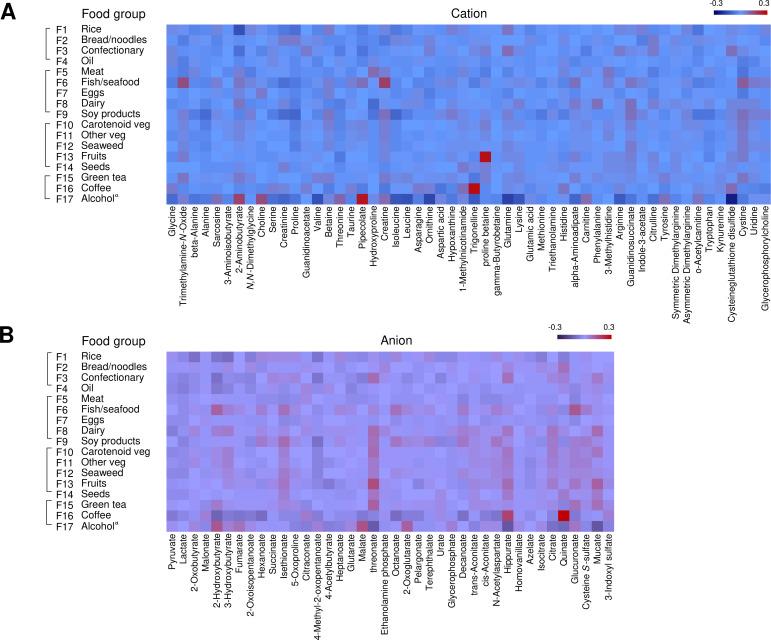
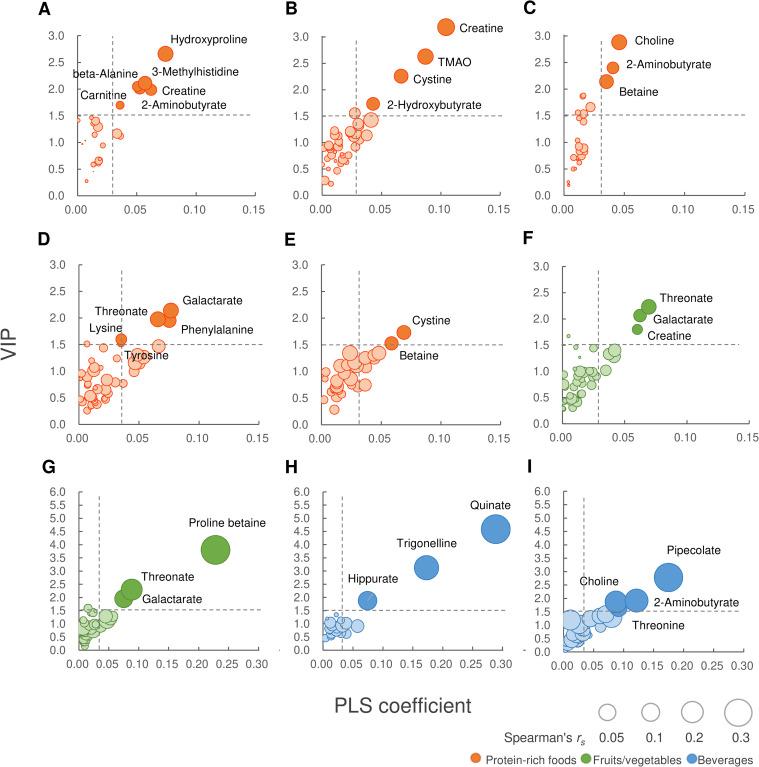
Food intake biomarkers can be critical tools that can be used to objectively assess dietary exposure for both epidemiological and clinical nutrition studies. While an accurate estimation of food intake is essential to unravel associations between the intake and specific health conditions, random and systematic errors affect self-reported assessments. This study aimed to clarify how habitual food intake influences the circulating plasma metabolome in a free-living Japanese regional population and to identify potential food intake biomarkers. To achieve this aim, we conducted a cross-sectional analysis as part of a large cohort study. From a baseline survey of the Tsuruoka Metabolome Cohort Study, 7,012 eligible male and female participants aged 40-69 years were chosen for this study. All data on patients' health status and dietary intake were assessed via a food frequency questionnaire, and plasma samples were obtained during an annual physical examination. Ninety-four charged plasma metabolites were measured using capillary electrophoresis mass spectrometry, by a non-targeted approach. Statistical analysis was performed using partial-least-square regression. A total of 21 plasma metabolites were likely to be associated with long-term food intake of nine food groups. In particular, the influential compounds in each food group were hydroxyproline for meat, trimethylamine-N-oxide for fish, choline for eggs, galactarate for dairy, cystine and betaine for soy products, threonate and galactarate for carotenoid-rich vegetables, proline betaine for fruits, quinate and trigonelline for coffee, and pipecolate for alcohol, and these were considered as prominent food intake markers in Japanese eating habits. A set of circulating plasma metabolites was identified as potential food intake biomarkers in the Japanese community-dwelling population. These results will open the way for the application of new reliable dietary assessment tools not by self-reported measurements but through objective quantification of biofluids.
食物摄入量生物标志物可以成为用于客观评估流行病学和临床营养研究中饮食暴露的关键工具。虽然准确估计食物摄入量对于揭示摄入量与特定健康状况之间的关联至关重要,但随机和系统误差会影响自我报告评估。本研究旨在阐明习惯性食物摄入量如何影响自由生活的日本人群的循环血浆代谢组,并确定潜在的食物摄入量生物标志物。为了实现这一目标,我们进行了一项横断面分析,作为一项大型队列研究的一部分。从鹤冈代谢组队列研究的基线调查中,选择了 7012 名年龄在 40-69 岁之间符合条件的男性和女性参与者进行这项研究。所有关于患者健康状况和饮食摄入的数据均通过食物频率问卷进行评估,并在年度体检期间获得血浆样本。使用毛细管电泳质谱法通过非靶向方法测量了 94 种带电血浆代谢物。使用偏最小二乘回归进行统计分析。共有 21 种血浆代谢物可能与 9 种食物组的长期食物摄入量有关。特别是,每个食物组中具有影响力的化合物是肉中的羟脯氨酸、鱼中的三甲胺 N-氧化物、蛋中的胆碱、乳制品中的半乳糖酸、豆制品中的胱氨酸和甜菜碱、富含类胡萝卜素的蔬菜中的 threonate 和半乳糖酸、水果中的脯氨酸甜菜碱、咖啡中的奎宁酸和瓜氨酸、以及酒精中的哌可酸盐,这些都被认为是日本饮食习惯中突出的食物摄入量标志物。一组循环血浆代谢物被确定为日本社区居民中潜在的食物摄入量生物标志物。这些结果将为应用新的可靠饮食评估工具开辟道路,而不是通过自我报告的测量,而是通过对生物流体的客观量化。
 Zotero 插件