
肽组学驱动的策略揭示了与口腔癌预后相关的肽和预测蛋白酶。
Peptidomics-Driven Strategy Reveals Peptides and Predicted Proteases Associated With Oral Cancer Prognosis.
机构信息
Brazilian Biosciences National Laboratory, National Center for Research in Energy and Materials, Campinas, Brazil.
Molecular Biology and Genetic Engineering Center, University of Campinas, Campinas, Brazil.
出版信息
Mol Cell Proteomics. 2021;20:100004. doi: 10.1074/mcp.RA120.002227. Epub 2020 Dec 3.
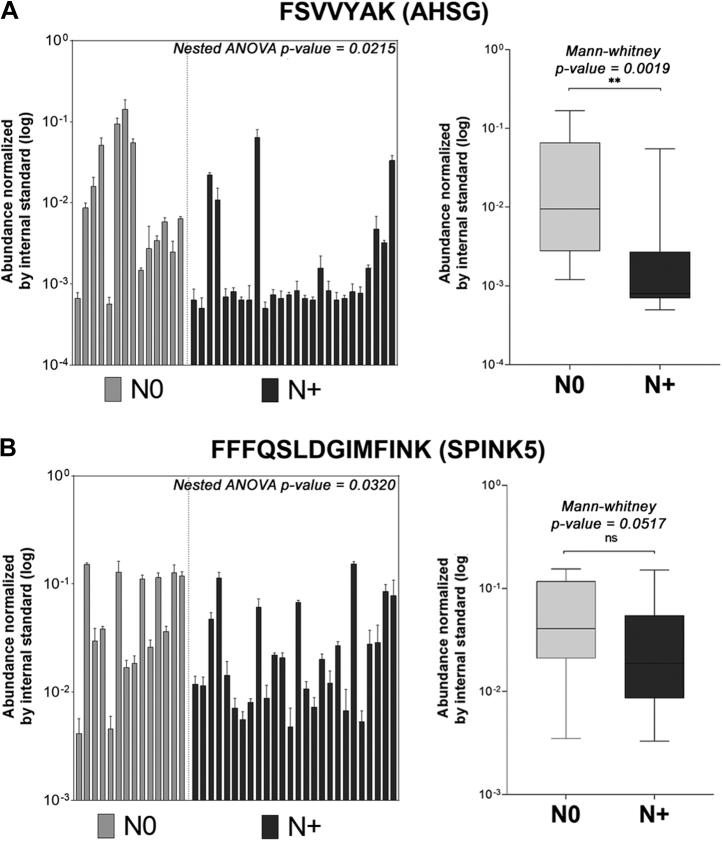
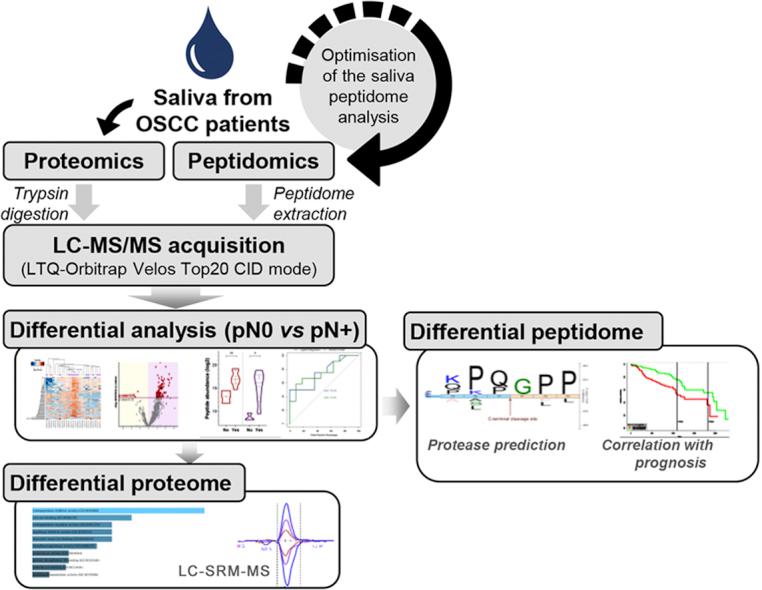
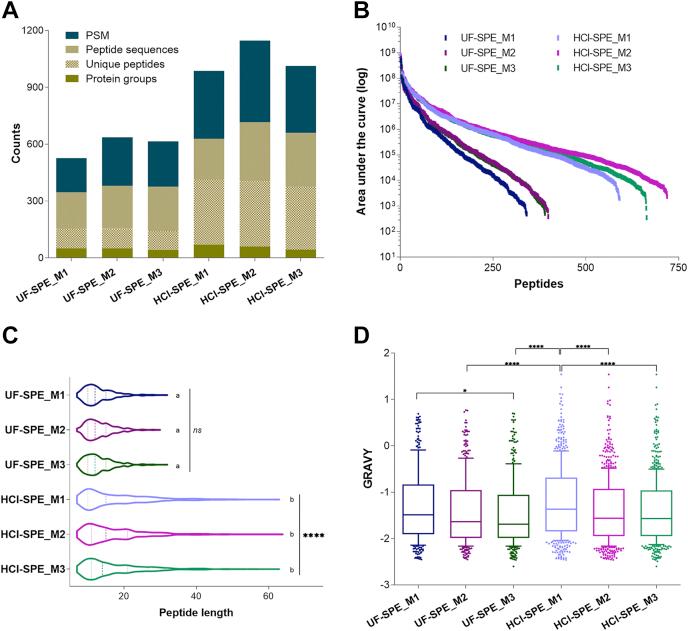
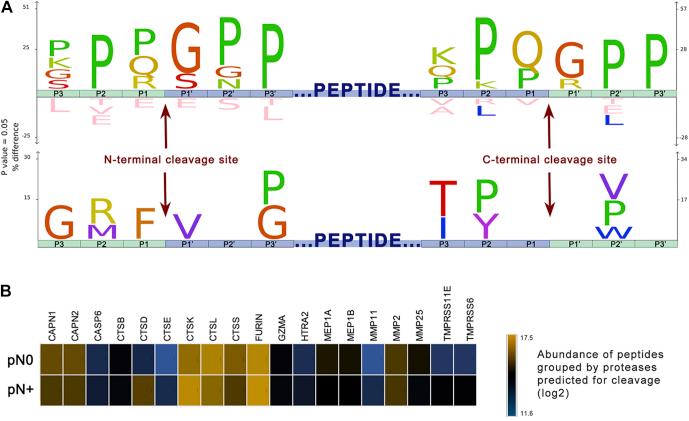
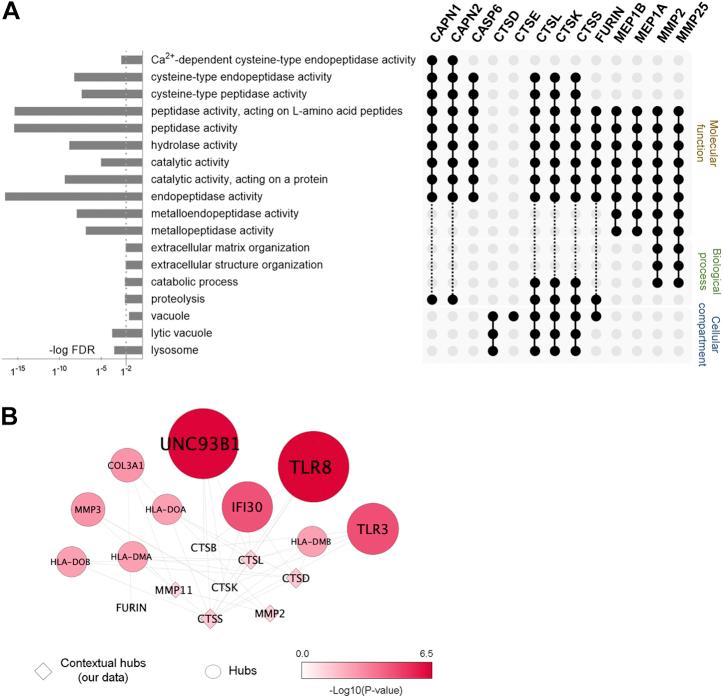
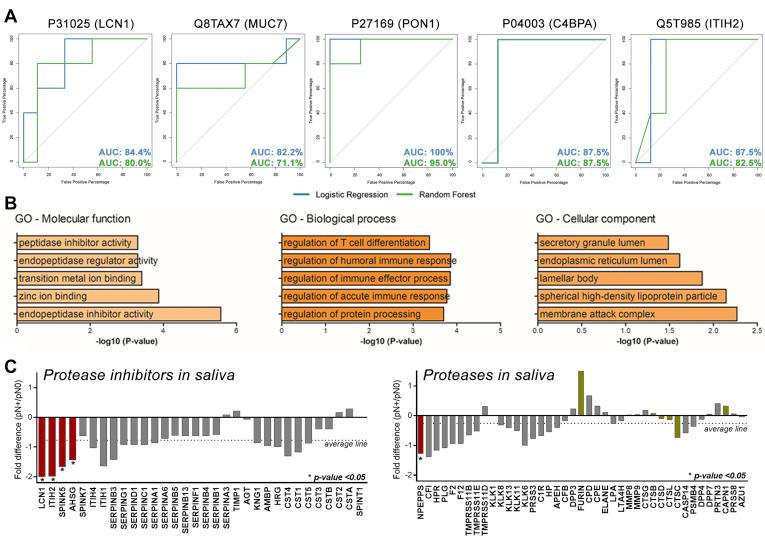
Protease activity has been associated with pathological processes that can lead to cancer development and progression. However, understanding the pathological unbalance in proteolysis is challenging because changes can occur simultaneously at protease, their inhibitor, and substrate levels. Here, we present a pipeline that combines peptidomics, proteomics, and peptidase predictions for studying proteolytic events in the saliva of 79 patients and their association with oral squamous cell carcinoma (OSCC) prognosis. Our findings revealed differences in the saliva peptidome of patients with (pN+) or without (pN0) lymph-node metastasis and delivered a panel of ten endogenous peptides correlated with poor prognostic factors plus five molecules able to classify pN0 and pN+ patients (area under the receiver operating characteristic curve > 0.85). In addition, endopeptidases and exopeptidases putatively implicated in the processing of differential peptides were investigated using cancer tissue gene expression data from public repositories, reinforcing their association with poorer survival rates and prognosis in oral cancer. The dynamics of the OSCC-related proteolysis were further explored via the proteomic profiling of saliva. This revealed that peptidase/endopeptidase inhibitors exhibited reduced levels in the saliva of pN+ patients, as confirmed by selected reaction monitoring-mass spectrometry, while minor changes were detected in the level of saliva proteases. Taken together, our results indicated that proteolytic activity is accentuated in the saliva of patients with OSCC and lymph-node metastasis and, at least in part, is modulated by reduced levels of salivary peptidase inhibitors. Therefore, this integrated pipeline provided better comprehension and discovery of molecular features with implications in the oral cancer metastasis prognosis.
蛋白酶活性与可能导致癌症发展和进展的病理过程有关。然而,由于蛋白酶、其抑制剂和底物水平的变化可能同时发生,因此理解蛋白水解的病理失衡具有挑战性。在这里,我们提出了一个结合肽组学、蛋白质组学和肽酶预测的研究方案,用于研究 79 名患者唾液中的蛋白水解事件及其与口腔鳞状细胞癌(OSCC)预后的关系。我们的研究结果揭示了有(pN+)或无(pN0)淋巴结转移的患者唾液肽组之间的差异,并提供了一个与预后不良因素相关的十个内源性肽的面板,以及能够区分 pN0 和 pN+患者的五个分子(接受者操作特征曲线下面积>0.85)。此外,使用公共存储库中的癌症组织基因表达数据研究了可能参与差异肽加工的内肽酶和外肽酶,这加强了它们与口腔癌生存率和预后较差的关联。通过唾液蛋白质组学分析进一步探索了 OSCC 相关蛋白水解的动力学。这表明,pN+患者唾液中的肽酶/内肽酶抑制剂水平降低,这一点通过选择反应监测-质谱法得到了证实,而唾液蛋白酶水平的变化较小。综上所述,我们的结果表明,OSCC 和淋巴结转移患者唾液中的蛋白水解活性增强,并且至少部分是由唾液肽酶抑制剂水平降低调节的。因此,这个综合的研究方案为理解和发现与口腔癌转移预后相关的分子特征提供了更好的认识。




 Zotero 插件